
Understanding Skid Steers and Mini Excavators
How Skid Steers and Mini Excavators Handle Site Work Differently
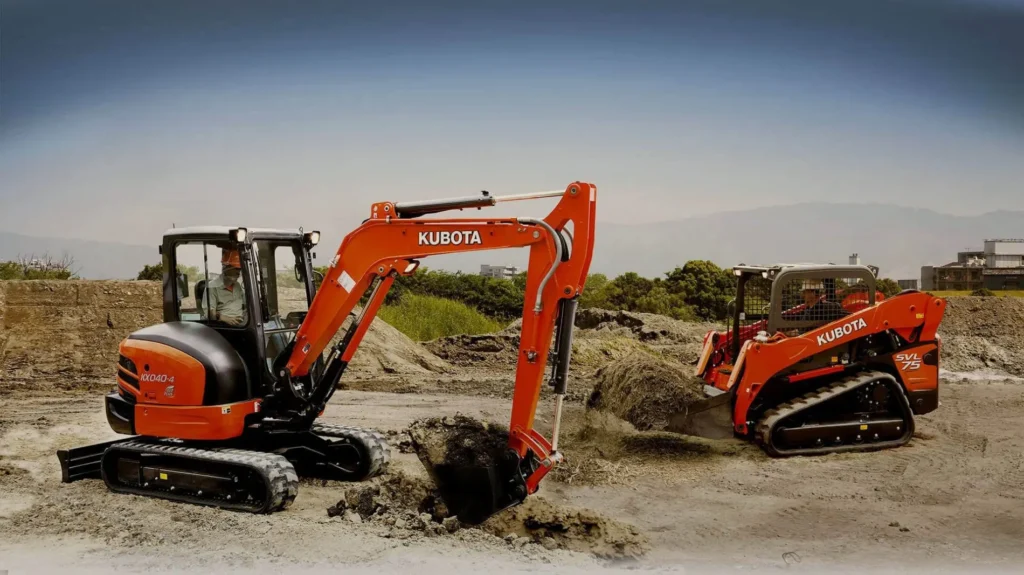
A skid steer and mini excavator solve different problems on a job site. A skid steer moves, carries and grades material with front attachments, while a mini excavator digs below ground with a boom and bucket. Quotor hires both machine types, making comparison easy before booking.
What Is a Skid Steer?
A skid steer loader is a compact, wheeled machine that steers by varying wheel speed on each side. This skid steering method lets the skid steer turn within its own footprint, suiting tight spaces on residential sites. Skid steers, sometimes called skid loaders, run attachments from buckets to augers through a universal quick-attach system, with sizes down to a mini skid steer for narrow access. A closer look at what a skid steer loader is covers the mechanics.
What Is a Mini Excavator?
A mini excavator is a tracked machine built around a rotating house, boom, dipper arm and bucket, letting it dig, lift and place material precisely. Tracks spread its weight over a larger area than wheels, which helps on soft ground. Mini excavators in Quotor’s taxonomy generally start around 1.7 tonnes and run up to roughly 9 tonnes, with smaller machines classed separately as micro excavators. Smaller mini excavators can access narrow residential sites, while larger models trade some of that access for greater digging depth and capacity. A closer look at what a mini excavator is breaks down the size classes.
Skid Steer Applications
Grading and Site Cleanup
Skid steers excel at grading and levelling on sites too tight for a full-size loader. A grading bucket or box blade attachment spreads and levels material in single passes, and the tight turning radius means less repositioning on cramped sites, per this skid steer operating guide. Clearing debris after landscape or demolition work is another use case, since a skid steer can push, scoop and load rubble in one pass.
Material Handling
Moving and placing material is where a skid steer earns its keep beyond digging and grading. Pallet forks move materials like bagged cement, timber or landscape supplies, and a bucket handles loose material such as sand, mulch or aggregate. With the load close to the front axle, a skid steer carries these loads with reasonable stability in confined yards a larger loader could not enter.
Landscaping and General Construction
Landscape contractors use skid steers for jobs from spreading topsoil to trenching for irrigation lines, swapping attachments like buckets and augers as the job changes. On a construction site, the same machine can grade a laneway, backfill a trench or clear vegetation before groundworks start, and on a longer construction project it often stays on hire. Quotor’s rundown of skid steer attachments lists the tools that make a single skid steer useful across tasks like these.
Mini Excavator Applications
Digging and Trenching
Digging is the core job a mini excavator is built for, whether a trench for drainage pipe, a footing line, or a hole for stump removal. A hydraulic thumb attachment lets the operator grip and place rock or debris instead of just scooping it. A guide to operating a mini excavator covers safe digging technique around buried utility lines.
Foundation and Utility Work
Foundation and utility work depends on digging to a consistent depth, using laser or GPS-guided depth control. Utility installation for stormwater, sewer or power conduit needs a machine narrow enough to dig a clean trench. Quotor’s excavator equipment range covers the size classes suited to this work.
Demolition and Excavation
Demolition work suits a mini excavator for jobs like breaking out a shed slab or clearing a small structure, since a hydraulic breaker or grab attachment swaps onto the same machine. Excavation tasks such as pools, basements or large planting beds suit it too, since the boom’s reach lets the operator work around existing structures. An overview of how people train to become excavator operators helps anyone new to operating one.
Skid Steer vs Mini Excavator Comparison
Machine Design and Working Method
A skid steer runs on four wheels and moves attachments mounted at the front, driving the whole machine forward, backward or turning. The similar-looking tracked machine, the compact track loader, is a separate equipment category, not a tracked version of the skid steer. A mini excavator instead keeps its undercarriage still and works through the boom, dipper arm and bucket, covered in this breakdown of excavator parts. Both rely on a hydraulic system, which is why a skid steer suits moving across a site while a mini excavator suits fixed-position digging.
Digging Capability
A mini excavator digs below its own track line and can reach several metres deep depending on the model, since the boom extends down from a fixed base. A skid steer isn’t built around dedicated excavation geometry like a mini excavator. Its bucket can scrape and dig shallow material, and specialised attachments such as trenchers or augers extend that capability, but they don’t replace the boom-and-arm reach of an excavator. For a hole deeper than that, the mini excavator is the machine built for it.
Grading and Material Handling
Grading favours the skid steer, since a box blade or grading bucket on a machine driving across the site covers ground faster than a fixed-position excavator. Material handling follows the same pattern: pallet forks and buckets on a skid steer move loads, while a bucket on a mini excavator is built for digging, not carrying material. Some jobs use both machines together rather than choosing one.
Site Access and Manoeuvrability
Both machines can work in tight spaces, but in different ways. A skid steer has the advantage when repeated turning and material movement dominate, while a zero-tail-swing mini excavator can work very close to walls or fences without needing the whole machine to pivot around the load. Manoeuvrability matters less on open ground, since both are a compact size compared with full-size loaders and excavators.
Attachments and Versatility
Attachment range is one of the clearest differences between the two. A skid steer’s quick-attach system supports buckets, forks, augers, brooms and grapples for various tasks, often called a versatile machine that can excel at several roles within minutes. A mini excavator carries fewer attachment types, mainly buckets, breakers, thumbs and augers, but this guide to excavator attachments shows how these extend a single machine’s range. Versatility means something different for each: broad task switching for the skid steer, precision for the excavator.
Ground Conditions
Ground conditions affect the two machines differently rather than favouring one outright. A wheeled skid steer can lose traction on soft ground, while the tracks on a mini excavator spread weight and cope better with mud or uneven terrain. On sealed or compacted surfaces, a skid steer usually moves faster and causes less wear than tracks. Where ground stays consistently soft, a compact track loader is often a better fit than a wheeled skid steer.
Hire Cost Comparison
Daily hire rates for the two machines vary by size, attachment and location, so cost alone tells part of the story. What matters more is productivity: a mini excavator may complete trenching far more efficiently than a skid steer fitted with a trencher, while a skid steer can outproduce an excavator when repeatedly moving material across a site. Comparing current rates side by side, as Quotor’s hire listings allow, makes it easier to judge duration and output together, not cost alone.
Choosing the Right Machine to Hire
To choose the right machine, start with what the job spends most of its time doing: moving material or digging.
When to Hire a Skid Steer
A skid steer is the better hire when the job is mostly on the surface, such as grading, general site cleanup or moving material. The skid steer also suits tight spaces, since it can turn within its own footprint and fit through standard gates. A closer look at the skid steer loader range covers sizes from compact units up to larger machines with more versatility for commercial sites. If digging is only a small part of the job, a trenching attachment can cover it.
When to Hire a Mini Excavator
A mini excavator is the better hire whenever the job needs a hole below ground, whether a trench, footing, services connection or small demolition. It also suits soft ground, since tracks handle that better than wheels. The mini excavator range covers machines from around 1.7 tonnes, with smaller models suited to narrow side access, up to larger units for deeper digging. If the job is mostly digging rather than moving material, this is the machine to hire.
Site Conditions and Project Requirements
Site conditions often settle the decision before cost or job type do. A narrow side access, a sloped block or limited headroom can rule out a skid steer or a mini excavator regardless of which suits the job better. Project requirements matter just as much: a job with a fixed completion date needs the machine that finishes the tasks fastest, not just the cheaper one per day. Weighing the pros and cons against these constraints, and confirming attachment needs, avoids paying for capability the site cannot use.
Hire Cost and Project Duration
Project duration changes which machine makes financial sense. A short job with a clear task often suits whichever machine handles it fastest, even at a higher rate, since less hire time offsets the cost difference. A longer job with mixed tasks may justify renting both mini excavators and skid steers together rather than compromising with one machine. Quotor lists current loader and excavator availability side by side, making cost and duration easy to compare before booking.