
Understanding Skid Steer Controls
What Is a Skid Steer Loader?
A skid steer loader is a compact, rigid-frame wheeled machine that steers by varying power to its left and right wheels rather than turning them, letting it pivot within a very tight space. For the full breakdown of how the machine is built, see Quotor’s guides to what a skid steer loader is and the wider loaders category if you’re also weighing other loader types. This piece covers what comes next: the controls, the pre-start checks and the technique needed to operate one safely.
Main Skid Steer Controls
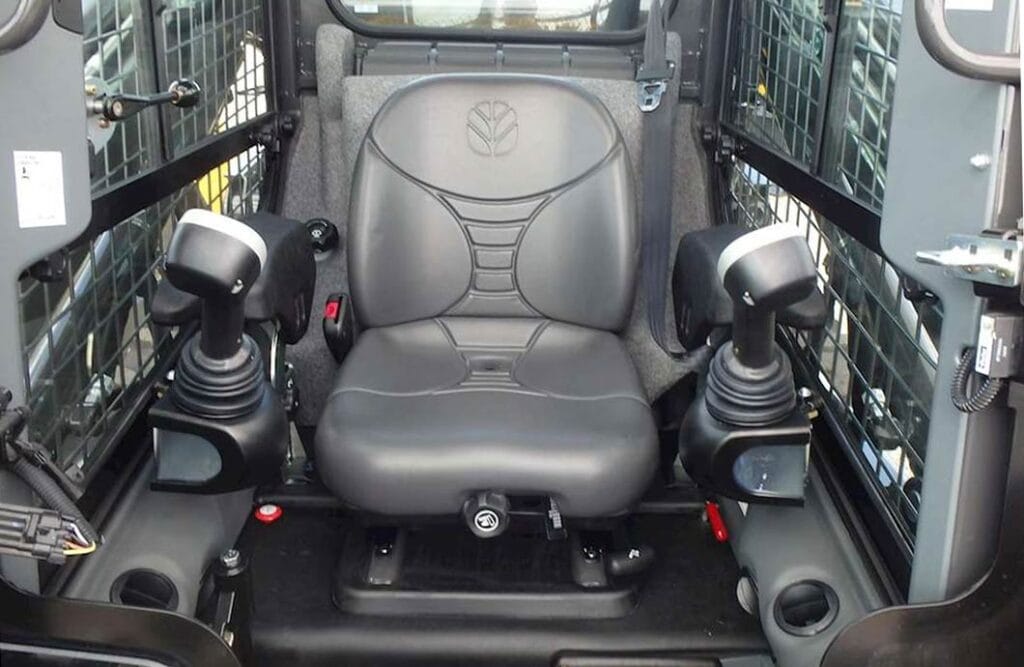
Skid steer control layouts vary by manufacturer and model, and the difference matters before you climb in. Modern electrohydraulic machines commonly use two joysticks with selectable ISO or H control patterns, while older, simpler machines often use traditional hand-and-foot controls instead. Bobcat skid steers, for example, offer selectable joystick patterns on many models.
| Control System | Travel / Steering | Lift & Tilt |
|---|---|---|
| ISO joystick | Left joystick | Right joystick |
| H-pattern joystick | Split across both joysticks | Split across both joysticks |
| Traditional hand-and-foot | Hand levers | Foot pedals |
Control availability and exact movements vary by model; confirm the selected pattern from the cab markings and operator’s manual before moving the machine. Different skid steers also vary in operating capacity within the same size class; Quotor’s skid steer loaders page helps with choosing the right size to hire.
Drive and Steering Controls
With ISO joystick controls selected, the joystick on the left is used for drive and steering: push it forward to drive, pull back to reverse, and move it left or right to turn by slowing one side relative to the other. On traditional hand-and-foot machines, two hand levers do this instead, one per side: pushing both forward drives straight, pushing only one pivots the machine.
Hydraulic and Attachment Controls
With ISO joystick controls selected, the right joystick is used to control the lift arms and bucket: push the right joystick forward to lower the lift arms, pull it back to raise them, and move it left or right to tilt the bucket, curling back to carry a load or rolling forward to dump. On traditional hand-and-foot machines, foot pedals handle lift and tilt instead. A dedicated switch or pedal engages the auxiliary hydraulics that power attachments beyond the bucket; this varies between makes, so confirm it before use.
Pre-Operation Skid Steer Checks
Walk-Around Inspection
Before starting the engine, walk a full circuit of the machine: check tyre condition, look underneath for fresh leaks, and inspect the bucket or attachment for cracks or a worn cutting edge. Check that lift arm and attachment locking pins are seated properly, since a loose attachment can detach mid-lift, and confirm the rollover protective structure is undamaged.
Tyres, Hydraulics and Attachment Checks
Check tyre tread, sidewall condition and inflation, since all three affect traction and steering feel. Check hydraulic hoses for leaks, cracking or bulging, since a slow leak often shows as a damp patch around fittings, then check the fluid level against the sight gauge and confirm the attachment is locked onto the quick-attach plate before relying on it to carry a load. If the ground calls for a tracked machine instead, Quotor’s guide to what a posi-track loader is explains how it compares.
Cab, Controls and Safety Systems
Enter and exit the cab using three points of contact to avoid falls. Fasten the seat belt every time, since it’s what keeps you inside the rollover protective structure if the machine tips, and lower the safety bar before touching any control. Test the parking brake, and in a safe test area, cycle the joystick or pedal controls and confirm the interlocks and hydraulic functions respond correctly per the manufacturer’s procedure, then check the backup camera and reversing alarm work. Skid steer safety comes down to routine: the same checks, every start. Most sites also require documented competency before operating unsupervised; Quotor’s guide to becoming a heavy equipment operator covers that pathway.
How to Operate a Skid Steer
Starting and Positioning the Machine
Adjust the seat and mirrors before you start the engine, and confirm the lift arms are lowered and the bucket sits flat on the ground; most machines won’t allow travel with the safety bar raised. Turn the key or press the start button, let the hydraulics build pressure, and check the gauges before releasing the parking brake. Approach the work square rather than at an angle, which keeps the bucket loading evenly.
Driving Forward and Reverse
Ease into throttle rather than snapping the controls to full travel; a skid steer’s steering is sensitive at low speed because each side can move independently of the other. Travel with the bucket low and close to the machine, with enough clearance for the terrain, for stability and forward visibility. Visibility when reversing is limited, so check mirrors and the backup camera, use a spotter on a busy site, give right of way to pedestrians, and reverse slowly.
Turning and Skid Steering
A skid steer turns by running one side faster than the other rather than by angling wheels, which is where the name comes from. Counter-rotating, driving one side forward and the other in reverse, gives the tightest turn but scrubs tyres hard and tears up soft ground, so use it only when genuinely needed, not as a default.
Raising, Lowering and Tilting the Bucket
Lift and tilt work together in most tasks: curl the bucket back as you raise the lift arms to keep material from spilling forward, and roll it forward once the arms are at height to dump. Keep the load low while carrying it, and raise the arms fully only when placing material into a truck or over an obstacle, since a raised load reduces stability, particularly on a slope.
Using Attachments
Skid steer attachments extend the machine well beyond bucket work: augers, grapples, trenchers, forks and sweepers all run off the same auxiliary hydraulic circuit, and swapping between them typically takes only a few minutes at the quick-attach plate. Quotor’s guide to types of skid steer attachments covers what’s available and which jobs each one suits. Match ground speed and hydraulic flow to the attachment’s rated specification rather than running it flat out; overdriving is a common way to damage attachments.
Stopping and Parking Safely
Lower the bucket or attachment fully to the ground before shutting down; never leave a loaded or raised bucket unattended. Engage the parking brake, lower the safety bar, and follow the manufacturer’s shutdown procedure, including any required idle or cool-down period. Park on firm, level ground where practicable; if slope parking is unavoidable, secure the machine per the manufacturer’s instructions and site procedure.
Skid Steer Operating Techniques
Loading and Moving Material
Drive the bucket into a pile square and low, roll it back to close the bucket and carry a full load, then lift only once clear of the pile. Carrying material with the arms low and the bucket close to the machine keeps the centre of gravity down and improves forward visibility, both of which matter on uneven ground.
Grading and Levelling
For rough grading, carry the bucket a few centimetres off the surface and tilt it slightly forward, then make overlapping passes rather than levelling the area in one go. To level and grade a smaller area more precisely, use short, controlled joystick movements rather than large sweeps, and check the result with a straightedge or laser level.
Backdragging with the Bucket
Backdragging, pulling the bucket toward the machine with the cutting edge tilted into the surface, is the technique for fine finish grading and cleaning up loose material after a pass. Keep the bucket angle shallow and the pass slow, since a steep angle digs in rather than skims, and work in reverse in a straight line, not curving, which leaves an uneven finish.
Working in Tight Spaces
In a confined work area, use small, deliberate joystick movements rather than large swings, and rely on mirrors and a spotter where sightlines are broken. Lower the bucket for visibility and stability while manoeuvring, and remember counter-rotation still needs clearance on both sides, since a machine close to a wall or fence needs room for its rear to swing during a pivot.
Building Skid Steer Operating Skill
Common Operating Mistakes
The most common mistakes are carrying the load too high while travelling, which reduces stability and blocks the view forward, and over-relying on counter-rotation for every turn, which accelerates tyre wear and tears up soft or finished surfaces. New skid steer operators also tend to work the joystick in large, abrupt movements rather than small, smooth ones, which makes fine work like grading harder than it needs to be.
Improving Steering and Bucket Coordination
Coordination improves through repetition on real tasks rather than isolated drills: moving material, grading a small area, or running an attachment under supervision helps you get a feel for the machine. Read the operator’s manual, since control response and attachment compatibility vary between models, and familiarise yourself with the controls before operating the machine under time pressure on site.
Reducing Tyre Wear and Surface Damage
Wheeled skid steers scrub tyres fastest during counter-rotation and pivot turns on abrasive or hard surfaces, so widening the turn where possible extends tyre life. On soft, wet or finished ground, tyres are more likely to rut or scuff than tracks on compact track loaders. If ground conditions favour tracks over tyres, compare a skid steer with a Posi-Track before choosing the machine: Quotor’s skid steer vs posi-track comparison sets out when each one suits the job better, and the posi-track loader page has what’s available to hire.