
Understanding Skid Steers and Posi-Track Loaders
How Wheeled and Tracked Loaders Handle Site Conditions Differently
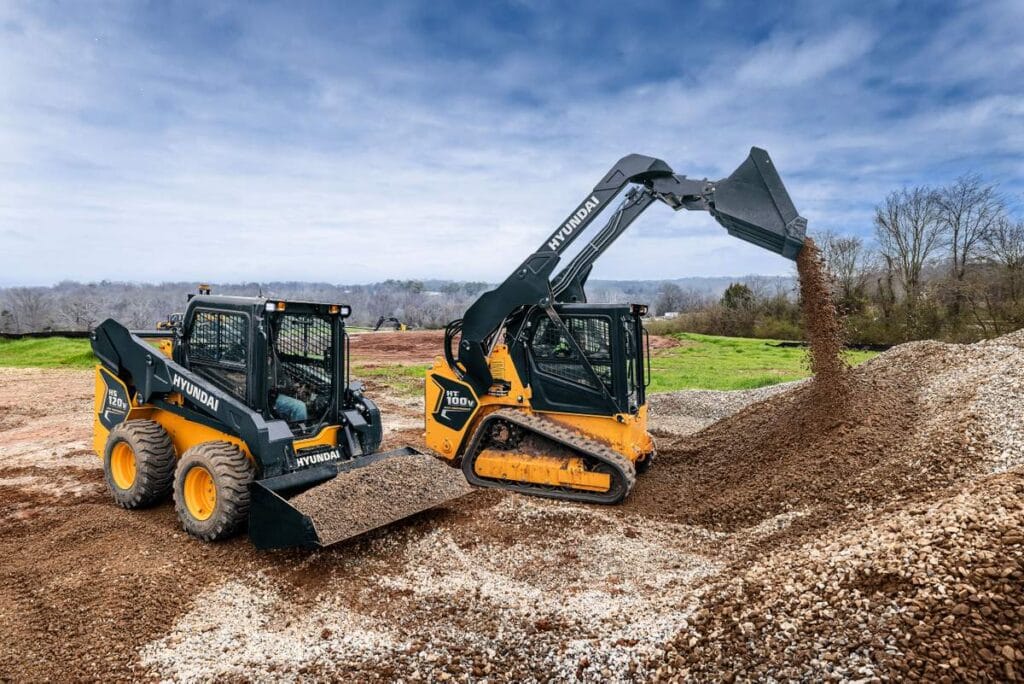
A skid steer loader and a posi-track loader are both compact, highly manoeuvrable machines built around the same skid-steering principle, turning by varying wheel or track speed on each side rather than steering the wheels. The real difference sits at ground level. A wheeled skid steer concentrates its weight over four tyres, which works well on firm, load-bearing surfaces. A posi-track loader spreads that same weight across two long rubber tracks, which changes how it copes with soft, wet or disturbed ground. Both machines are usually listed as separate categories in equipment hire, because the choice between them typically comes down to the job site itself rather than cost alone.
What Is a Skid Steer Loader?
A skid steer loader is a small, rigid-frame machine that steers by varying the speed of the wheels on each side rather than turning them, which gives it a tight turning radius in confined spaces. It runs on wheels rather than tracks, and models range from sub-compact units under 25 horsepower to full-size machines over 90 horsepower. Attachments connect through a quick-hitch system at the front, which is what makes the skid steer loader one of the most versatile machines on a construction site. See what is a skid steer loader for the full specifications.
What Is a Posi-Track Loader?
A posi-track loader is a type of compact track loader that runs on a pair of rubber tracks instead of wheels. The name comes from ASV’s patented posi-track undercarriage, a fully suspended, torsion-axle track system also supplied to Terex, though other brands build compact tracked loaders on different undercarriage designs. What all of them share is a longer footprint that spreads the machine’s weight over a wider area than a wheeled machine. The what is a posi-track loader guide breaks down the different undercarriage types available to hire.
Skid Steer Best Uses
Hard Surfaces and Firm Ground
On concrete slabs, compacted hardstand or sealed roadway, a wheeled skid steer moves faster and puts less wear on its tyres than a tracked machine covering the same ground. Loading trucks, spreading aggregate or clearing a warehouse floor are typical jobs where the firm surface plays to the machine’s strengths. Rubber tracks aren’t built for sustained travel on abrasive surfaces like asphalt, so it’s usually the better fit once the site is mostly hard standing.
Tight Construction Sites
A skid steer’s compact frame and tight turning circle let it operate in tight spaces such as renovation sites, laneway builds and yards where a larger loader can’t manoeuvre. See how to operate a skid steer loader for the technique in detail.
Jobs Requiring Frequent Attachment Changes
On a job that switches tasks through the day, a wheeled skid steer can offer the range of attachments needed to keep up, including buckets, forks, augers, brooms, trenchers and grapples through the same quick-hitch system. On demolition cleanup followed by material handling, for example, the operator can swap tools in minutes rather than changing machines. That flexibility is one reason skid steers remain a common first choice for general construction and landscaping work.
Posi-Track Loader Best Uses
Soft and Uneven Ground
On wet ground, sandy fill or freshly disturbed soil, a posi-track loader spreads its weight over a wider area than a wheeled skid steer, which generally reduces the risk that the machine will sink or get bogged. The longer track footprint also maintains more contact with uneven terrain than four tyres, helping the machine retain traction over ruts and disturbed ground.
Landscaping and Low-Ground-Pressure Work
Turf, garden beds and recently graded topsoil are easily damaged by concentrated point loads, which is why landscapers often reach for a posi-track loader over a wheeled skid steer on finished or near-finished ground. The rubber tracks give more even weight distribution than tyres, lowering the ground pressure the machine exerts and reducing rutting on soft lawns. The posi-track loader listings cover the size range available for landscape work.
Earthmoving on Difficult Terrain
Steep grades, loose fill and repeated wet weather create ground that’s harder to navigate than for a wheeled skid steer, but a posi-track loader keeps working through it. Grading, spreading fill and loading dump trucks are all part of the same range of earthmoving tasks that benefit from the tracked machine’s consistent grip, even as conditions change through the day. Contractors often choose it specifically for that reliability on ground that would otherwise slow the job down.
Skid Steer vs Posi-Track Loader Comparison
Wheels vs Tracks
A skid steer runs on four tyres, while a posi-track loader runs on two continuous rubber tracks. The differences in traction, ground pressure, speed and undercarriage wear covered below all follow from that one design choice.
Traction and Ground Conditions
Wheeled skid steers grip well on hard, dry surfaces but lose traction quickly once the ground turns muddy or loose. One downside to a wheeled skid steer is that its grip depends entirely on tyre contact, so a posi-track loader can keep moving faster in such conditions, since its tracks hold more surface area against the ground, giving it better traction and stability across a wider range of ground conditions. Tracked loaders can also offer a smoother, more planted ride over uneven ground, though undercarriage design and ground clearance vary between manufacturers.
Surface Impact and Ground Pressure
Spreading weight across a longer track generally lowers the ground pressure a posi-track loader exerts, though the exact figure depends on the model, its counterweights and the load being carried. That lower ground pressure is why a posi-track loader tends to cause less rutting on lawns, landscaped areas and freshly laid topsoil than a similarly sized wheeled skid steer.
Travel Speed and Manoeuvrability
A wheeled skid steer typically travels faster over hard ground. Both machines manoeuvre similarly well thanks to the shared skid-steering principle, but the skid steer’s advantage relies on tyre grip to pivot cleanly, something tracks maintain more consistently on loose or slippery ground.
Attachments and Versatility
Both machine types use front quick-coupler systems and share many of the same attachment categories, including buckets, forks and augers. Actual compatibility depends on the coupler, hydraulic flow and capacity of the specific machine. See types of skid steer attachments for the range available. What matters more is which machine can put those attachments to work in the ground conditions on site.
Maintenance and Undercarriage Wear
Tyres are cheaper to replace than tracks and simpler to maintain in the field, which keeps a wheeled skid steer’s wear and tear costs down over time. Rubber tracks will wear out faster under sustained use on hard, abrasive ground, a maintenance cost it doesn’t carry in the same way. Matching the machine to the ground it will work on limits that wear rather than fighting it.
Popular Brands and Model Availability
Bobcat, Caterpillar, Kubota and JCB all build wheeled skid steer loaders, and most of the same manufacturers also build compact track loaders under their own undercarriage designs, separate from the posi-track name. Quotor’s fleet includes both skid steer loaders and posi-track loaders, so availability through plant hire usually comes down to what’s in the yard at the time.
Hire Cost Comparison
The cost to hire either machine depends more on size, attachments and hire duration than on wheels versus tracks alone. Whether the job is wet hire, with an operator included, or dry hire, self-operated, also moves the daily rate. Where cost differs, it usually reflects the posi-track loader’s more complex undercarriage rather than a blanket rule that one always costs less. Quotor’s guide on estimating equipment cost walks through the variables that move the price.
Choosing the Right Loader to Hire
When to Hire a Skid Steer
A skid steer is ideal for jobs that stay mostly on firm, dry or paved ground and call for fast attachment changes. On these surfaces, tyres also avoid the unnecessary track wear that comes with running a tracked loader on abrasive hardstand. Quotor’s skid steer loader listings show what’s available for hire across sizes.
When to Hire a Posi-Track Loader
A posi-track loader earns its keep where soft, wet or unstable ground would slow a wheeled machine or cause excessive rutting, making terrain performance more important than the machine’s quoted daily rate. Quotor’s loaders range also lists other types of loaders, such as mini loaders and wheel loaders, for jobs that fall between these two options.
Site Conditions and Project Requirements
Walking the site before the machine arrives is the clearest way to decide between skid steers and posi tracks. Firm, consolidated ground across most of the job favours a skid steer; soft, saturated or frequently changing ground favours a posi-track loader. Quotor’s guide on equipment procurement has a broader list of factors to consider before locking in a hire.
Hire Cost and Project Duration
For a short job, the machine that suits the ground conditions on day one is usually the more economical choice, since remobilising partway through adds cost either way. For longer or staged projects where ground conditions are expected to change, such as construction work that moves from excavation to landscaping, comparing both options before committing can avoid paying for capability the job doesn’t need at each stage. Quotor’s guide on how to hire construction equipment covers the practical steps for either machine.