
Understanding Excavators
What Is an Excavator?
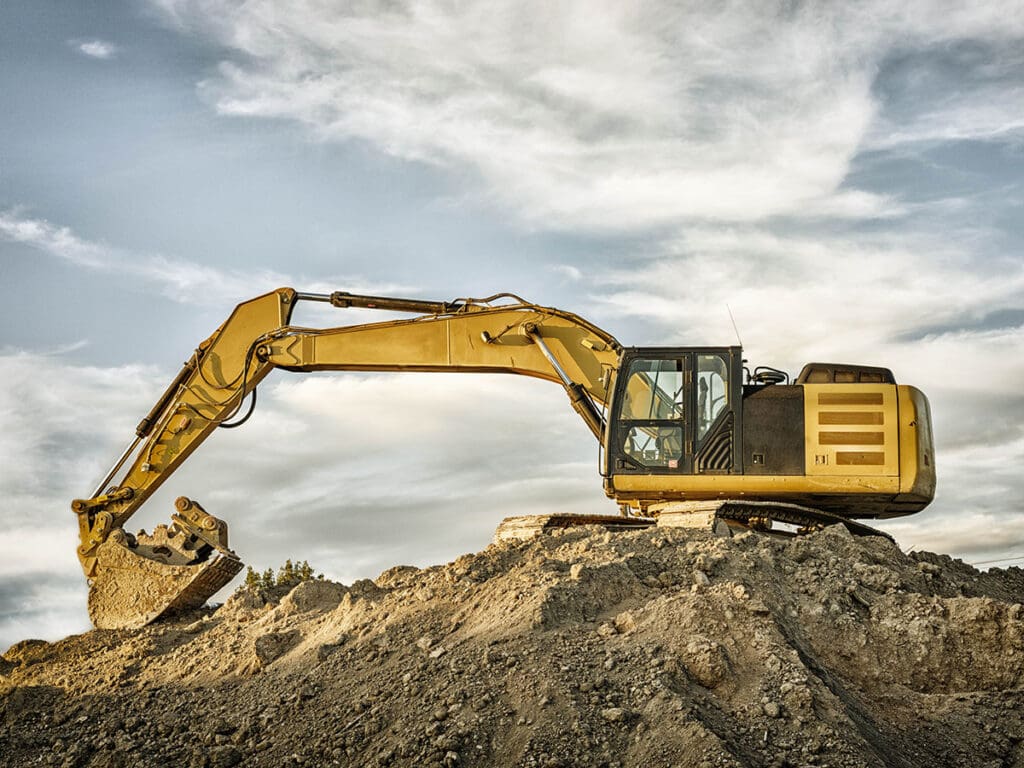
An excavator is a hydraulic machine built around a boom, an arm (or dipper) and a bucket, mounted on a rotating house that sits on tracks or wheels. That rotating house lets an excavator dig, lift and swing material without repositioning the machine, unlike a backhoe loader, whose rear digging assembly has a much more limited swing range. There are several different types of excavators and sizes, from micro machines under around 1.7 tonnes to extra-large mining units, and Quotor organises its listings around this range to help contractors compare options.
How Excavators Work
The operator sits in the cab and controls the excavator through a hydraulic system that powers the boom, arm and bucket independently, for precise digging, lifting and grading. A slew ring beneath the cab lets the upper structure rotate a full 360 degrees, so the operator can dig, swing and dump without moving the tracks or wheels. Hydraulic performance, not engine size, is the main spec to compare between excavators. Quotor’s guide on how to operate an excavator covers the basic controls.
What Excavators Are Used For
Excavators are used for digging, lifting, loading and grading material, which makes them central to construction, demolition, trenching, mining and landscaping work. Which tasks a given excavator handles well depends heavily on the type of excavator and its size, since a machine suited to backyard trenching is a poor match for quarry work and vice versa.
Types of Excavators
Crawler Excavators
Crawler excavators run on continuous steel or rubber tracks rather than wheels, spreading the machine’s weight over a wide area for better stability and traction on soft or uneven ground. This is the standard configuration for most heavy construction and earthmoving work, and excavators are among the most common heavy equipment hired in Australia, used across mini through extra-large classes. The trade-off is speed: tracked machines typically travel between sites by trailer rather than on public roads.
Wheeled Excavators
Wheeled excavators run on wheels instead of tracks, trading some stability on rough terrain for the ability to travel under their own power, including on sealed roads. They are often used for urban construction, roadworks and utility work where a contractor needs to reposition the machine frequently. Quotor’s wheel excavator category lists the machines available in this class.
Mini Excavators
Mini excavators sit below small excavators in Quotor’s classification, generally ranging from around 1.7 to 9 tonnes, and are among Australia’s most widely hired compact excavator classes. Their compact footprint suits residential construction, landscaping, drainage and utility work in confined spaces, while still offering enough depth and lift for general earthmoving. Quotor’s guide on what a mini excavator is covers this class in more depth.
Dragline Excavators
Dragline excavators use a cable-suspended bucket rather than a hydraulic arm, casting it out and dragging it back through the material being dug. This lets a dragline reach far greater depths and distances than a conventional hydraulic excavator, so draglines are mostly found on large-scale mining and dredging operations rather than construction sites.
Suction Excavators
Suction excavators use high-pressure air or water combined with a powerful vacuum to remove soil non-destructively, rather than digging with a bucket. This suits exposing buried services, utility work near existing pipes and cables, and other tasks where a bucket risks damaging what’s underground.
Parts of an Excavator
Boom, Arm and Bucket
The boom raises and lowers, the arm (or dipper) extends and retracts to control reach, and the bucket digs, curling to scoop and rotating to dump it. Bucket types vary by task, general-purpose, trenching and rock buckets are common, and swapping between them lets one excavator handle several jobs. Quotor’s guide on the parts of an excavator covers each component in more depth.
Cab and Upper Structure
The cab houses the operator’s seat and controls, and sits on the upper structure along with the counterweight that balances the machine when the boom is loaded. Enclosed cabs are standard on most excavators sold in Australia, offering weather protection and climate control, while some compact models use an open canopy. The upper structure rotates independently of the undercarriage, letting an excavator dig and dump through a full circle without repositioning.
Undercarriage and Tracks or Wheels
The undercarriage carries the machine’s weight and determines how it moves and how stable it is while digging. Tracked undercarriages spread weight over a larger footprint for better traction on soft or sloped ground, while wheeled undercarriages trade some stability for road speed and manoeuvrability. Some smaller excavators use an expandable undercarriage that widens for stability while digging and narrows for transport through gates or doorways.
Hydraulic System
Hydraulic pumps draw power from the engine and convert it into pressurised fluid that drives the boom, arm, bucket and any fitted attachment. The size and flow rate of this system largely determines digging force and lifting capacity, which is why two machines of similar weight can perform quite differently.
Excavator Attachments
Common Excavator Attachments
Beyond the standard digging bucket, excavators can run attachments like hydraulic breakers for demolition and rock breaking, augers for drilling post holes, grapples for handling logs or debris, and rippers for breaking up compacted ground. Quotor’s guide to excavator attachments runs through the full range and what each one suits.
Choosing the Right Attachment
The right attachment depends on the task and on whether the excavator’s hydraulic flow and quick-hitch system are compatible with it, since an undersized machine can’t safely power a larger-class attachment. Matching attachment weight to lift capacity also matters, since an oversized attachment can affect stability and reach.
How Attachments Expand Excavator Uses
A single excavator fitted with different attachments can dig a trench, break out old concrete and drill fence post holes on the same job, without changing machines. This is why attachment compatibility is worth checking before hiring: the right base machine paired with the right attachment can cover several stages of one project.
Excavator Applications
Construction and Earthmoving
Excavators dig foundations, move bulk material and grade sites in the early stages of most construction projects, making them one of the first machines onto a job site. Quotor’s guide to earthmoving equipment covers how excavators fit alongside dozers, loaders and other machines during this phase.
Demolition
Fitted with a hydraulic breaker or demolition shear, excavators are used to bring down structures, break up concrete slabs and clear debris. Quotor’s guide on equipment used for demolition covers where excavators fit alongside other demolition machinery.
Trenching and Utility Work
Excavators dig trenches for pipes, cables and drainage more than any other task, with mini and small excavators typically handling the job on residential and commercial sites. Suction excavators are increasingly used alongside conventional digging near existing underground services.
Mining and Quarrying
Large and extra-large excavators, and draglines on bigger operations, move overburden and extract material in mining and quarrying, where production volume matters more than manoeuvrability. Larger excavators are built for continuous heavy-duty operation, unlike the varied, stop-start work typical of a construction site.
Landscaping and Site Preparation
Mini and micro excavators are commonly used for landscaping, digging garden beds, installing retaining walls and clearing sites in tight, often residential spaces where larger machines can’t fit. Their manoeuvrability and reduced ground disturbance suit projects close to existing structures.
Choosing the Right Excavator
Excavator Size and Operating Weight
Quotor groups excavator sizes into six classes based on operating weight, from micro machines under around 1.7 tonnes through to extra-large units, the largest excavator class, built for mining. Each class suits a different scale of work, from indoor and tight-access jobs at the small end through to major infrastructure at the top.
| Class | Approx. Operating Weight | Typical Use |
|---|---|---|
| Micro | Under 1.7 tonnes | Tight-access and indoor work, light landscaping |
| Mini | 1.7-9 tonnes | Residential construction, drainage, general earthmoving |
| Small | 10-19 tonnes | Road construction, subdivisions, utility trenching |
| Medium | 20-35 tonnes | Civil infrastructure, bulk earthmoving |
| Large | 36-90 tonnes | Quarrying, mining support, deep excavation |
| Mining | 100 tonnes plus | Mining, major infrastructure |
Digging Depth, Reach and Lift Capacity
Beyond weight, digging depth, maximum reach and lift capacity determine whether an excavator can complete a task, particularly deep trenching. Long-reach excavators use an extended boom and arm to dig well beyond a standard machine’s range, suited to dredging, deep excavation and demolition work. Quotor’s guide on what a long-reach excavator is explains how this variant differs from a standard boom; the long-reach excavator category lists what’s available to hire.
Site Access and Ground Conditions
Site access often narrows the choice before size or reach even matter: narrow gates, low clearance and soft or sloped ground can all rule out otherwise suitable machines. An expandable undercarriage or a wheeled excavator can solve some access problems, while very soft ground may call for a smaller machine even where a larger one would dig faster.
Excavator Hire vs Purchase
For most contractors, hiring makes more sense than buying outright, particularly for larger or specialised classes used only for specific projects. Hiring avoids the cost of storage, maintenance and depreciation between jobs, and lets a business match the machine to each project rather than own construction equipment that sits idle.
Excavator Hire
When to Hire an Excavator
Hiring suits any project where owning the machine outright doesn’t make financial sense, whether that’s a one-off residential job needing a mini excavator for a weekend or a civil contractor needing a large excavator for months on a bigger project. It also lets a business trial a size or type before buying.
Factors to Consider When Hiring
Hire cost is usually driven by excavator size, hire duration and attachment requirements, so it pays to hire the excavator you need rather than a bigger one. It’s also worth checking the site’s operator competency requirements, since commercial projects may require recognised training, prior experience or a site-based verification of competency; Quotor’s guide on becoming an excavator operator covers what that typically involves.
Excavator Hire Costs
Hire rates generally rise with excavator size and with any attachments bundled in, and wet hire (machine plus operator) costs more than dry hire (machine only) but removes the need to source an operator separately. Getting quotes from more than one supplier is the most reliable way to gauge a fair rate, and Quotor’s excavator category makes the comparison straightforward.