
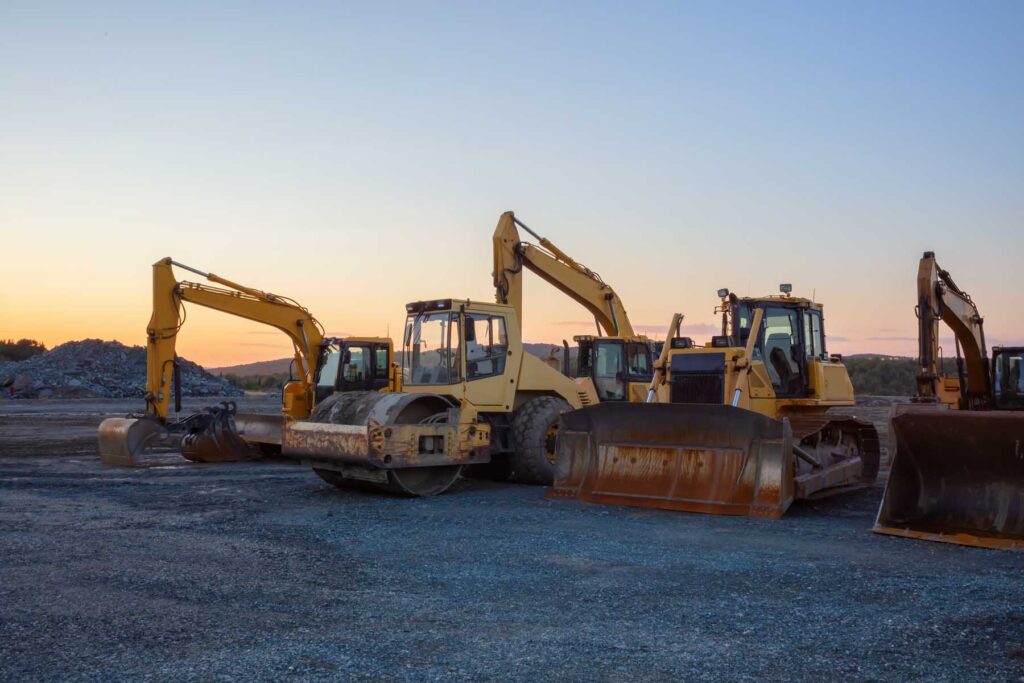
Understanding Earthmoving Equipment
What Is Earthmoving Equipment?
Earthmoving equipment is the machinery designed to dig, push, load, grade and haul large volumes of soil and earth on a construction site. The category spans excavators, dozers, wheel loaders, graders, scrapers and dump trucks, plus the excavator attachments and buckets that extend what each machine can do. These machines form the backbone of the construction industry’s heavy work, distinct from the finishing trades that follow once the ground is ready. Quotor lists them under its equipment range because most projects need several types working in sequence rather than one machine doing everything.
How Earthmoving Equipment Is Used
On a typical project, excavators dig footings and trenches, dozers clear and push material, loaders shift it into trucks, and graders and scrapers finish the surface to the right level. Equipment operators move between these roles, and site conditions such as hard materials or a sudden change in terrain can send a crew back to an earlier stage instead of straight through.
Choosing Equipment for Different Ground Conditions
Soft, wet or uneven ground on a construction site changes which machine can get to work. Tracked excavators and dozers spread their weight and manage soft terrain better than wheeled machines, while a skid steer or compact track loader is often more suitable for urban sites that larger equipment cannot reach. Matching machine to ground, not just task, often decides whether a job finishes on schedule.
Types of Earthmoving Equipment
Excavators
Excavators use a boom, dipper arm and bucket or scoop to dig, lift and place material with more precision than most machinery on site. Hydraulic power drives the boom and bucket, and Quotor’s excavator range spans compact excavators through to the largest construction equipment used in civil and mining. A typical mini excavator can dig to around three or four metres, while a large excavator can reach well beyond that, so matching dig depth to the job avoids hiring more machine than the work needs. Swapping the bucket for an auger, drill, ripper or breaker turns the same base machine into a drilling, ripping or heavy-duty demolition tool.
Dozers
Dozers, often called bulldozers, use a wide front blade, sometimes paired with a rear ripper, to push, level and clear material. Their tracked undercarriage gives traction in mud and loose ground where wheeled machines lose grip. Quotor’s dozer category ranges from small machines suited to residential clearing up to large dozers built for heavy-duty earthmoving and mining, and a powerful engine lets one push material that would take a loader several passes.
Wheel Loaders
Wheel loaders lift, carry and load material using a front bucket. Their wheeled design means loaders are highly manoeuvrable and faster over hard ground than a tracked machine. Quotor’s loader category covers wheel loaders alongside skid steers and compact track loaders, since all three fill a similar loading role at different sizes. A wheel loader’s bucket is usually its default attachment, though forks and brooms are commonly used swaps.
Backhoe Loaders
A backhoe loader combines a front loading bucket with a rear excavator arm on one chassis, a practical choice where a site needs both digging and loading but doesn’t justify two separate machines. Quotor’s guide to the backhoe loader covers how it compares with a standalone excavator or wheel loader on capacity and reach. It’s a familiar sight on utility and council works, where a crew might dig a service trench in the morning and use the same machine to load spoil by the afternoon. It suits smaller trenching, foundation digging and materials handling rather than large-scale civil work.
Dump Trucks and Dumpers
Dump trucks and dumpers haul excavated material, demolition waste or aggregate off site, ranging from small walk-behind dumpers on tight sites to articulated dump trucks that move large amounts of soil across rough haul roads. On haul work, productivity depends on payload capacity, haul distance, loading time and cycle time, so truck size needs to be matched to both the loading machine and the route. Quotor’s dumper category separates these by carrying capacity and undercarriage, since wheeled and tracked dumpers suit different ground.
Graders
Graders use a long, adjustable blade beneath the chassis to fine-tune a surface to a precise level, a job too delicate for a bulldozer’s blade. Quotor’s grader category is mostly used in road construction and mining, where a flat, compacted surface matters more than the volume of material moved.
Scrapers
Scrapers cut, carry and spread material in a single pass, suited to large-scale earthmoving where dozers and loaders would otherwise need several separate trips. Elevating scrapers load themselves using an elevator mechanism, while open-bowl scrapers may need push assistance in harder ground. Pull-type scrapers use the same cutting-and-loading principle but are towed by a tractor or dozer rather than being self-propelled. Quotor’s scraper category is smaller than the other earthmoving categories, since scrapers suit large infrastructure projects more than typical construction and mining projects.
Skid Steers and Compact Track Loaders
A skid steer turns by driving the wheels on each side independently, causing the tyres to skid across the ground as the machine pivots, while a compact track loader uses the same principle through rubber tracks. Quotor’s guides to the skid steer loader and posi-track loader cover the tradeoffs. Both accept multiple attachments, from buckets and augers to trenchers and brooms, which is why they’re widely used in urban construction.
Earthmoving Equipment Applications
Excavation and Trenching
Digging trenches for pipes, cables and drainage is common excavation work, and excavators usually do the bulk of it when a site needs to excavate below the surface. Quotor’s guide to what an excavator is breaks down bucket widths and dig depths for typical trenching jobs. Trench depth and stability determine whether shoring or a trench box is needed before crews enter, and a deeper dig usually means a wider trench to keep the sides stable. Backhoe loaders and mini excavators handle smaller trenches where a full-size excavator would be oversized.
Site Clearing and Preparation
Clearing vegetation, debris and structures marked for demolition is usually a bulldozer’s job, though a skid steer with a brush cutter or grapple can handle smaller clearing work. Quotor’s guide to what a dozer is explains how blade type affects clearing speed and finish. Where a structure needs to come down before excavation starts, crews typically demolish it and clear the debris in the same pass. Once the site is cleared, grading equipment takes over to prepare a level base.
Loading and Material Handling
Wheel loaders are used for tasks like loading trucks, stockpiling material and moving aggregate around a site, and Quotor’s guide to what a wheel loader is covers bucket sizes and lift capacities. Skid steers and track loaders do the same job at a smaller scale, particularly where space is too tight for a full-size loader.
Grading and Levelling
Grading brings a surface to a consistent slope and level, whether for a building pad, road base or landscape feature. Graders handle the final fine grading pass, while dozers and scrapers do the coarse levelling beforehand. Machine control technology, using GPS or laser guidance, has made this stage faster and more precise than grading by eye.
Hauling and Material Transport
Moving spoil, aggregate or demolished material off site, or fill material in, is the job of dump trucks and dumpers. On larger infrastructure and road jobs, articulated dump trucks haul between the excavation and a stockpile or disposal site, while smaller dumpers cover residential or commercial sites.
Road Construction and Civil Works
Road construction and other civil projects typically use the full range of earthmoving machinery in sequence: excavators and dozers for the initial earthwork, graders and scrapers to shape the surface, and rollers to compact each layer before the next is laid. Large projects often run several machines simultaneously rather than one machine through each stage.
Choosing the Right Earthmoving Equipment
Project Type and Material
The right machine depends on what’s being moved and how much of it. Project managers weighing a residential landscape job with modest volumes of soil usually choose a mini excavator or skid steer, while civil and construction projects moving large volumes of material need dozers, scrapers and articulated dump trucks. On tight building sites in particular, the choice often comes down to what can physically get through the gate as much as what suits the material being moved. Quotor’s backhoe loader category is a useful middle option where a project needs both digging and loading but the volumes don’t justify separate machines.
Machine Size and Capacity
Construction professionals should match bucket capacity, blade width and engine output to the scale of the job, not just the space available on site. Undersizing means more passes and a longer hire; oversizing wastes hire budget and can be harder to manoeuvre on a tight site. Quotor’s wheel loader category lists bucket capacity alongside tip height and reach, usually the fastest way to compare models across brands.
Site Access and Ground Conditions
Where a machine can physically reach a site often narrows the choice before capacity does. Soft, wet or sloped ground favours tracked machines, and Quotor’s posi-track loader category shows why a compact track loader often replaces a skid steer where traction matters more than manoeuvring. Narrow access, low clearance or a shared site with other trades can rule out larger equipment regardless of task fit.
Attachment Requirements
Some jobs need one machine for the whole project; others need a base machine plus a rotating set of hydraulic excavator attachments to handle digging, breaking, lifting and clearing without separate hires. Quotor’s skid steer loader category lists which attachments suit which model, since not every attachment fits every carrier. Confirming compatibility before booking avoids a mismatch on site.
Earthmoving Equipment Hire
When to Hire Earthmoving Equipment
Hiring makes sense for most earthmoving work, since needs change from job to job and few businesses use the same machine and size often enough to justify owning, maintaining and transporting it year round. Short residential jobs, one-off civil contracts and projects where the required machine size varies by stage are the clearest cases for hire over purchase.
Factors to Consider When Hiring
Machine size, attachment needs, site access and how long the equipment is needed all affect which hire option makes sense. Wet hire, machine and operator together, suits shorter or specialised jobs, while dry hire suits sites with an experienced operator already available. Whichever option is chosen, the operator is generally expected to demonstrate competency for the machine and task, which may be supported by relevant training, experience or a site-based verification of competency.
Earthmoving Equipment Hire Costs
Construction equipment hire cost is driven mainly by machine size, hire duration, attachment inclusions and how far the supplier has to transport it. Longer hire periods usually bring the daily rate down, while short notice or remote sites push it up. Comparing quotes from more than one supplier, which is what Quotor does on a project owner’s behalf, is usually the fastest way to check whether a rate is competitive.