
Introduction to Bulldozers
Definition of a Dozer
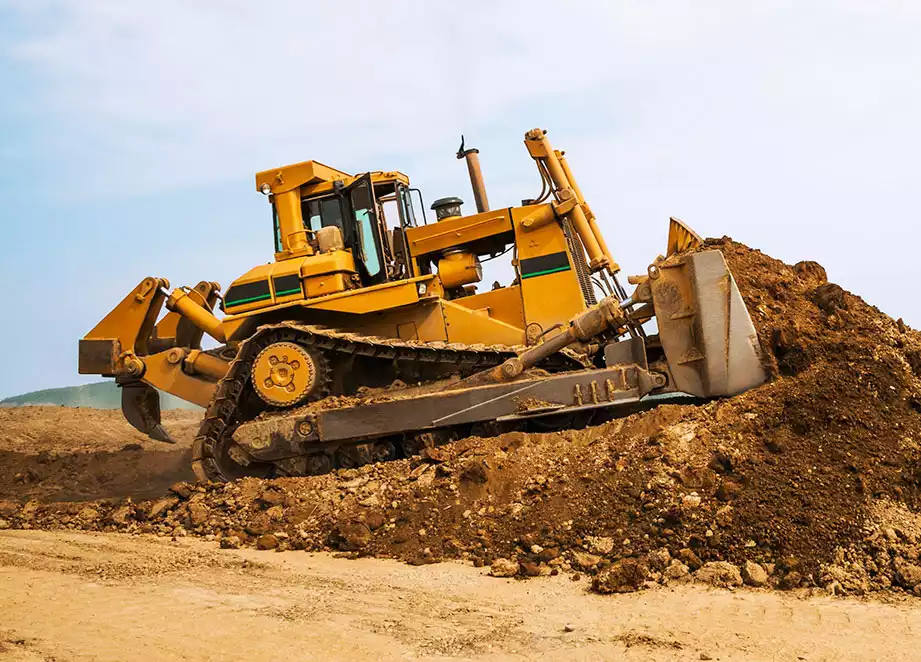
A bulldozer, or dozer, is a heavy tracked or wheeled machine built around one job: pushing material with a large front-mounted blade rather than digging or lifting it. Unlike a bucket on an excavator, the blade doesn’t come off; it’s fixed to the machine, hydraulically raised, lowered and angled from the cab. That’s the line separating a bulldozer from every other earthmoving category on Quotor’s bulldozer equipment page. Bulldozers run on either steel tracks or rubber tyres, and both versions sit inside the same equipment category, split by undercarriage rather than by what the machine does.
History of Bulldozers
The bulldozer’s origins sit in early tracked farm tractors. Benjamin Holt developed a working crawler tractor in 1904 for ploughing soft delta land in California, and by the 1920s several manufacturers were bolting blades onto the front of these tractors. Kansas farmer James Cummings and draftsman J. Earl McLeod are usually credited with the first dedicated version, patenting a tractor-mounted blade in 1923. These machines were known as “bull-graders” until hydraulic controls replaced gravity-drop blades in the mid-1930s, when the modern bulldozer took hold. R. G. LeTourneau’s engineering pushed the design from a flat steel plate into the curved, reinforced shape still used today.
Importance in Construction Projects
On most construction sites, the bulldozer is the first machine working and often the last to leave. It clears the ground other trades need before they start, then returns at the end to shape final grades and level the site. A single bulldozer can move large amounts of dirt in an hour that would take a crew days by hand, which is why bulk earthworks are scheduled around bulldozer hours rather than labour hours.
Types of Bulldozers
Overview of Bulldozer Types
Bulldozers split two ways: by undercarriage and by size. Crawler (tracked) machines use steel tracks for grip and low ground pressure, while wheeled bulldozers run on rubber tyres for speed and less surface disturbance. Quotor’s own taxonomy sorts bulldozers into four weight classes:
| Class | Weight range | Typical role |
|---|---|---|
| Small bulldozers | Under 20 tonnes | Residential and tight-access sites |
| Medium bulldozers | 20–39 tonnes | General commercial earthworks |
| Large bulldozers | 40–69 tonnes | Bulk civil and road construction |
| Extra-large bulldozers | 70 tonnes and up | Mining and major infrastructure |
Choosing the right bulldozer starts with this weight class, well before choosing a blade.
Comparison of Dozer Types
The clearest comparison is between crawler and wheel bulldozers. Tracks give crawler bulldozers better traction on soft, uneven ground than wheels manage. Wheeled bulldozers trade that traction for speed and manoeuvrability, and don’t tear up a level surface the way tracks can, which matters on paved yards or landfill sites shifting stockpiles. Quotor’s guide to track versus wheel bulldozers breaks down which undercarriage suits which ground condition.
Specific Applications of Different Bulldozer Types
A mini dozer sees plenty of use in tight spaces on residential blocks, where access is too tight for a bigger machine. Medium bulldozers cover most general commercial earthworks. Large and extra-large bulldozers handle bulk overburden removal on mining and major infrastructure jobs, moving more material per pass. Swamp dozers, fitted with extra-wide tracks, are the choice for wetland remediation and land clearing on ground too soft for a standard crawler bulldozer.
Common Uses of Bulldozers
Bulldozer for Your Project: Applications
Bulldozers grade, level and rip ground before other trades move in. Most work falls into a handful of tasks: clearing vegetation and debris on a construction site, bulk cut-to-fill earthmoving, rough grading, ripping compacted ground with a rear attachment, and spreading stockpiled materials like topsoil. What changes from project to project is scale, not the task list.
Bulldozers in Various Construction Jobs
Bulldozers are used across civil, residential construction, mining and forestry work. Road-building projects use them to strip topsoil and build embankments from cut material. Residential developers use them for broadacre clearing and pad preparation, clearing land for a new subdivision before other machinery arrives. Mining operations run large bulldozers around the clock for overburden removal. Demolition jobs bring bulldozers in afterward, for clearing rubble and reshaping the site.
Case Studies of Bulldozer Use in Construction
Scale is easier to picture against a real project. Transport for NSW’s earthworks packages for the M12 Motorway in Western Sydney moved over 2.5 million cubic metres of material to shape the road corridor, with cut material reused on site to build embankments. Work at that volume is exactly the job large bulldozers are built for, which is why bulk earthworks on comparable jobs are scheduled around bulldozer availability.
Dozer Attachments
Common Dozer Attachments
The blade sits at the front of the bulldozer; rippers, winches and rakes mount to the rear. A ripper, one heavy-duty shank or several lighter shanks together, is the most commonly used attachment, breaking up compacted soil, rock or old pavement ahead of grading. Rear winches handle towing and pulling fallen trees clear. A rotating mulcher head clears scrub and small trees without burning or separate removal. Quotor’s breakdown of bulldozer parts covers where each sits on the machine.
Benefits of Using Dozer Attachments
Fitting a ripper or rake to an existing bulldozer often removes the need to bring a second machine onto site. A single-shank ripper can break up rock that would otherwise need an excavator with a hydraulic hammer, and a rear winch can clear fallen timber without a separate loader. Rippers, rakes and winches turn one bulldozer into multipurpose machinery, which matters most on a small site where mobilisation cost is a bigger factor than hire rate.
Choosing the Right Attachment for Your Project
Ground condition decides the ripper. For deep penetration into rock, a single-shank ripper works best, putting more force behind one point. Multi-shank rippers work faster across looser, variable ground. Winches make sense on forestry jobs with standing timber to remove. On a straightforward grading job with no rock or timber involved, the blade alone is usually enough.
Bulldozer Blades
Types of Bulldozer Blades
| Type | Shape | Best suited to |
|---|---|---|
| S-blade (straight) | Flat, no side wings | Precision grading on firm ground |
| U-blade (universal) | Tall, curved, high side wings | Pushing large volumes over distance |
| SU-blade (semi-universal) | Shorter wings than a U-blade | General-purpose earthmoving |
| A-blade (angle) | Centre-mounted, angles left or right | Side-casting and drainage work |
The straight or S-blade is the simplest option, suited to precision work on firm ground rather than long carries. The universal or U-blade adds height and curved side wings to hold more material, common on wheel bulldozers at mining sites. Quotor’s guide to bulldozer blade types covers the semi-universal and angle options in more depth.
Choosing the Right Blade for Your Dozer
Selecting the right option comes down to three questions: how far material needs to travel, what type of terrain it’s crossing, and how much precision the finish needs to reach level. Long pushes over soft ground favour a U-blade or SU-blade. Fine grading on firmer ground favours the flatter, more precise S-blade. Jobs that need material cast to one side, like cutting a ditch, call for an angle option instead.
Common Uses of Different Blades
Site preparation calls for the flatter S-blade. Mining and stockpile work call for the U-blade. Road construction calls for the A-blade, casting material to one side as the machine moves. General contractors default to the SU-blade for jobs that mix bulk pushing with fine, level grading.
Renting a Bulldozer
Advantages of Renting a Bulldozer
Buying a bulldozer outright ties up capital in a machine that might sit idle between projects, and larger machines depreciate fast. Renting gives access to the right machine for a specific job without the ongoing cost of maintenance or resale, and makes it possible to use a bigger bulldozer for a short phase without owning one.
Factors to Consider When Renting
The main variables are weight class, blade type and how long the machine is needed for. Quotor’s guide to sizing a bulldozer walks through matching machine size to job scope. Weight also determines transport: small and medium bulldozers move on a standard float, while large machines need a low-loader. Hire splits into wet hire, where the machine comes with an operator, and dry hire, where the hirer supplies their own. Most commercial sites expect the operator to hold a recognised plant competency for bulldozer operation, so dry hire only makes sense if that’s covered in-house. Quotor’s guide to becoming a bulldozer operator outlines what that involves.
Where to Rent Bulldozers
Sourcing the right equipment usually means comparing several suppliers on availability, condition and price. Quotor does that legwork directly: it researches the market, contacts suppliers and compares machinery based on a project’s requirements, location and timeline, then shortlists what’s actually available. For a one-off job, that comparison is worth more than chasing quotes individually.