
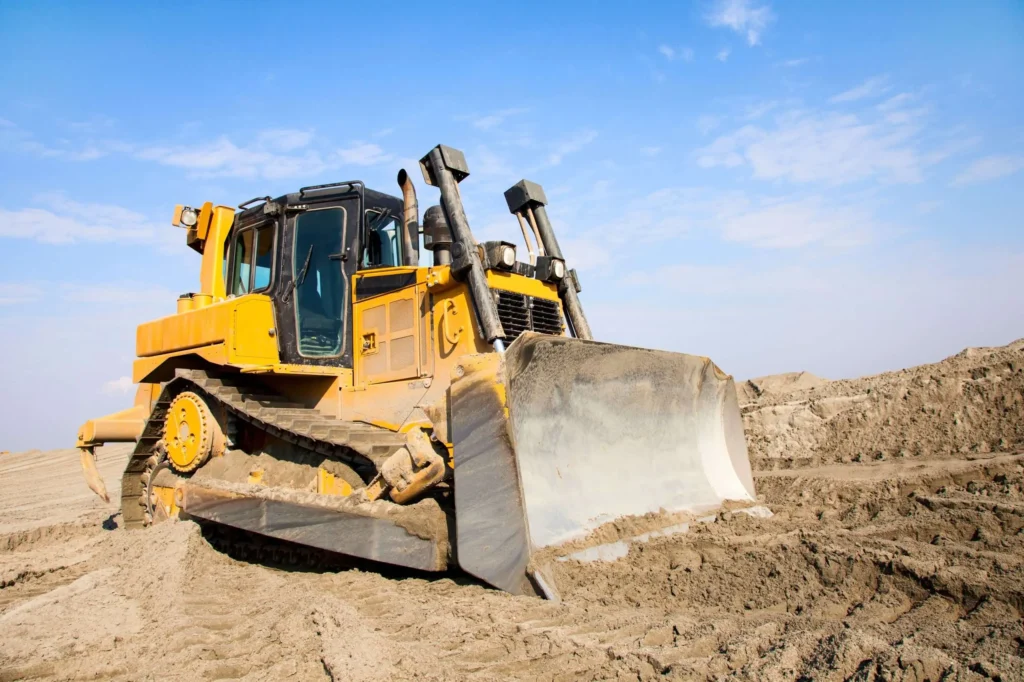
Understanding Bulldozer Parts
What Is a Bulldozer?
A bulldozer is a heavy-duty tracked or wheeled machine built to push, grade and clear soil, rock and debris using a blade at the front. Every modern bulldozer runs on the same core components: an engine and drivetrain that generate and deliver power, an undercarriage that carries the machine across the terrain, a cab where the operator sits, and a blade that does the physical work. For the full picture of how bulldozers are classified and used, see Quotor’s guide to what a dozer is. Bulldozers sit alongside excavators and other earthmoving equipment on most construction projects, all built for moving large volumes of soil or material.
Why Understanding Bulldozer Parts Matters
Knowing what each part does helps you understand how a bulldozer operates, work safely around it, spot wear early, and judge whether a specific machine suits your project before you hire it. It also makes conversations with a supplier more useful: you can ask about the parts that matter for your job instead of relying on a spec sheet alone, and make informed hiring decisions. Quotor’s dozer listings show the various types of bulldozer available, from compact machines for tight sites to heavy-duty dozers built for large-scale earthworks.
Main Parts of a Bulldozer
Engine
The bulldozer engine supplies the power to move the machine and run its hydraulic system. Most bulldozers use diesel engines sized to match the machine’s weight class and the heavy-duty tasks it handles, and engine and hydraulic demand rise together under load. The cooling system, which includes a radiator, fan and coolant, prevents overheating during sustained work, particularly during long grading runs or when pushing heavy material in hot conditions. Regular oil changes and coolant top-ups help protect the engine’s performance and longevity.
Transmission and Final Drive
The transmission and final drive carry engine power to the tracks or wheels. Power passes from the engine through the transmission, which may be powershift or hydrostatic, then through final drives at each side that step up torque before reaching the drive sprockets on a tracked dozer, or the axles on a wheeled one. This mechanical link is what allows a bulldozer to move under load, turning engine output into the necessary power and force needed to push a loaded blade.
Undercarriage and Track Components
The bulldozer undercarriage carries the machine’s full weight and comes in two types, tracked and wheeled. On a tracked dozer, it includes rollers, idlers and drive sprockets that keep the tracks moving: rollers support the machine’s weight, idlers guide the track around the frame, and sprockets, driven by the final drive, pull it forward or back. Tracks spread the bulldozer’s weight over a large area, giving it traction and flotation across various terrains a wheeled undercarriage can’t always match. Wheeled dozers trade some of that traction for greater travel speed on firmer ground, a trade-off covered in this comparison of track vs wheel dozers.
Cab and Operator Controls
The cab is where the operator sits and controls the bulldozer, using joysticks or levers to steer, raise and lower the blade, and, where fitted, operate the ripper. Many modern cabs create a comfortable environment for the operator, with ergonomic seating, clear sightlines to the blade and climate control for operator comfort during long shifts in hot or dusty conditions. Because the cab is effectively the machine’s command centre, its condition and layout affect both safety and how precisely the operator can work. This guide on how to become a dozer operator covers what the role involves.
Hydraulic System
The hydraulic system is the network of pumps, hydraulic hoses and cylinders that turns engine power into the pushing, lifting and tilting movements the blade and ripper can’t achieve mechanically. A pump connected to the engine pressurises fluid and sends it through the hoses, using that fluid to power the cylinders and building the pressure needed to move the blade and ripper together. Keeping hydraulic fluid levels topped up supports smooth operation and optimal performance, and precise control while grading depends on how well the system is maintained.
Bulldozer Blade
The blade is the flat, curved attachment placed at the front of the bulldozer, used for pushing materials, grading and levelling, and clearing terrain. Blades come in several configurations: S-blades (straight blades), often used for general pushing and fine grading, U-blades for carrying larger loads, and semi-U blades as a middle ground between the S-blade and the U-blade. Quotor’s guide to dozer blade types covers the differences, and choosing the right configuration lets you tailor the machine to a specific job.
Ripper
Where fitted, the ripper is a hooked shank, or set of shanks, mounted at the rear of the bulldozer and used for breaking up tough, compacted soil, rock or old pavement before the blade can move it. Not every bulldozer carries one; it earns its place on jobs where significant force is needed on previously compacted ground, and it’s controlled by the same hydraulic system that operates the blade.
How Bulldozer Parts Work Together
From Engine Power to Machine Movement
Power starts at the engine and passes through the transmission and final drives. On tracked dozers, it reaches the drive sprockets that move the tracks; on wheel dozers, the drivetrain sends power to the driven axles and wheels. That chain, engine to transmission to final drive to track or wheel, is what converts fuel into forward or reverse movement, and it runs continuously whenever the bulldozer is under load.
How Hydraulics Control the Blade and Ripper
While the drivetrain moves the machine forward, a separate hydraulic circuit controls the blade and ripper. The operator’s joystick inputs in the cab direct pressurised fluid to specific cylinders, controlling the movement of the blade as it raises, lowers or tilts, or, where a ripper is fitted, driving it into the ground. Drivetrain and hydraulics run side by side rather than one feeding the other.
How the Undercarriage Transfers Power to the Ground
The undercarriage is where both systems meet the ground. Sprocket-driven tracks grip and distribute the bulldozer’s weight across a wide area, giving it the traction to push a loaded blade without losing grip, while rollers and idlers keep the track running smoothly under load. This combination of drivetrain force and undercarriage traction is what lets a bulldozer move heavy material rather than just its own weight.
Other Bulldozer Attachments
How Attachments Extend Bulldozer Capability
Beyond the standard blade and ripper, some bulldozers can be fitted with extra attachments, brush rakes or specialised cutting edges among them, suited to demanding tasks like heavy land clearing. Quotor lists dozers with a range of blade and attachment configurations, so it’s worth checking what’s actually fitted to a specific machine rather than assuming.
Inspecting Bulldozer Parts Before Hire
Undercarriage Wear
Track, roller and sprocket wear affects both safety and efficiency, and it’s one of the most expensive things to inherit on hired machinery, and one of the easiest to check. Look for uneven wear across rollers, excessive track sag, and sprocket teeth that have thinned or hooked.
Blade and Cutting Edge Condition
Check the cutting edge for even wear and cracking, and confirm the blade tilts and lifts smoothly through its full range. A worn edge reduces grading precision even when the rest of the machine is in good shape.
Hydraulic Leaks and Cylinder Condition
Inspect hydraulic hoses and cylinders for leaks, and cycle the blade, and the ripper if fitted, to confirm smooth, consistent movement. Slow or jerky cylinder response often points to low fluid or a failing pump.
Cab, Controls and General Machine Condition
Check that the controls respond smoothly, gauges and warning lights work, and the cab is free of damage that would affect operator comfort or visibility over a full shift.
Bulldozer Parts and Hire Responsibility
Dry Hire Inspection and Operator Checks
Under dry hire, the operator will commonly be responsible for routine pre-start and walk-around checks, including fluid levels, visible leaks and machine condition, although the exact responsibilities should be confirmed in the hire agreement. This guide on how to operate a dozer covers daily maintenance tips worth building into a routine.
Wet vs Dry Hire Maintenance Responsibility
Maintenance responsibility depends on the hire agreement rather than a fixed rule. Daily checks often sit with the hirer or operator, while scheduled servicing and major repairs typically remain with the supplier, so it’s worth confirming who covers what before the machine arrives. This comparison of wet hire vs dry hire breaks down how responsibility usually splits between the two.
Questions to Ask the Supplier Before Hiring
Before hiring, ask about the machine’s service history, undercarriage wear and hydraulic condition, and confirm which size and blade configuration actually suits your specific tasks, starting with this guide on what size dozer you need. Working through Quotor’s construction equipment hire process connects you with suppliers who can answer these questions for a specific machine before you commit.