
Understanding Bulldozer Controls
What Is a Bulldozer?
A bulldozer is a tracked machine built around a front-mounted blade that pushes, cuts and shifts material, usually paired with a rear ripper for breaking up hard ground. For a full breakdown of how the machine is built, see what a dozer is and how it works. This guide covers what you need to learn how to operate a bulldozer safely: the controls, pre-start checks and technique.
Main Bulldozer Controls
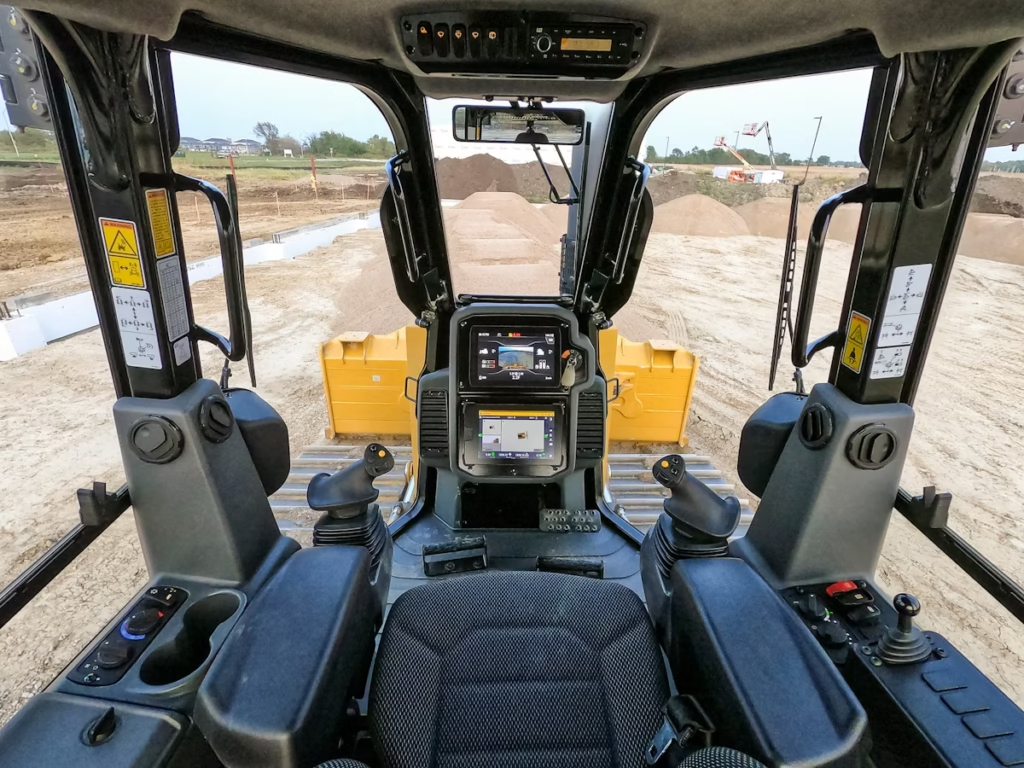
Control layouts vary by manufacturer, model and generation. Modern dozers commonly use joysticks for steering, direction, blade and ripper functions, though older or other current models split these across separate levers and pedals. Confirm each control against the operator manual and complete a site familiarisation before moving the machine. The table below covers what each control does and where it varies most.
| Control / function | What it does | Important variation |
|---|---|---|
| Travel and steering | Moves and turns the dozer | Varies by model and transmission type |
| Blade raise/lower | Sets blade working height | Common across nearly all dozers |
| Blade tilt | Raises one side of the blade relative to the other | Configured differently by machine |
| Blade angle | Directs material to the left or right | Mainly on PAT or other angle-capable blades |
| Ripper control | Raises and lowers the ripper, and may adjust shank angle | Ripper configuration varies by machine |
| Throttle / engine speed | Sets engine operating speed | Varies between manual and electronic systems |
| Parking / service brake | Holds or slows the machine | Varies by model |
Throttle and travel-range selection usually sit apart from the steering controls, whether through a knob, lever or integrated switch. Quotor’s parts of a dozer guide covers where each of these sits in the cab and what the rest of the machine looks like underneath.
Blade and Ripper Controls
The blade and ripper are controlled separately from steering; confirm which control does what before moving the machine. Quotor’s guide to types of dozer blades explains why the tilt and angle functions in the table above differ by configuration. The ripper is mounted behind the cab. How many shanks are fitted is a physical, mechanical setup decided before the machine goes to site, not something selected hydraulically from the cab.
Pre-Operation Bulldozer Checks
Walk-Around Inspection
Walk the machine’s full perimeter before climbing in, checking each side of the bulldozer for visible damage. Check both crawler tracks for wear, damage and correct tension, and look underneath for oil leaks and hydraulic fluid leaks. Inspect the blade and ripper for cracks, worn edges or loose mounting pins. Confirm the safety rails and steps are clear of mud or debris, and check that a fire extinguisher is mounted and in date.
Fluids, Tracks and Hydraulic Checks
Check engine oil, coolant, transmission oil and hydraulic fluid against their dipsticks, topping up anything low. Inspect hydraulic hoses for cracking, fraying or wet patches, since a slow leak shows up as reduced blade or ripper response before real damage occurs. Check air filters for dust build-up and clear packed material from the tracks.
Cab, Controls and Safety Systems
Adjust the seat, fasten the seatbelt and set mirrors as basic safety precautions first. With the engine off, test the controls: confirm the transmission or travel range is in the neutral position, cycle the controls through their full range, and press the brake to confirm it’s properly engaged. A dozer does not require a specific national High Risk Work Licence, but employers and job sites must still ensure an operator has had heavy equipment training relevant to the machine and task. Quotor’s guide to becoming a dozer operator covers the training, Statement of Attainment and VOC pathway involved.
How to Operate a Bulldozer
Starting and Positioning the Bulldozer
Startup sequences vary by manufacturer, so follow the machine’s prescribed procedure, not a generic checklist. Mount the machine using the safety rails and steps, fasten the seatbelt and start the engine, whether by turning the key in the ignition or pressing a start switch. Confirm warning indicators and gauges read normally before releasing the parking brake, then move the machine off gradually once the area is clear, selecting the travel range for the task.
Driving and Steering
Steering response depends on the machine’s control layout, often a joystick but sometimes twin levers or a wheel-and-pedal setup, confirmed during familiarisation. Smooth, deliberate inputs keep the machine tracking straight, while jerky movements on rough ground tend to overcorrect and waste fuel. Match engine speed to the task with the throttle, and keep the machine at a speed it can be stopped safely near a slope edge, an excavation, or other machines.
Using the Blade
Blade work runs through a dedicated control, often a joystick, separate from steering. Lower the cutting edge progressively rather than dropping it in one movement, then adjust height as the machine moves to control how much is cut or carried. New operators often lower the blade too far, stalling the tracks; working the height gradually while watching how the material responds gives better control.
Using the Ripper
Engage the ripper by lowering the shank, then move forward at a steady pace and controlled throttle so it doesn’t shock-load against buried obstructions. Raise the shank clear of the ground before repositioning or turning. Ripping on a slope should follow the site’s work method and manufacturer’s limits rather than a fixed rule, since ground condition and ripper configuration change what’s safe.
Stopping and Parking Safely
Lower the blade and ripper before parking, since a raised attachment left unsupported can drift on uneven ground. Stop with the brake, return the transmission to neutral, idle briefly to cool, then shut down following the machine’s procedure. On a slope, chock the tracks before leaving the cab.
Bulldozer Operating Techniques
Pushing and Spreading Material
Clearing loose material or pushing material in bulk both come down to maintaining a manageable blade load, enough material ahead of the blade to progress without excessive track slip. On blades with an angle function, directing material to one side spreads it rather than piling it at the pass end. Overlapping each pass by a small margin avoids ridges between passes. Load capacity also depends on the types and sizes of dozer in use, and Quotor’s guide to choosing the right size dozer is worth checking when matching a machine to the job.
Rough Grading
Rough grading relies mainly on controlled blade height, cutting high areas and spreading material into low areas across repeated passes. Where the blade allows tilt, that helps establish crossfall or correct uneven ground rather than driving the grading pass itself. Working from a known reference point, such as a stake or grade line, makes it easier to judge how much material still needs moving.
Ripping Hard Ground
Start with a shallow rip and increase shank depth on the next pass rather than breaking hard ground in one deep pass, which stresses the undercarriage and can stall the machine. Watch the ground ahead for buried rock or services rather than relying on feel. On rocky ground, a slower, steadier pace causes less wear than pushing through resistance at higher throttle.
Working on Slopes and Uneven Terrain
Slope work needs attention to the manufacturer’s operating limits, ground condition and site work method, since traction and stability shift with soil type, moisture and slope angle in ways no fixed rule covers. Avoid side-slope or steep-slope operation beyond what the machine is rated for, and position the blade and ripper as the manufacturer and site procedure require. Reduce speed before the terrain changes, so the machine is already controllable when the ground shifts underneath.
Building Bulldozer Operating Skill
Common Operating Mistakes
New bulldozer operators most often lose control by overloading the blade, ripping too deep on the first pass, or driving faster than the terrain allows. Skipping the pre-operation inspection is another common shortcut, showing up later as downtime from a hydraulic issue or track problem a walk-around would have caught, forcing mid-shift troubleshooting instead. Checking gauges only once something feels wrong, rather than through the shift, is a habit worth breaking early. Formal operator training helps catch these habits early, and Quotor’s broader guide to becoming a heavy equipment operator covers what that involves.
Improving Blade Control and Grading Accuracy
Grading accuracy comes from repeating passes checked against a reference line. Practising small, incremental blade movements rather than large corrections builds the feel needed for finish grading. Smooth throttle control matters as much as blade control, since sudden throttle changes translate into an uneven pass. Building that feel takes time, and Quotor’s equipment hire page for dozers is a starting point for sourcing one to practise on.
Developing Better Terrain Awareness
Terrain awareness builds from working varied ground rather than one site type, noting how the machine’s response changes as soil, moisture and slope shift underneath. Working a range of sites often means sourcing different machines, and Quotor’s general guide to hiring construction equipment covers what to check before booking one in.