
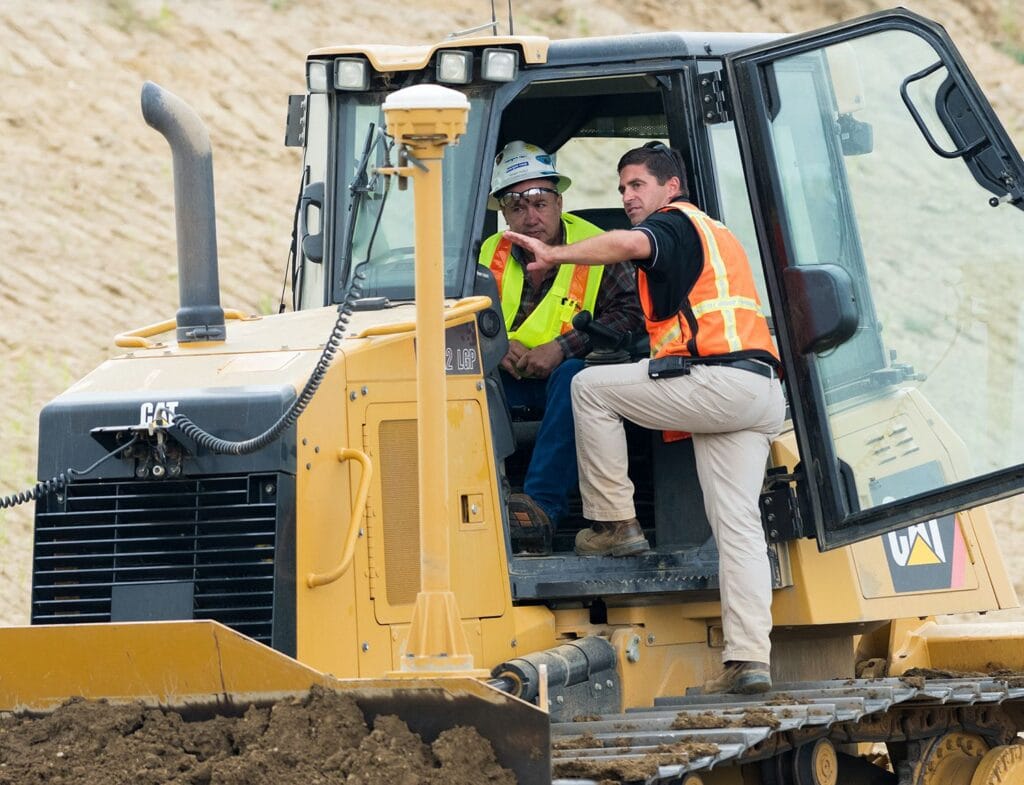
Operating a dozer, also known as a bulldozer, means planning and carrying out earthmoving work: pushing, spreading and levelling material to a survey grade using the machine’s blade and, on some jobs, a rear ripper. If you’re weighing this up as a career, the practical question isn’t really “do I need a licence,” it’s “what does this specific machine actually require, and how do I get it.” Quotor’s dozer explainer covers what separates a dozer from other earthmoving plant if you need that grounding first.
Getting Started as a Dozer Operator
What Does a Dozer Operator Do?
Day to day, the work involves reading civil plans and survey marks, checking the site for underground services and other hazards, and operating the machine safely and efficiently to cut, fill or trim to design levels. Larger dozers on mine sites push overburden; smaller machines on civil sites do finer trim work. This piece covers how to get qualified and hired, not the mechanics of running the machine. For the controls, blade technique and day-to-day operating skill, see Quotor’s guide on how to operate a dozer.
Entry Requirements
Exact requirements differ between registered training organisations (RTOs) and may include a minimum age, valid photo identification, language, literacy and numeracy requirements, and evidence of prior experience for accelerated courses aimed at experienced operators. Separately, anyone working on Australian construction sites needs a general construction induction card, commonly called a white card, which is not the same as dozer-specific evidence of competence.
Skills and Attributes Employers Look For
Employers look past the qualification to concrete indicators: the ability to read plans and survey pegs accurately, mechanical aptitude for pre-start checks and basic fault-spotting, spatial judgement for working close to other plant and workers, and clear radio communication on a busy site. A statement of attainment establishes formal competence; beyond that, employers weigh machine hours, site references and demonstrated operating skill just as heavily.
Dozer Licence and Competency Requirements
Do You Need a Licence to Operate a Dozer?
Unlike a forklift or a mobile crane, which fall under a mandatory High Risk Work Licence class, a dozer doesn’t require a specific national licence to operate. Instead, the business in control of the site, the PCBU under work health and safety law, is responsible for making sure the operator can demonstrate competence for the machine and the task.
Training and Verification of Competency
The core qualification for this machine is RIIMPO323E (Conduct Civil Construction Dozer Operations), a nationally recognised unit covering the skills and knowledge needed to plan and prepare for dozer operations, operate to a work plan, select, remove and fit attachments, relocate the machine, and carry out routine operator maintenance and housekeeping. Depending on your situation, that might mean completing the full unit through a training organisation, having existing skills checked through a VOC, or having prior experience formally recognised through RPL.
The table below lays out how these pieces of evidence differ and when each one applies.
| Requirement / Evidence | What It Is | When It Applies |
|---|---|---|
| High Risk Work Licence | Mandatory licence for specified high-risk work classes | Not normally required just to operate a dozer |
| RIIMPO323E | Nationally recognised training unit for civil construction dozer operations | Main formal pathway into the role |
| Statement of Attainment | Evidence issued by a training organisation after successful completion of the unit | Used to show formal competence |
| Verification of Competency (VOC) | Employer or site assessment confirming existing skills on particular plant | Often required when joining a new employer, site or project |
| Recognition of Prior Learning (RPL) | Assessment of skills gained through previous work experience | Useful for operators with real experience but no formal recognition |
| White Card | General construction induction | Required for construction-site work; separate from dozer competence |
State and Territory Requirements
RIIMPO323E is recognised nationally, but the licensing, legislative and site-specific requirements that sit around it can vary by state and territory. Confirm current requirements with the relevant state or territory regulator, SafeWork NSW, WorkSafe Victoria, WorkSafe Queensland, SafeWork SA and their equivalents elsewhere, rather than assuming one state’s rules apply everywhere.
How to Become a Dozer Operator
To get certified, the process follows a straightforward sequence.
Enrol with a Registered Training Organisation
Search training.gov.au to confirm the training organisation is actually approved to deliver RIIMPO323E, then enrol. You’ll typically need to provide identification and confirm you meet the entry requirements above before a start date is booked.
Complete Dozer Operator Training
This is where you learn to operate the machine itself: classroom or online theory covering plans, survey marks, hazard identification and pre-operational checks, combined with structured practical sessions on an actual dozer. Course duration varies substantially between providers and depends on prior experience, training format and assessment requirements; an experienced operator on an assessment-focused pathway can move through much faster than a genuine beginner who needs supervised machine time to build the underlying skill.
Complete the Practical Assessment
A qualified trainer or assessor observes you carrying out real dozer tasks, planning and preparing for the job, operating to a work plan, fitting attachments, and finishing with correct housekeeping, and assesses you against the unit’s performance criteria. You’ll need to demonstrate each element to be deemed competent, not just complete the hours.
Obtain Your Statement of Attainment or Competency Evidence
Upon successful completion of training and assessment, the training organisation issues a nationally recognised statement of attainment, sometimes referred to informally as a dozer ticket. If you’ve been operating dozers on the job for years without formal paperwork, ask providers about RPL before committing to a full course; it can shortcut straight to assessment if your experience holds up.
Choosing a Dozer Training Provider
Check RTO Accreditation
Confirm the provider is a registered training organisation listed against RIIMPO323E on training.gov.au, and look for experienced instructors with real site background rather than classroom-only trainers. Both private training companies and TAFE deliver this unit; accreditation status matters more than which type of institution issues it.
Practical Training and Machine Access
Ask specifically how many hands-on hours the training program spends on an actual dozer rather than in a classroom or simulator, and whether that machine access is guaranteed or dependent on group size and availability for this course. A provider that can’t answer clearly is a signal to look elsewhere.
Course Content and Assessment
Match the course to the machine you’ll actually operate. If your work will involve a specific blade type, a straight blade for trim work versus a U-blade for bulk push, check the course covers attachment selection and fitting, not a generic overview. Quotor’s guide to dozer blade types and its parts of a dozer breakdown are useful references before you sit down with a provider.
Dozer Operator Career Path
Dozer experience opens doors across the civil construction industry, mining and beyond.
Entry-Level Dozer Operator Roles
Entry-level opportunities commonly appear in civil construction, land development, quarrying and earthmoving, often on smaller or less complex jobs before an operator progresses to larger production machines. This is where the plans-reading and machine-feel skills from training get tested against real ground conditions. If you’re mapping out multiple machine types rather than dozers alone, Quotor’s guide to becoming a heavy equipment operator covers that wider pathway.
Building Experience on Construction and Civil Sites
Time on civil sites builds the track record employers in the construction industry actually check: hours logged, machine sizes operated, and references from site supervisors. This experience is also what makes a later RPL or VOC assessment straightforward if you move between job sites, employers or states.
Mining and Heavy Earthmoving Opportunities
Mining and large-scale earthmoving generally offer the highest pay for this work, particularly on FIFO rosters and larger production machines such as D8 to D11 dozers. SEEK industry estimates in 2026 commonly place mining roles around $140,000 to $165,000, with some employers advertising or estimating higher depending on roster, experience and site. Civil construction roles can sit materially lower, rising with experience, ticket currency and machine size.
Progressing to Other Heavy Equipment
Many operators multi-skill onto excavators, graders, loaders, backhoes and skid steers, since sites often want skilled operators who can move between different pieces of heavy machinery rather than single-machine specialists. Building that broader base early tends to matter more for long-term progression than staying narrowly focused on one machine class.
Once you’re qualified, the practical side of the job usually involves sourcing the right machine for the job at hand. Quotor’s dozer equipment listings and its guide to hiring construction equipment are worth bookmarking for that stage. Contact us if you need help sourcing a specific machine, whether you’re hiring on behalf of an employer or eventually running your own jobs.