
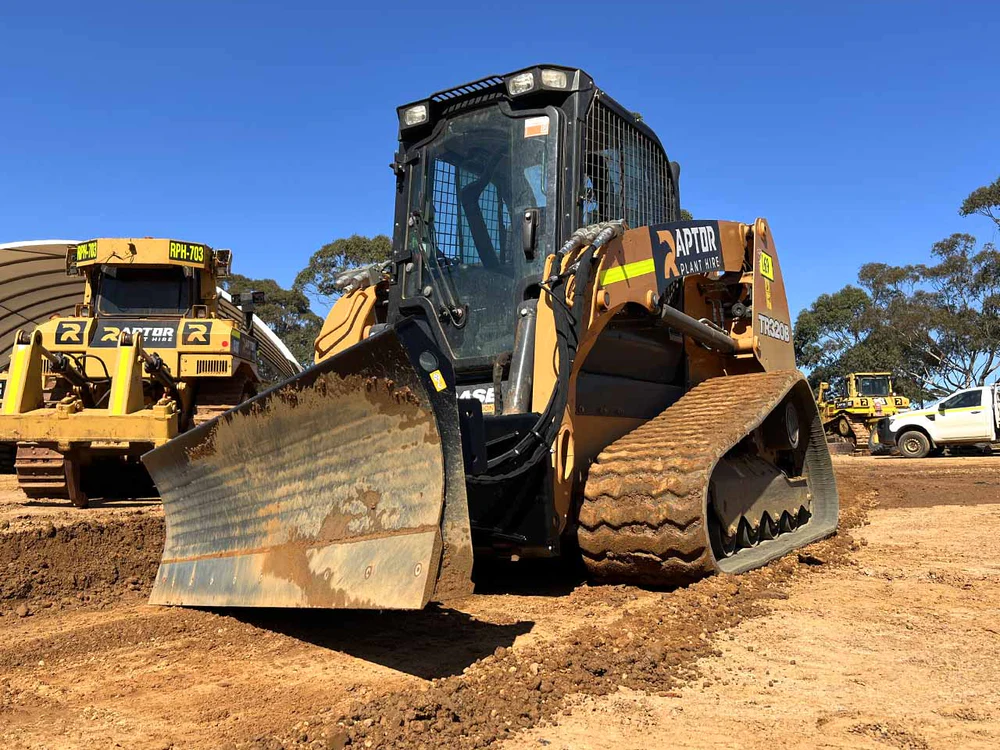
Skid steer or bulldozer is one of the first calls a contractor makes on almost any earthmoving job, because the two machines solve overlapping problems in very different ways. A skid steer loader is compact, quick to manoeuvre and built around attachments for material handling and light grading in tight spaces. A bulldozer trades that agility for raw pushing power, moving large amounts of earth and clearing ground a skid steer simply can’t push through. Picking whichever is better for your construction needs starts with understanding the key differences between skid steers and bulldozers, not just comparing their size.
Understanding Skid Steers and Bulldozers
How Skid Steers and Bulldozers Handle Site Work Differently
Both machines move earth and material, but they do it on very different scales. A skid steer works in short, precise movements around obstacles, buildings and other trades. A bulldozer works in long, continuous passes, using weight and width to shift far more material per pass than a skid steer ever could.
What Is a Skid Steer Loader?
A skid steer loader is a small, rigid-frame wheeled machine that turns by varying wheel speed on each side rather than steering the wheels. Its attachment-driven design is what lets one machine cover so many different jobs on a construction site.
What Is a Bulldozer?
A bulldozer is a tracked machine built around a front-mounted blade, designed to push, cut and shift large volumes of soil, rock and debris that a skid steer can’t move in the same time. Weight and traction, not manoeuvrability, are what make a bulldozer effective.
Skid Steer Applications
Compact Size and Manoeuvrability
A skid steer’s small footprint and zero-radius turning let it navigate tight spaces and confined spaces that a bulldozer can’t enter at all, think fenced yards, indoor demolition or landscape areas close to a building. Operators can reposition the machine constantly without repositioning the whole job site around it.
Attachment Versatility
Skid steers have a genuine variety of attachments, buckets, augers, trenchers and forks, covering a variety of tasks such as digging, lifting and sweeping across a single day. That range of attachments is the main reason they show up on residential and light commercial construction sites where the day’s tasks vary hour to hour.
Best Jobs for Skid Steers
Skid steers are ideal for smaller projects and varied work: landscaping, site cleanup, material handling, trenching and grading around structures. They’re a poor match for large-scale projects or heavy land clearing, where their size becomes a limitation rather than an advantage. Quotor lists a full range of skid steer loaders for exactly this kind of smaller, varied job.
Bulldozer Applications
Pushing Power and Traction
A bulldozer’s tracked undercarriage and low centre of gravity give it traction that a wheeled machine like a skid steer can’t match, letting it push through soft or uneven ground without losing grip. Operators need real training to use that power well; Quotor’s guide on becoming a dozer operator covers what that involves.
Land Clearing and Site Preparation
Bulldozers clear vegetation, level building pads and rip up compacted ground in fewer passes than almost any other machine on site. Knowing how to operate a dozer safely across a slope or through debris is central to getting land clearing done without damaging the blade or the site.
Best Jobs for Bulldozers
Bulldozers are designed for heavy-duty tasks: broadacre land clearing, road base preparation, bulk earthmoving and rough grading before finer machines take over. A bulldozer is essential when broadacre clearing needs to happen in the fewest possible passes. On a small residential block, a bulldozer is usually overkill; Quotor’s bulldozer listings make it easy to match blade size and horsepower to the actual scope of the job rather than hiring bigger than necessary.
Skid Steer vs Bulldozer Comparison
Skid steers excel at manoeuvring and attachment-driven versatility; a bulldozer excels at raw pushing power and bulk earthmoving.
Size and Site Access
Skid steers are generally smaller and narrower than bulldozers, typically two to three metres long and under two metres wide, small enough, in many compact models, to fit through access points that rule out larger earthmoving equipment. A full-size bulldozer can be several times that footprint, which rules it out on tight urban or residential construction sites regardless of how much pushing power it offers.
Pushing Power and Earthmoving Capacity
Bulldozers move dramatically more material per pass than skid steers because of blade width, weight and horsepower. Where a skid steer might shift a bucket load, a mid-size bulldozer can push several cubic metres of earth in a single pass, which is why bulk earthmoving jobs default to a bulldozer.
Manoeuvrability and Ground Conditions
Wheeled skid steers perform best on firm, relatively stable ground, while bulldozer tracks provide much better flotation and traction on soft or disturbed terrain. Where tight access and soft ground overlap, a compact track loader or Posi-Track loader can be the better middle option.
Attachments and Versatility
A skid steer can be fitted with a dozer blade attachment for light-duty pushing, though nothing close to a full-size bulldozer’s output. A bulldozer, by comparison, is built around its own dozer blade, with a ripper as the main add-on, which is exactly why the two rarely compete for the same task on a real site.
Land Clearing and Grading Capability
For light grading and small-scale clearing, a skid steer fitted for the job can manage it. For heavy land clearing, pushing trees and stumps, or rough-shaping a full building pad, a bulldozer’s blade and undercarriage are built for that larger scale of work.
Popular Brands and Model Availability
Both dozers and skid steers are available across a wide range of sizes and manufacturers, from compact entry-level machines to large-frame bulldozers built for civil work. Quotor’s broader loader range sits alongside its dozer listings, so contractors can compare specific models rather than guessing at capacity from a spec sheet alone.
Hire Cost Comparison
Hire cost depends on machine size, duration, transport and attachments, so it pays to estimate those costs properly before comparing quotes. A skid steer can be more economical for confined, varied work, while a bulldozer can reduce total project cost on bulk earthmoving by shifting far more material per pass.
Choosing the Right Machine to Hire
The decision between a skid steer and a bulldozer really comes down to site access, ground conditions, job scale and how the work will be sequenced.
When to Hire a Skid Steer
Choose one when the site is tight, the tasks are varied, or the job needs a tool change more than raw pushing power, landscaping, cleanup, trenching and material handling all fall into this category.
When to Hire a Bulldozer
Choose a bulldozer when the job is bulk earthmoving, broadacre clearing or grading at a scale where a skid steer would need dozens of passes to do what one bulldozer pass achieves.
Site Conditions and Project Requirements
Ground conditions matter as much as job size and specific needs. Soft, sloped or unstable ground makes a bulldozer better suited to the work, even on a moderate-size job, while firm, confined ground favours a skid steer even on a larger one. Access matters too, a machine that can’t fit through the site entrance isn’t the right machine for the job regardless of its capability.
Hire Cost and Project Duration
Matching hire duration to the actual stage of a construction project keeps costs down on both machines, a bulldozer for the initial bulk push and clearing, then a skid steer for the longer finishing and detail stages that follow. Quotor makes it straightforward to compare pricing and availability for both machines side by side. Its guide to hiring construction equipment covers choosing the right equipment, and comparing both properly is how you select the right machine for your project and make the right choice without paying for capability you don’t need on a given day.