
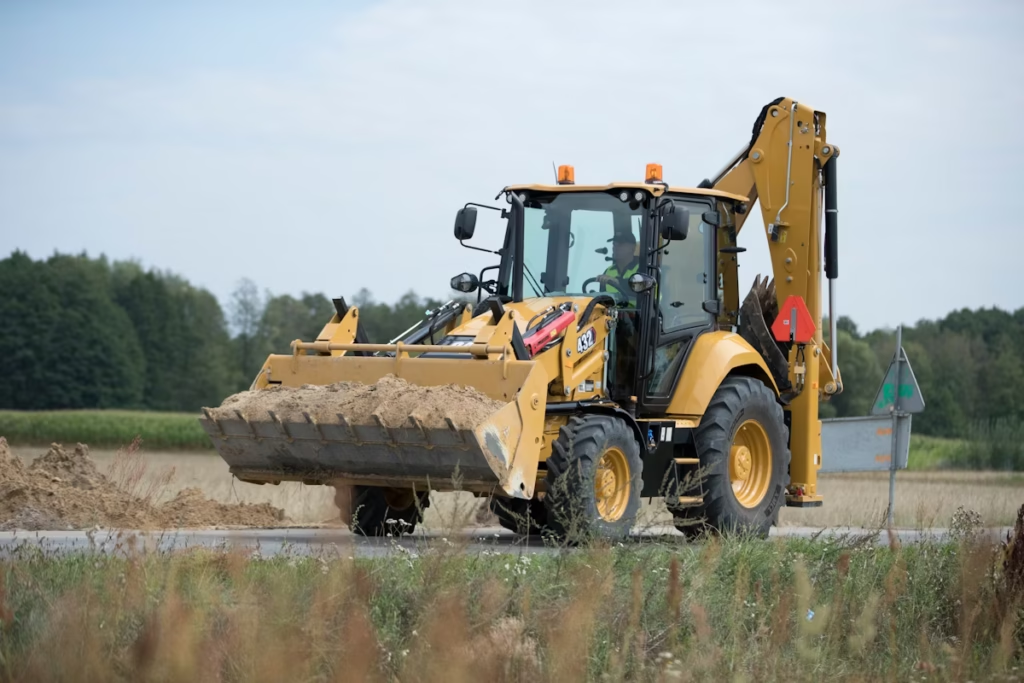
JCB built the first backhoe in 1953, and the machine remains one of the most recognisable pieces of heavy equipment on an Australian construction site, and one of the most versatile for small to medium earthmoving jobs. It combines two machines in one. Quotor lists it within its loaders category. This guide covers how it works, what it can be fitted with, where it is used, and what to weigh up before hiring one.
Understanding Backhoe Loaders
What Is a Backhoe Loader?
Combining a front loading bucket with a rear-mounted arm, known as the backhoe, on a single tractor-style chassis, it lets one machine dig, load and carry rather than needing two separate machines on site. Within Quotor’s loaders category, it sits alongside skid steers and wheel loaders as a versatile piece of equipment built for smaller earthmoving and utility work rather than large-scale excavation.
How a Backhoe Loader Works
On site, the operator lowers stabiliser legs at the rear to steady the machine, then swivels the seat to face the backhoe arm and its controls. The arm handles the ground-breaking work, while the tool at the front of the machine handles spoil, backfill and material transport once the operator swivels back. Because it runs on tyres rather than tracks, it can travel between work areas under its own power, subject to registration and road-use requirements.
Main Components of a Backhoe Loader
Its main components are the loading arm at the front, the boom, dipper and scoop at the rear, the stabiliser legs, and the cab or canopy housing the swivel seat and dual controls. Most run on four-wheel drive with large tyres. Quotor’s guide to backhoe parts breaks down each one in more detail.
Backhoe Loader Attachments
Front Loader Bucket
The standard front bucket is general-purpose, suited to moving soil, sand, gravel and demolition material. Many machines can swap it for a four-in-one attachment, which opens like a clamshell to grab, doze, level and load, or for a wider option for bulk handling.
Backhoe Bucket
At the rear, cutting tools come in several widths and profiles. A narrow option cuts a clean, consistent line for pipes and cables, while a wider ditching version clears more material per pass but sacrifices precision. Toothed edges suit compacted or rocky ground, and smooth edges suit grading and clean-up work.
Hydraulic Breakers and Augers
A hydraulic breaker, powered by the machine’s hydraulic system, attaches to the arm in place of the standard tool. It fractures rock, concrete slabs and old foundations that are too solid for normal ground work. An auger drills post holes and footings quickly and consistently, useful for fencing, signage and landscaping work needing a row of identical holes.
Forks and Other Attachments
Pallet forks turn the machine into a basic materials handler for palletised loads, while compaction plates, grapples and sweepers extend it into compaction, clean-up and site preparation work. Quotor’s types of backhoe attachments guide runs through which tools suit which jobs.
Backhoe Loader Applications
Excavation and Trenching
They commonly excavate foundations, service trenches and drainage runs on residential and light commercial construction projects, where depth and reach cover most footing work without needing a dedicated excavator.
Loading and Material Handling
It is equally useful for loading trucks, moving stockpiled material and backfilling once pipework or cabling is in, so the same machine handles both halves of a typical job.
Utility and Road Work
Utility contractors use it for laying water, gas and telecommunications lines, road construction and pothole repair, moving between nearby job sites under its own power.
Landscaping and Site Preparation
On landscaping and site prep jobs, it can clear vegetation, grade a building pad, cut garden beds or ponds and load waste, covering most of the earthmoving needed on a small residential or commercial landscape project.
Benefits and Limitations of Backhoe Loaders
Two Machines in One
The core benefit is that one machine replaces two, a loader and an excavation machine, on smaller jobs. That means one machine, one operator and one hire cost instead of coordinating two separate pieces of construction equipment.
Mobility Between Work Areas
Where road access and registration requirements allow, it can travel between nearby sites under its own power, cutting the cost and time of floating a tracked machine for the same short move.
Versatility Across Different Tasks
In a single day it can move from earthworks in the morning to loading aggregate in the afternoon and drilling fence post holes with an auger. That range of tasks is what makes it a common first hire for smaller contractors handling mixed jobs.
Limitations Compared with Dedicated Machines
The trade-off is that dedicated machines outperform it at their own job. A mini excavator generally works deeper, reaches further and fits into tighter spaces thanks to its tracks and full slewing turret, and a wheel loader shifts more material faster with a larger capacity. Quotor’s excavator range spans several size classes for this kind of work.
Backhoe vs Excavator
Key Differences
Understanding the difference between a backhoe and an excavator starts with how each machine is built. One is wheeled, with a loading attachment at the front and a digging arm at the rear, run from a single swivelling seat. The other is a dedicated digger, usually tracked, with a cab that rotates a full 360 degrees and no front bucket. Quotor’s excavator vs backhoe loader comparison covers this further.
Digging Performance and Reach
A standard backhoe typically reaches a depth of around 4.3 to 4.9 metres, enough for most footings and drainage work. Purpose-built diggers cover a much wider range, from compact micro units suited to tight residential jobs through to large machines built for far greater depth, with a full slewing turret that places spoil more precisely than a fixed arm.
Mobility and Loading Capability
Its biggest practical advantage is that it can load as well as dig, and travel between sites under its own power, subject to road rules. A dedicated digger works ground more efficiently but has nothing to move material with, so a separate machine still has to shift it away, and it needs a trailer to reach site rather than driving there.
When to Use a Backhoe vs an Excavator
It suits smaller jobs that mix earthworks and loading, tighter budgets and sites with road access to drive the machine in. An excavator is the better choice for deeper or more technical work, confined access jobs needing a compact tracked footprint, or larger volumes of spoil. Quotor’s what is an excavator guide covers that side of the decision in full.
Choosing the Right Backhoe Loader
Digging Depth and Reach
Backhoe loaders come in different sizes, so match depth and reach to the deepest trench or footing on the job, with some margin for ground variation.
Loader Capacity
Bucket capacity and lift height determine how much material it can move and how high it can load a truck or bin, which matters more on jobs with a heavy loading component than a single-task job.
Site Conditions and Access
Soft, wet or sloped ground makes tyre choice, four-wheel drive, machine stability and ground conditions especially important. A lighter machine may reduce ground loading, but it still needs enough traction and stability for the work. Narrow gates or laneways also need checking against transport width, since most machines travel to site on their own wheels rather than via trailer.
Attachment Requirements
If the job needs a breaker, auger or forks alongside digging and loading, confirm the machine comes fitted with a compatible quick-hitch and that the specific tool is available from the same supplier, rather than assuming every unit arrives attachment-ready.
Backhoe Loader Hire
When to Hire a Backhoe Loader
Hiring makes sense for most contractors: like most heavy machinery, it is used intensively for short stretches rather than year round, and hire avoids the cost of ownership, storage and maintenance between jobs. Quotor’s backhoe loader listings show current machines available from suppliers across Australia, including JCB and Case models.
Factors to Consider When Hiring
Confirm whether the hire is wet, machine and operator, or dry, machine only, since dry hire means the operator is generally expected to demonstrate competency for the machine and task, which may be supported by relevant training, experience or a site-based verification of competency. Quotor’s guide on how to operate a backhoe loader is a useful reference for what that competency covers.
Backhoe Loader Hire Costs
Hire cost depends on machine size, attachments needed, whether an operator is included, and hire duration, so rates vary too widely across the range to quote a single figure. Comparing several supplier quotes side by side, which Quotor helps with, gives a clearer picture of fair pricing for a specific job than any published average.