
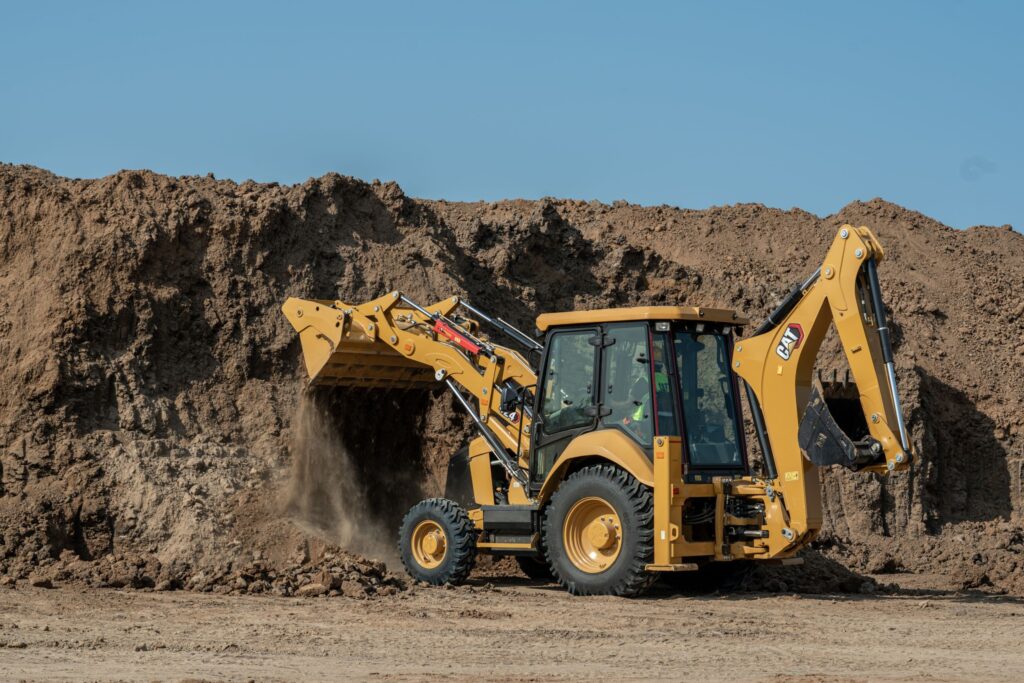
Understanding Backhoe Loader Parts
What Is a Backhoe Loader?
As the name implies, a backhoe loader combines two machines in one: a front loader and a rear backhoe, mounted on a single tractor-style chassis. It’s a piece of construction equipment useful for agricultural, utility and construction site work alike, built to switch between loading, carrying and digging without swapping machines. See what a backhoe loader is and how it fits within earthmoving equipment. Quotor lists backhoe loaders in its backhoe loader category for hirers comparing machines by size.
Why Understanding Backhoe Loader Parts Matters
Anyone comparing backhoe loaders for hire may be wondering which parts matter most. Knowing what each part does supports safer operation, catches wear early, and clarifies maintenance responsibility during the hire. Backhoe loaders are essential on sites that need both loading and digging capability from a single machine, so the parts of a backhoe loader are worth understanding before comparing loaders.
Main Parts of a Backhoe Loader
The core components of a backhoe loader fall into three groups: what powers the machine, what the operator controls, and what does the physical work of loading and digging.
Engine
The engine is the main component that powers everything else on the machine, turning the hydraulic pump, driving the transmission and running the electrical systems. Most backhoe loaders run a diesel engine sized to tow, drive and run hydraulics at once. Engine output supports the hydraulic and drivetrain demand of the machine, while actual loader lift capacity and backhoe digging force depend on the hydraulic system and linkage geometry.
Transmission and Drivetrain
Power from the engine reaches the wheels through a transmission and drivetrain, typically a powershift gearbox connected to front and rear axles. Many backhoe loaders offer four-wheel drive for improved traction on soft or uneven ground, while two-wheel-drive configurations may be sufficient on firm prepared surfaces. A forward-reverse shuttle lever lets the operator change direction without stopping to shift gears.
Cab and Operator Controls
Backhoe loader cabs and canopies may incorporate ROPS and FOPS protection depending on the machine and configuration, along with a seat and two sets of controls, one for the front loader and one for the rear backhoe, since a single operator runs both. On many models the seat rotates to face front or rear without leaving the cab. Joystick or lever controls direct hydraulic flow to each cylinder, while gauges show engine and hydraulic readings.
Hydraulic System
The hydraulic system moves the machine’s other parts: a pump, reservoir, control valves and a network of hoses and cylinders converting engine power into force for lifting, digging and steadying it. Its condition, checked through hose wear, cylinder seals and fluid cleanliness, affects how precisely the machine moves.
Front Loader Arms and Bucket
The lift arms, located at the front of the machine, raise or lower the loader bucket using two hydraulic cylinders, while a separate tilt cylinder curls it for scooping or dumping. The loader bucket suits loading jobs like transporting materials, lifting heavy loads onto trucks, backfilling trenches, clearing construction debris and general job site clean-up. Bucket size and lift capacity vary between machines, so matching the bucket to the job affects productivity.
Rear Boom and Dipper Arm
At the rear, the backhoe boom pivots on a swing frame and connects to the dipper arm, sometimes called the stick, which extends the digging reach. The backhoe arm is divided into three sections, and each component of the backhoe arm, the boom, dipper arm and bucket, moves on its own hydraulic cylinder, giving independent control over reach, depth and angle. The backhoe’s swing frame lets the whole assembly rotate left and right at the pivot without moving the machine itself.
Backhoe Bucket
Mounted at the end of the dipper arm, the backhoe bucket, or rear bucket, is used for digging trenches, excavation and general material handling the front loader bucket can’t reach. Bucket width and tooth pattern vary by job, and the bucket usually swaps through a pin or quick coupler for different attachments.
Stabiliser Legs
Two hydraulic stabiliser legs lower at the rear before backhoe work begins, transferring much of the digging load from the tyres into a wider, more stable base. Without them, digging force would rock the machine and could tip it on uneven ground. Stabiliser legs are an important safety feature as well as a productivity one, since a stable machine digs faster and more accurately.
Chassis, Axles and Tyres
The chassis ties the engine, transmission, axles and cab into a single tractor-style frame, heavy-duty enough to carry the loader and backhoe assemblies at each end without excess flex, built for durability under repeated site use. Front and rear axles connect to large, rugged tyres suited to site conditions and general travel. Backhoe loaders are wheeled and can travel between nearby work areas under their own power; public-road use depends on registration and local road requirements. This mobility is one reason a backhoe loader suits a smaller machine fleet moving between sites without a low loader. Quotor’s listings show engine, drivetrain and chassis specs side by side for easier comparison.
How Backhoe Loader Parts Work Together
Understanding how these systems interact also feeds into broader construction equipment management, from maintenance scheduling to fleet planning.
From Engine Power to Hydraulic Movement
The engine drives a hydraulic pump, which pulls fluid from the reservoir and pressurises it before sending it through control valves. Moving a joystick or lever opens the valve for a specific cylinder, extending or retracting it. This one hydraulic system utilises the same pump and reservoir to power the loader arms, backhoe boom, dipper arm, bucket and stabiliser legs, so all of the machine’s movement traces back to engine power converted into hydraulic force.
How the Front Loader System Works
Raising the loader arms lifts the bucket, while the tilt cylinder curls it forward to scoop or back to carry a load level. Because the loader and backhoe share one hydraulic system, using both at once draws from the same pump capacity.
How the Rear Backhoe System Works
Backhoe components work through the same shared system: the swing frame rotates the assembly into position, the boom and dipper arm extend to depth and reach, and the bucket curls to cut into the material and lift it clear. An operator repeats this sequence, swing, dig, lift, swing, dump, when trenching or excavating.
How Stabiliser Legs Support Digging
Before backhoe work starts, the stabiliser legs lower and transfer much of the digging load from the tyres onto a wider, more stable base. This keeps the bucket’s cutting angle consistent and stops the machine rocking as it works, which matters most in a trench where a shifting machine can undercut the wall it’s digging.
Backhoe Loader Attachments
How Attachments Extend Backhoe Loader Capability
A quick coupler or pin mount at the end of the dipper arm lets the backhoe bucket be swapped for different attachments: a hammer for breaking concrete, an auger for drilling post holes, a thumb for handling irregular material, or a broom for site clean-up. With attachment points at both the front loader and rear backhoe, a backhoe loader can cover a broad mix of loading, digging, breaking and material-handling tasks, adding versatility for jobs like demolition, roadwork, paving projects or landscape work. The full range is covered in the guide to backhoe loader attachments.
Inspecting Backhoe Loader Parts Before Hire
The points below give a quick way to assess a backhoe loader’s condition before hiring one through Quotor or elsewhere.
Loader Arms and Bucket Condition
Check the lift and tilt cylinders for leaks or rod scoring, and look for play in the pins and bushings connecting the arms to the chassis, a wear sign that affects lifting accuracy. Bucket teeth or cutting edges should still have usable material left, since a worn edge slows loading and increases fuel use.
Boom, Dipper and Backhoe Bucket Wear
Inspect the boom and dipper arm for cracks near the welds and pivot points, and check the backhoe bucket’s teeth and cutting edge. Loose movement at any pin joint usually means the pin or bushing needs replacing before heavy digging resumes.
Hydraulic Hoses, Cylinders and Leaks
Look along every visible hose for cracking, bulging or wet patches, and check cylinder rods for pitting that can damage seals. Sluggish or jerky control response often points to air in the system, low fluid, or a failing pump.
Stabiliser Legs, Tyres and General Machine Condition
Check that both stabiliser legs extend evenly and hold their position under load. Tyres should have even tread wear and no deep cuts, and the chassis should be free of cracks or excessive rust.
Cab and Operator Controls
Confirm any ROPS/FOPS structure is intact with no visible damage, the seatbelt works, and gauges, warning lights and mirrors are all functional. Responsive, smooth joystick and pedal controls with no delay or drift are a good sign the hydraulic and electrical systems are sound.
Backhoe Loader Parts and Hire Responsibility
Once the machine itself checks out, hire responsibility is worth clarifying up front.
Dry Hire Inspection and Operator Checks
On a dry hire, no operator comes with the machine, so pre-start checks sit with the hirer’s own qualified operator: a walk-around, fluid levels, control response and a check of the points above before each shift. The guide on how to operate a backhoe loader covers what a competent pre-start routine looks like.
Wet vs Dry Hire Maintenance Responsibility
Who covers routine maintenance and repairs during the hire period depends on the agreement, though wet hire, where the supplier’s operator runs the machine, more often keeps servicing with the supplier, while dry hire terms vary on who handles proper maintenance. Quotor’s guide to wet hire versus dry hire breaks down how responsibility is usually split.
Questions to Ask the Supplier Before Hiring
Before hiring, ask about hours on the machine, last service date, condition of wear items like bucket teeth and tyres, and whether the quick coupler suits the attachments the job needs. Comparing backhoe loader brands and the guide to hiring construction equipment can help you understand which machine will fit your project and avoid costly downtime. Quotor connects hirers with high-quality backhoe loaders and suppliers, making it easier to compare backhoe parts before committing to a hire.