
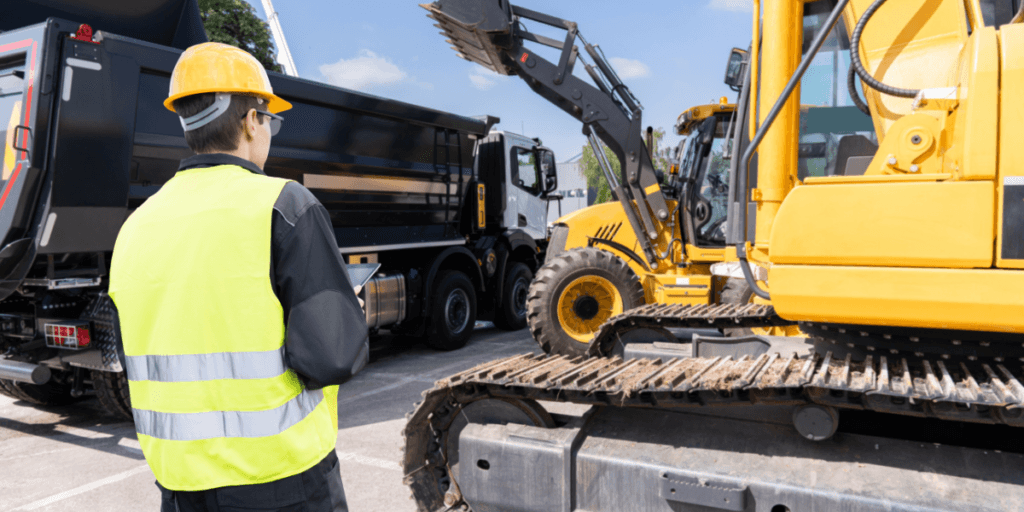
A construction business rarely makes money from equipment sitting on a truck between jobs. Every excavator or loader is capital that only pays for itself while working, and construction companies that manage that gap well run tighter, more profitable projects.
Understanding Construction Equipment Management
What Is Construction Equipment Management?
Construction equipment management refers to how a business tracks, maintains, allocates and budgets for the heavy machinery it owns or hires across one project or many. Across construction projects, it covers everything from deciding which piece of equipment goes where this week to planning a compactor’s next service.
Why Equipment Management Matters
Poorly managed equipment shows up as project delays, unplanned repair bills and machines nobody can locate when a site needs them. Responsibility varies by business: a project manager may coordinate equipment needs at project level, while a fleet, plant or operations manager controls allocation, maintenance and availability across multiple construction sites.
Main Challenges in Managing Construction Equipment
The most common problems are idle machinery on one site while another hires the same equipment type, maintenance pushed back until something breaks, and cost data scattered across paper logs, spreadsheets and supplier invoices.
Core Components of Construction Equipment Management
These six areas work together to keep a fleet productive. The table summarises what each tracks and the decision it feeds; each heading below adds what the table can’t show.
| Management Area | What It Tracks | Decision It Supports |
|---|---|---|
| Utilisation | Where and how often equipment works | Redeploy, retain or hire |
| Maintenance | Service intervals and faults | Preventive maintenance timing |
| Lifecycle | Hours, condition, downtime, residual value | Repair, retain or replace |
| Cost | Fuel, repairs, depreciation and hire | Own vs hire decisions |
| Availability | Working, idle and unavailable equipment | Project allocation |
| Suppliers | Hire rates, availability and mobilisation | External fleet capacity |
Equipment Utilisation and Allocation
Utilisation only means something when compared within an equipment class, since a specialised attachment and a common earthmoving equipment unit have very different baseline equipment usage.
Maintenance Scheduling
A maintenance schedule matches service dates to a machine’s actual maintenance needs, by hours run, calendar time or manufacturer intervals, rather than waiting for a breakdown. Regular maintenance on this schedule keeps repair costs and downtime predictable instead of reactive.
Equipment Condition and Lifecycle Planning
Lifecycle planning tracks condition, hours, maintenance cost, downtime and residual value so the business can decide when continued ownership stops making sense, not only after repair costs or an equipment failure force the issue.
Cost Tracking and Budget Control
Cost tracking pulls fuel, repair, hire and depreciation costs into one place; without it, most businesses can’t say whether an owned machine or a hired one is actually cheaper for a given job.
Downtime and Availability Management
Downtime covers any period a machine should be working but isn’t: breakdowns, parts delays, waiting on an operator. Tracking the cause points to the real fix, whether preventive maintenance, a spares policy, or scheduling that ensures equipment is available when needed.
Supplier and Hire Management
Most fleets mix owned and hired equipment, so supplier management means keeping external hire options visible alongside internal fleet availability rather than treating equipment procurement and hire as separate problems. Sourcing services such as Quotor can research supplier availability and pricing when the fleet can’t meet project demand.
Best Practices for Managing Construction Equipment
Match Equipment to Project Demand
Before assigning a machine to a job, check the fleet for an underused piece of equipment that fits before hiring new. This alone prevents the biggest cause of an underutilised fleet: idle time on one site because nobody checked what else was available.
Reduce Idle and Underused Equipment
Set utilisation targets appropriate to each equipment class and review machines that consistently fall below them. Low utilisation can point to a case for redeployment, disposal or switching from ownership to hire, but specialised equipment may justify a lower target than high-volume fleet assets.
Plan Maintenance Around Project Schedules
Schedule maintenance during planned lulls between project phases, not whenever a slot opens at the workshop, to reduce downtime during busy stretches. This keeps machines available when a schedule needs them and avoids costlier unexpected breakdowns mid-task.
Track Equipment Costs and Performance
Compare each machine’s total cost, including fuel, repairs and hire fees, against what it delivered on site. That turns cost tracking into real decisions about equipment, the kind that reduce costs across a fleet: which machines to keep, sell, or hire instead of own.
Standardise Equipment Management Processes
Use the same inspection checklist, maintenance log format and equipment allocation process across every site rather than letting each project manager run their own system. Standardised processes make it easier to compare performance, optimise resourcing, and hand off responsibility when staff change.
Using Technology to Manage Construction Equipment
Construction Equipment Management Software
Purpose-built construction equipment management software centralises maintenance schedules, utilisation records and cost data otherwise scattered across spreadsheets and paper logs. Most systems flag equipment status changes and upcoming service dates automatically, instead of manual checks.
Telematics and Equipment Tracking
Telematics units fitted to machines monitor equipment through real-time location, hours run and, on newer models, engine diagnostics. This makes it easy to locate equipment across multiple jobsites and can catch early signs of a fault before it becomes a breakdown, protecting productivity.
Maintenance and Utilisation Data
The value of telematics and a management system comes from the insight in the data: tracking utilisation rates by machine, maintenance reminders triggered by actual hours, not guesswork, and which equipment delivers the best ROI. That data only helps if someone reviews it regularly.
Integrating Equipment Data with Project Systems
Feeding equipment data into the same systems and workflow used for project scheduling and budgeting lets a project manager see equipment availability and cost alongside labour and materials in real time, from mobile devices on site. That visibility lets a business make quick decisions when a schedule changes.
Equipment Management Considerations in Australia
Wet Hire vs Dry Hire
Wet hire includes an operator with the machine, while dry hire is equipment only, with the hiring business supplying its own operator. The choice affects labour, pricing and how responsibilities are divided between supplier and hiring business, with the hire agreement and site WHS arrangements determining where those sit.
Maintenance and Responsibility for Hired Equipment
Hire agreements typically specify who is responsible for routine equipment maintenance during the hire period and who covers equipment damage beyond normal wear and tear. These terms vary between suppliers, so check the actual contract, not assumptions, to avoid disputes over a repair bill once equipment is returned; a quick inspection at handover helps too.
Supplier Availability and Mobilisation
Equipment availability varies by region in Australia, with metropolitan areas generally offering faster mobilisation than regional or remote sites. Comparing several suppliers rather than defaulting to the closest one, using a service like Quotor to check a wider supplier base, often means equipment arrives on time instead of late.
Contract and Insurance Considerations
Hire contracts and insurance requirements differ between suppliers and states, covering areas such as liability for third-party damage and who insures the equipment during the hire period. This is general informational content, not legal or financial advice; a business should confirm its specific contract and insurance terms with the supplier or its own adviser before signing, to ensure it isn’t caught out later.
Sourcing Equipment to Support Your Fleet
When to Hire Instead of Use Owned Equipment
Hiring makes sense for short jobs, specialised equipment used rarely, or filling a gap while an owned machine is under repair. Knowing how to hire construction equipment properly, weighed against the cost of owning the same machine, keeps this option cheaper than it looks on paper.
Filling Short-Term Equipment Gaps
A short-term gap, a machine down for repair, an unexpected spike in demand, or equipment the business doesn’t own yet, rarely justifies a long-term purchase. Quotor can source that equipment for a defined period without building a new supplier relationship from scratch.
Comparing Suppliers, Availability and Pricing
Quotor researches the market, contacts suppliers directly and compares pricing and availability, instead of leaving that legwork to whoever has time between other tasks. That comparison, done properly at the point of hire, speeds up decision-making and keeps a fleet cost-effective rather than assembled out of whatever was available fastest.
How Quotor Supports Fleet Capacity
When internal fleet capacity isn’t enough, Quotor researches suitable suppliers, checks current pricing and availability, and presents hire options matched to the equipment and location required. That lets external hire function as an extension of the fleet rather than an emergency purchase made after a machine is already needed.