
Understanding Excavator Parts
What Is an Excavator?
An excavator is a piece of earthmoving equipment that combines a rotating upper structure, an articulated digging arm and a mobile undercarriage into one unit, using hydraulic power for digging, lifting and excavation work on a job site. For a full look at how excavators are classified and used, see Quotor’s guide to what an excavator is. Quotor lists excavator equipment for hire, from mini excavators, ideal for tight spaces on residential jobs, to larger crawler machines for civil work.
Why Understanding Excavator Parts Matters
Knowing what each part does turns a walk-around inspection into more than a glance. A hirer who can tell arm wear from bucket wear, or knows what a slow hydraulic response means, can spot problems early and ask a supplier better questions, whether it’s a one-day dry hire or a machine with an operator attached.
Main Parts of an Excavator
Cab and Operator Controls
Excavator cabs and canopies may incorporate ROPS, TOPS and FOPS protection depending on the machine and configuration, designed to protect the operator against rollover, tip-over or falling-object hazards. Joysticks control the digging and swing functions, while travel levers or pedals control the tracks. For a walkthrough of the controls, see Quotor’s guide to how to operate an excavator.
Engine
Almost every excavator runs on a diesel engine, typically mounted toward the rear of the upper structure. Its job is mechanical: it turns a hydraulic pump that pressurises fluid for every other moving part, from the tracks to the bucket.
Hydraulic System
The hydraulic system is the network of pumps, valves, hoses, cylinders and motors that carries pressurised fluid to every moving part of the excavator, drawing from a hydraulic reservoir that stores and cools the fluid between cycles. The main control valve meters hydraulic flow to whichever cylinder or motor the operator commands, allowing individual functions or several movements to operate together. Cylinders convert that flow into the linear push and pull that raises the boom or curls the bucket, while hydraulic motors convert the same pressurised flow into the continuous rotation that drives swing and track travel.
Boom
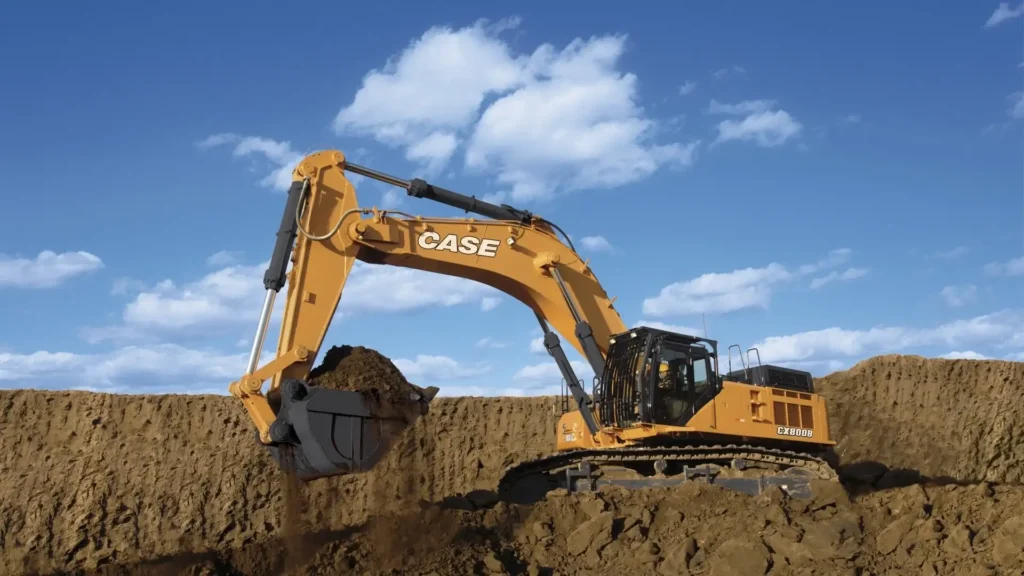
The boom is the first and longest section of the digging arm, pinned to the upper structure at its base, and a pin connects the boom to the arm at its far end. It sets the excavator’s reach and dig depth, and its own hydraulic cylinder lifts and lowers the whole assembly.
Arm or Stick
Also called the stick or dipper, the arm is the second section, pinned between the boom and the bucket. It does most of the excavator’s actual digging: extending it reaches material out, curling it back drags the bucket toward the machine to fill it. Pins and bushings at each of these joints let the boom, arm and bucket pivot relative to each other, and it’s the joints, not the sections themselves, that wear fastest.
Quick Coupler
A quick coupler mounted at the end of the excavator arm lets the bucket or another attachment be swapped without manually driving pins in and out. Hydraulic couplers, common on modern hire machines, let the operator swap attachments from the cab through a dedicated hydraulic circuit; pin-grabber couplers still need a manual pin change but skip the crane or forklift otherwise needed to align a heavy attachment by hand.
Bucket
The bucket is the attachment at the end of the arm that actually breaks and holds material, usually the first thing swapped for the job at hand. Standard, trenching and grading buckets each suit a different task; guides to excavator bucket sizes and excavator bucket types cover how to match one to the job.
Upper Structure and Counterweight
The upper structure, sometimes called the house, is the rotating platform carrying the cab, engine, hydraulic system and boom, and it can swing a full 360 degrees independent of the undercarriage below. The counterweight offsets the weight of the arm and boom, attachment and load carried out front, improving stability as working radius increases.
Swing Motor and Slew Ring
The upper structure rotates on a large slew ring, or swing bearing, fitted between the house and the undercarriage. A hydraulic swing motor drives this bearing through a reduction gearbox, letting the cab, engine and digging assembly rotate independently of the tracks. Wear in the slew bearing can show up as excessive play or knocking between the upper and lower structures.
Undercarriage and Tracks
The excavator undercarriage, sometimes called the track frame, is the base that carries the entire machine’s weight and provides its ground contact. Crawler excavators use steel track shoes or rubber track pads connected through links, pins and bushings. Lower rollers carry the machine’s weight along the frame, upper rollers support the returning length of track, the front idler guides and tensions it, and the rear drive sprocket turns the track using power from the final-drive motor. Some machines fitted for rocky or demolition sites add rock guards along the frame to stop debris fouling the rollers and idlers. Smaller excavators often run rubber tracks rather than steel, trading some digging power for a lighter footprint on finished surfaces and less vibration in the cab. Wheeled excavators offer more speed between sites, running on rubber tyres instead of tracks, which suits sealed sites and frequent relocation.
How Excavator Parts Work Together
From Engine Power to Hydraulic Movement
Everything an excavator does starts with the engine turning a hydraulic pump, which draws fluid from a reservoir and pressurises it. That fluid travels through hoses to the main control valve, which routes it to whichever cylinder or motor the operator has selected. Fluid entering a cylinder forces its piston to extend or retract, and that push raises the boom, curls the bucket or swings the upper structure. The same pressurised flow drives the travel motors that turn the sprockets and move the tracks.
How the Boom, Arm and Bucket Work Together
The boom, arm and bucket form the three main sections of the digging assembly, with power running from the boom to the bucket as one linked chain rather than as independent movements. The boom sets how far out and how deep the assembly reaches, the arm curls in to drag the bucket through material, and the bucket curls to scoop and hold what’s been dug. Separate hydraulic cylinders control the boom, arm and bucket, allowing the operator to blend their movements into one digging cycle.
How the Upper Structure and Undercarriage Control Movement and Stability
The upper structure and undercarriage handle the movement of the excavator rather than its digging. Swinging the upper structure moves the whole boom, arm and bucket assembly to a new spot without repositioning the machine, while the undercarriage’s tracks or wheels move the excavator between digging positions or across the site. Stability comes from the counterweight balancing the load out front, and from the undercarriage’s width keeping the machine in firm contact with the ground while it digs.
Excavator Attachments
How Attachments Extend Excavator Capability
Beyond the standard bucket, the arm’s quick coupler opens up a wider range of attachments, including grapples, augers and hydraulic breakers, each drawing on the same hydraulic system that powers the bucket. Quotor’s guide to types of excavator attachments covers the full range.
Inspecting Excavator Parts Before Hire
Undercarriage and Track Wear
Undercarriage wear is one of the most expensive things to overlook. Stretched track chains and worn rollers and sprockets reduce traction and raise the chance of a track coming off mid-job, and replacing an undercarriage is one of the costliest repairs an excavator can need. A quick check before hire: look for slack in the tracks, uneven wear across the track pads, and play in the sprocket and idler.
Hydraulic Hoses, Cylinders and Leaks
Hydraulic problems usually show up as visible fluid around a cylinder, hose fitting or the main control valve, or as movement slower or jerkier than it should be. Fresh oil stains under a parked excavator, or a boom that drifts down on its own when left extended, both point to a hydraulic system needing attention before it goes out on a job.
Boom, Arm and Bucket Condition
Pins and bushings connecting the boom and arm, and the arm and bucket, wear with use, and excess play at any of these joints shows up as a rattle or an arm that won’t hold position under load. Bucket teeth and cutting edges pick up wear and tear from digging too; worn teeth cost more in extra digging time than they save in delayed replacement.
Cab, Controls and General Machine Condition
A walk through the cab shows a lot about how an excavator has been treated. Working gauges, responsive joysticks and an intact protective structure, where fitted, all matter, and small issues (a warning light that’s been ignored, a seat patched rather than replaced) often signal how the rest of the machine has been looked after.
Excavator Parts and Hire Responsibility
Dry Hire Inspection and Operator Checks
On a dry hire, the operator is the hirer’s own or a subcontractor’s, so pre-start checks fall to them too: fluid levels, leaks, track condition and confirming the controls respond as expected. The guide to becoming an excavator operator covers the training and competency generally expected before operating one on site.
Wet vs Dry Hire Maintenance Responsibility
Responsibility for a breakdown or routine servicing during a hire depends on the agreement, not a fixed rule. Wet hire, where the machine comes with an operator, usually keeps maintenance with the supplier, since it’s their machine and their person running it. Dry hire shifts more onto the hirer, but how much varies by contract; some suppliers cover mechanical failure not caused by misuse, others don’t. Quotor’s guide to dry hire vs wet hire breaks down what each arrangement typically covers.
Questions to Ask the Supplier Before Hiring
Knowing an excavator’s parts turns a supplier conversation into a useful one: ask about undercarriage age and remaining wear life, when hydraulic hoses were last replaced, and what’s covered if something fails mid-hire. Brand matters too, since different manufacturers configure similar excavators differently; see the guide to excavator brands when comparing quotes, or how to hire construction equipment for the broader process. Quotor connects hirers with excavator suppliers matched to the job, giving you the opportunity to confirm machine condition, service history and hire terms before proceeding.