
Understanding Excavator Bucket Size
What Is an Excavator Bucket?
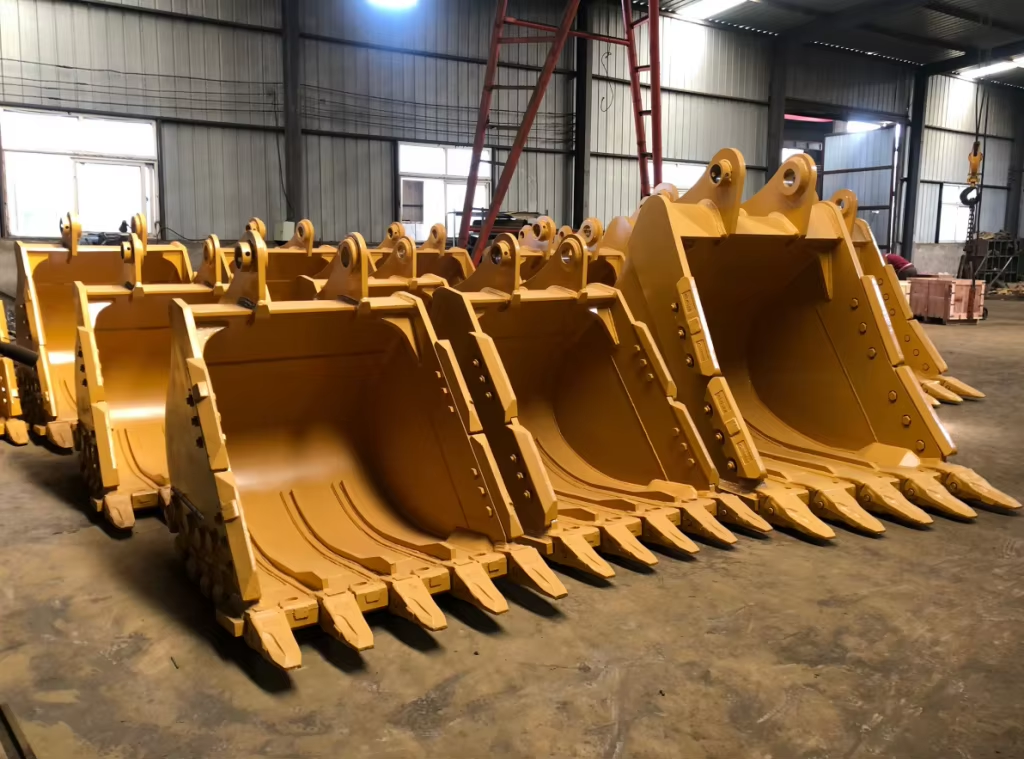
An excavator bucket is the digging attachment mounted on the dipper arm, the part that fills with material during a dig cycle. It’s the most common excavator attachment; Quotor’s guide to types of excavator attachments covers hammers, grapples and augers for jobs a bucket isn’t built for. If the question is which bucket type suits the work rather than what size to hire, general-purpose, rock, skeleton and other excavator bucket types come before size in that decision. Background on the arm itself sits in what is an excavator if needed.
What Does Excavator Bucket Size Mean?
Bucket size covers two linked measurements: width, how wide the bucket sits across the cutting edge, and capacity, how much material the bucket can hold. A wider bucket usually holds more, but the two don’t scale evenly, since depth and curve shape how much material a given width can carry.
Why Bucket Size Matters
The right size moves material efficiently without overloading the excavator. A bucket too small for the machine wastes lift capacity and adds passes; one too large overloads the arm or won’t clear a narrow trench. Size, more than bucket type alone, decides how well a bucket suits both the machine and the job, which is why Quotor treats sizing as its own step when booking a hire.
Excavator Bucket Size and Capacity
Bucket Width
Bucket widths run from around 300mm on a narrow trenching bucket to 1500mm or more on a wide general-purpose bucket for larger machines, though the exact figure depends on the bucket’s design and the manufacturer’s approved combination for that model. Width follows the job first, close to the trench’s own width, then the excavator’s weight class, since a wider bucket carries a heavier load at full reach.
Bucket Capacity
Manufacturers quote bucket capacities in cubic metres or cubic yards, either struck capacity (level with the rim) or heaped capacity (mounded to its natural angle). Suppliers usually list heaped capacity, closer to how a bucket loads in practice.
Excavator Bucket Size Chart
Excavator buckets come in many combinations of width, capacity and coupler, so the ranges below are indicative examples rather than fixed limits; actual bucket width and capacity depend on bucket design, material density and the manufacturer’s approved combination for the excavator. These are Quotor’s own excavator classes, the reference point for sizing rather than a generic scheme.
| Excavator Class | Operating Weight | Typical Bucket Width | Indicative Capacity |
|---|---|---|---|
| Micro | Under 1.7 t | Varies by model/task | Very small |
| Mini | 1.7-9 t | Varies by model/task | Small |
| Small | 10-19 t | Varies by model/task | Moderate |
| Medium | 20-35 t | Varies by model/task | Larger |
| Large | 36-90 t | Varies by model/task | High |
| Mining | 100 t+ | Varies by model/task | Very high |
How Bucket Size Affects Digging Performance
A bucket sized correctly for the excavator fills in a single pass and swings without straining the arm. An undersized bucket needs more cycles to shift the same volume; an oversized bucket fills slowly in dense material because the machine can’t generate enough breakout force to pack it full in one pass. Either way, productivity on site suffers.
Matching Bucket Size to Excavator Size
Excavator Operating Weight
Operating weight is the starting point for bucket sizing, since larger excavators generally have greater lifting and digging capacity, but the approved bucket combination still depends on the specific machine, coupler, bucket weight and the material being handled. A 25-tonne excavator, for example, sits in the Medium class shown above and can safely swing a fuller bucket than a small excavator half its weight. The what size excavator do I need guide covers matching the machine to the job before bucket sizing.
Lift Capacity and Machine Stability
Every excavator carries a rated lift capacity that drops the further the bucket reaches out. A bucket loaded with dense material at full reach can exceed that rating before it looks full, so sizing has to account for reach as well as capacity.
Coupler and Mounting Compatibility
The coupler also limits size: pin spacing, pin diameter and mounting width have to match the excavator, and a quick coupler adds its own range on top. Standards vary by brand, which Quotor’s guide to excavator brands covers, and the lock should be fully engaged before lifting a newly attached bucket.
Hydraulic and Attachment Limits
Hydraulic pressure, cylinder force and linkage geometry contribute to bucket breakout force, while hydraulic flow affects cycle time, how quickly the boom, arm and bucket move through each pass, rather than the maximum bucket width itself. These factors shape how effectively the excavator fills a given bucket, particularly in dense ground. The parts of an excavator guide covers how the hydraulic system and dipper arm work together.
Matching Bucket Size to the Job
Trenching and Utility Work
Trenching buckets sit close to the trench or pipe width, commonly 300 to 600mm, so the dig doesn’t run wider than needed and leave extra spoil to backfill.
General Excavation
Bulk digging and loading favour a wider standard digging bucket, usually 600 to 1200mm depending on the machine’s class, to move more material per pass.
Grading and Cleanup
A grading bucket trades depth for width, spreading wide and shallow to level a surface. Ditching buckets shape drainage lines the same way, and a tilt bucket adds side-to-side movement for grading slopes without repositioning the excavator.
Heavy and Dense Materials
Rock, clay and other dense, abrasive materials call for a narrower, heavy-duty rock bucket designed with reinforced edges for extra durability, rather than the widest bucket the class would otherwise carry, since the same volume weighs more and reaches the lift capacity limit sooner.
Bucket width is only part of the selection. Tooth configuration and cutting edge also need to suit the material: excavator bucket teeth improve penetration in compacted or frozen ground, while a smooth edge suits grading, finishing work and clean-up jobs. The guide to becoming an excavator operator covers the skill involved in changing attachments and edges confidently on site.
Mini Excavator Bucket Sizes
Bucket Sizes for Micro and Mini Excavators
Micro and mini excavators use narrower, lower-capacity buckets, since the machines have less lifting capacity and a smaller stability envelope. Within this taxonomy, shown in the chart above, micro excavators sit below roughly 1.7 tonnes and mini excavators extend from around 1.7 to 9 tonnes, though bucket selection still needs checking against the individual model. The what is a mini excavator guide covers what sets this class apart from standard machines.
Access and Machine Stability Considerations
Narrow buckets let mini excavators work through gateways, fence lines or basements a standard machine can’t access. The smaller undercarriage leaves less stability margin too, so oversizing a bucket matters more on a small excavator than a larger one.
Choosing the Right Excavator Bucket Size
Material Density
Two buckets of the same volume can carry very different loads: loose soil, wet clay and rock differ enough in weight that a bucket’s capacity alone doesn’t tell the full story, so density has to factor into the choice too.
Required Trench Width
Match bucket width to the trench or pipe specification, not whatever bucket happens to be on hand. A bucket wider than the job needs removes more spoil, and more support, than the trench requires.
Digging Depth and Production
A larger bucket clears deep trenches in fewer passes, but only if the excavator can safely lift a full load at that depth and reach. Bigger-bucket production gains disappear once the machine has to work under capacity to stay stable.
Common Bucket Sizing Mistakes
Choosing the right bucket size starts with the job, not the excavator’s class alone; the most common mistake is sizing for the machine without checking the work, so standard buckets that suit the excavator can still be the wrong width for a narrow trench. Ignoring material density is another: a bucket sized for soil can overload the same machine in rock. The guide to operating an excavator covers technique that affects how hard the bucket works too.
Hiring the Right Excavator Bucket
Confirming Bucket Size with the Supplier
Confirm width, capacity and coupler type against the machine’s class before booking. Quotor’s excavator listings show which bucket comes standard with each machine, avoiding surprises on delivery.
Hiring Additional Bucket Sizes
A machine hire usually comes with one bucket as standard. Suppliers typically quote and source extra sizes separately, a narrow trenching bucket alongside a general-purpose one, for example.
Bucket Size and Hire Cost Considerations
Cost depends on the bucket’s size, how much wear the job puts on it, and whether it’s bundled with the excavator or booked as an extra. Quotor helps line up the excavator and the right bucket for the job as one hire.