
Understanding Demolition Work
What Is Demolition Work?
Demolition work means breaking down buildings and structures in a planned, controlled way, from a full teardown to selective deconstruction that saves materials or protects what’s next door. It covers everything from a single house to a multi-storey building or an industrial structure being cleared for new construction. The method chosen shapes which machines end up on site.
How Equipment Is Used Across a Demolition Project
A demolition project moves through stages, and different machines take the lead at each one. Structural demolition comes first: breaking down walls, floors and framing. Then comes clearing debris, sorting, loading and moving it off site. Site prep and grading often follow once the structure is down. No single machine covers all of that, which is why most demolition jobs run several types of heavy machinery side by side rather than relying on one all-purpose unit.
Main Types of Demolition Equipment
The machines that show up on a demolition site depend on the job, but a few types cover most demolition work:
| Equipment | Primary Role in Demolition |
|---|---|
| Excavator | Structural demolition and breaking using attachments |
| High-reach excavator | Demolishing taller structures from ground level |
| Wheel loader | Loading and moving debris |
| Skid steer / compact track loader | Tight-access cleanup and material handling |
| Dozer | Pushing debris, clearing and grading |
| Dump truck / dumper | Moving demolition material |
Quotor groups each of these machines by equipment category, which makes it easier to compare options before working out how many machines a demolition project actually needs.
Equipment Used for Demolition
Excavators
The excavator handles more structural work than any other machine on most demolition sites. Crawler excavators fitted with a hydraulic breaker, shear or pulveriser handle most of the job: breaking up concrete, cutting through rebar and steel beams, and bringing down walls and framing. They also provide a broad undercarriage and good mobility across rough demolition sites, but the working surface still needs to be assessed for voids, unstable rubble and other stability hazards. Swapping attachments lets one machine handle several tasks across a single demolition site. For more on how they work, see what an excavator is.
High-Reach Excavators
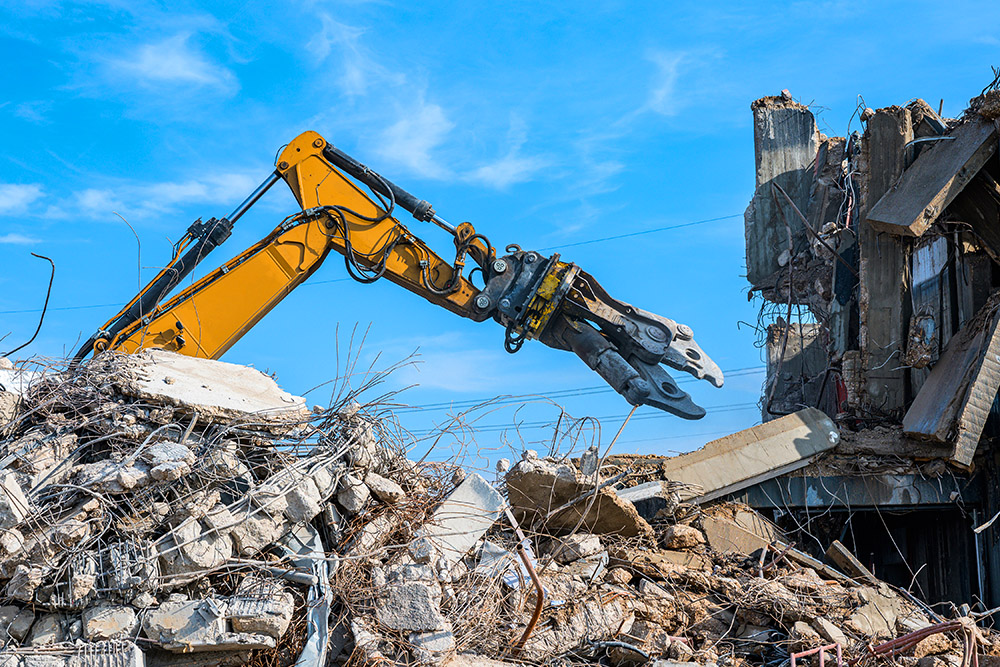
For multi-storey buildings, a standard excavator boom often can’t reach the top floors safely. High-reach excavators use extended demolition booms with purpose-matched attachments such as shears, pulverisers and processors to dismantle upper sections progressively from ground level. This keeps operators away from unstable upper floors and reduces the risk of working above a structure being demolished. High-reach demolition is standard practice on taller commercial buildings, where a wrecking ball or crane-based approach would be harder to control.
Wheel Loaders
Once an excavator has broken a structure down, moving materials off site becomes the next job. Wheel loaders use a wide bucket to scoop and load rubble, concrete and soil into dump trucks or stockpiles, moving quickly between loading points on rubber tyres. On uneven, debris-strewn terrain they’re faster than a truck making the same trip alone. What a wheel loader is covers the machine in more depth, and Quotor’s loader category lists what’s available to hire.
Skid Steers and Compact Track Loaders
On tight sites, a skid steer loader or compact track loader often does more useful work than a full-size loader. Both machines turn within their own footprint, which matters on urban sites, indoor deconstruction, or anywhere a wheel loader won’t fit. Skid steers run on wheels and suit firmer ground; compact track loaders (also called posi-track loaders) run on rubber tracks, spreading their weight for better traction over soft ground, though sharp demolition debris can be hard on tracks. Both can run a wide range of compact demolition and cleanup attachments, including grapples, breakers, buckets and sweepers, subject to the machine’s hydraulic capacity and attachment limits. See what a skid steer loader is and what a posi-track loader is for more on each machine.
Dozers
Dozers, sometimes called bulldozers, come into play once the structure is down. A dozer’s wide blade is well suited to pushing and levelling debris, and it clears access routes for other machines. Once removal is finished, it grades the site and can bring in gravel. Fitted with a ripper attachment, a dozer can break up hard, compacted asphalt or ground a bucket can’t touch. What a dozer is covers the machine’s core specs and typical sizes available for hire.
Dump Trucks and Dumpers
Getting debris off site is its own job. Articulated dumpers handle rough, uneven demolition sites where a road-going dump truck would struggle, carrying rubble, soil or asphalt from the loading point to a stockpile or waiting truck. Larger dump trucks then take that material to a recycling facility or landfill. Matching the truck and dumper fleet to the pace of loading keeps a demolition project moving instead of leaving loaders waiting.
Other Specialised Demolition Equipment
Some demolition jobs call for equipment outside the usual line-up. Cranes handle wrecking ball demolition on older or free-standing structures and lift heavy structural components, steel beams among them, clear of the site. On-site crushers process concrete rubble into usable aggregate rather than trucking it away whole, which can cut both transport and disposal costs on larger jobs. Material handlers, with an elevated cab and long-reach boom, sort and load material on scrap-heavy sites. Backhoe loaders can cover smaller demolition or clearance jobs that don’t need a full excavator.
Demolition Attachments and Material Handling
Hydraulic Breakers and Hammers
A hydraulic breaker, sometimes called a hammer, mounts on an excavator’s boom and delivers repeated, high-force impacts to break up concrete, masonry and rock. Hydraulic breakers are widely used where hard material needs to be broken into manageable sections. On structural demolition projects they work alongside attachments such as shears and pulverisers, which may be better suited to cutting, crushing or separating reinforced material.
Grapples and Pulverisers
A grapple’s hydraulic jaws grip and move awkward material, such as structural beams, pipe or timber, that a bucket can’t hold securely. A pulveriser does similar work with more force, crushing concrete and separating out the rebar inside so it can be recycled separately from the aggregate.
Buckets and Sorting Attachments
Buckets come in various sizes for different tasks, from general loading to fine grading. Sorting attachments, such as grapple and screening buckets, separate materials like concrete, timber and metal on site rather than leaving that work for the recycling facility.
Managing Demolition Debris
Sorting and Stockpiling Material
Demolition generates large amounts of mixed material fast. Sorting it on site, keeping concrete, metal and timber in separate stockpiles, makes the rest of the job faster and keeps recycling options open.
Loading and Removal
Wheel loaders and excavators handle most of the loading, moving sorted debris from stockpiles into dump trucks and dumpers for transport off site. This loading has to keep pace with the demolition, or debris piles up faster than it can be cleared.
Recycling and Disposal
Separating concrete, metals, timber and other recoverable construction materials can reduce mixed-waste disposal and make recycling easier. Where concrete or masonry is processed and reused on site, it can also reduce the material hauled away and the aggregate brought in. What can’t be recycled, hazardous material especially, needs separate handling and disposal under standard site rules.
Demolition Safety and Site Considerations
Structural and Site Hazards
Partially demolished structures are unpredictable. Weakened floors, unsupported walls and hidden voids raise the risk of unplanned collapse, and older buildings can carry hazardous material such as asbestos that needs clearing before demolition starts.
Exclusion Zones and Machine Access
Machines working near a structure that’s being taken apart need clear exclusion zones, both to protect people on foot and to give operators room to work without other equipment nearby. This matters more with high-reach excavators or crane operations, where falling material can travel further than it would from a low structure.
Operator Competency and Site Requirements
Demolition machinery, high-reach excavators and crane-based equipment especially, requires operators with specific competency for that machine and task, including a clear view from the cab over debris and other equipment nearby. Site-specific safety measures, including exclusion zones, spotter requirements and sequencing rules, should be set before machines arrive rather than improvised on the day.
Choosing Equipment for a Demolition Project
Choosing the right equipment for a demolition project means matching a combination of machines to the job, not just picking one.
Structure Size and Demolition Method
A small residential demolition might need a mid-size excavator and a dumper. A multi-storey commercial building calls for a larger excavator or a high-reach unit, a wheel loader, and enough trucks to keep debris moving. The demolition method, full mechanical teardown versus selective deconstruction, also drives which attachments and how many machines a demolition task needs.
Site Access and Working Space
Urban and confined job sites often rule out larger machines, which is where skid steer loaders and compact track loaders take over material handling and finer demolition tasks that a full-size excavator can’t manage. Open sites can run larger equipment without that constraint.
Debris Volume and Material Handling
Estimating how much construction debris a structure will generate determines how many loaders, dumpers and trucks a project needs. Underestimating this is a common reason debris removal falls behind the pace of demolition.
Wet vs Dry Hire
Demolition machines can be hired with an operator (wet hire) or without one (dry hire), and the right choice depends on whether the contractor has operators with the competency and experience for specialised equipment like high-reach excavators. Dry hire vs wet hire covers the difference and what to weigh up for a project like this.
Equipment Hire and Mobilisation Costs
Costing a demolition project means pricing equipment and attachments together, plus the mobilisation cost of getting several machines to site. Quotor lets a project source excavators, loaders, dozers and trucks for one job through a single request, instead of contacting a separate supplier for each machine. How to hire construction equipment and how to estimate equipment cost both go into more detail on pricing a job like this out.