
Understanding Skid Steers and Backhoe Loaders
How Skid Steers and Backhoe Loaders Handle Site Work Differently
A skid steer and a backhoe loader are both heavy-duty construction equipment, but they solve site work in different ways. A skid steer is a compact loader built around attachments: swap the bucket for forks, an auger or a trencher and it takes on a different task. A backhoe loader puts two machines on one chassis, a front loader bucket for material handling and a rear digging arm for excavation, so one hire covers both loading and digging without a second machine on site. Choosing between a backhoe loader and a skid steer for a construction project usually comes down to whether the job needs manoeuvrability and attachment versatility, or digging depth built into a single unit, and the sections below help you choose the right machine.
What Is a Skid Steer Loader?
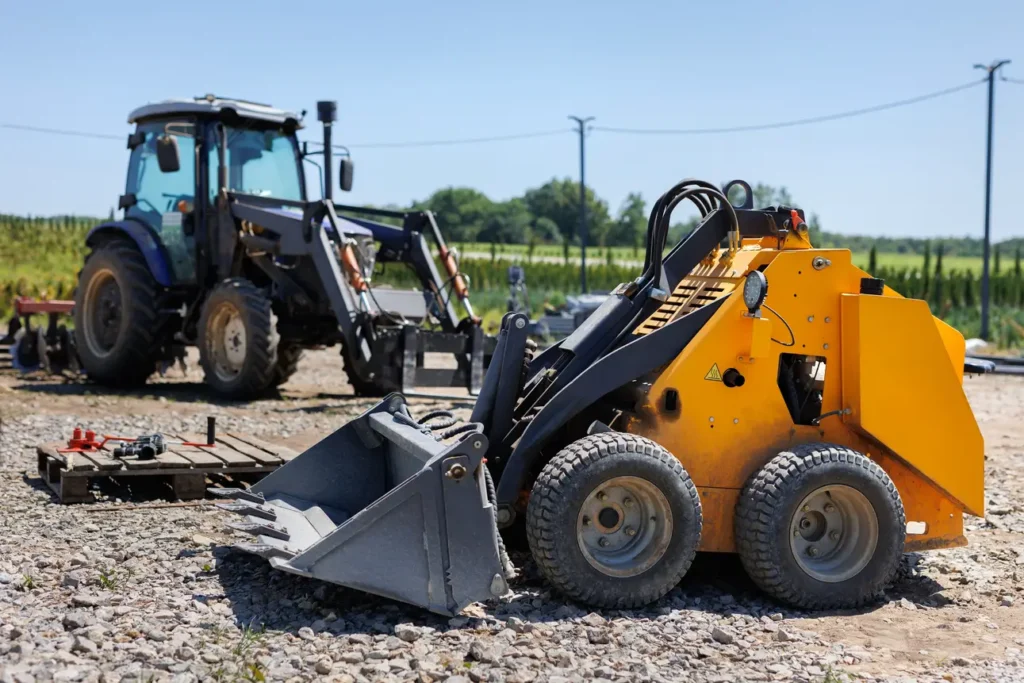
A skid steer loader, also known as a skid loader, is a small, rigid-frame loader that steers by varying the speed of the wheels on each side rather than turning them. That skid-steering system gives it a tight turning circle, which is why skid steer loaders work well in confined spaces a larger loader can’t reach. Skid steers run on wheels. Where the same compact-loader concept is needed on tracks for softer ground, a compact track loader or Posi-Track loader is the alternative. Sub-compact skid steer models start under 25hp, with full-size units running over 90hp. Quotor’s what is a skid steer loader guide covers the full breakdown.
What Is a Backhoe Loader?
A backhoe loader is a wheeled machine equipped with a front loader bucket and a rear digging arm, letting one operator load, carry and dig without switching machines. The front loader handles carrying and material movement, while the rear backhoe arm handles excavation and can accept attachments such as buckets, breakers or augers. Most backhoe loaders are also road-registrable, so they can travel between job sites under their own power. Our what is a backhoe loader guide has more detail.
Skid Steer Strengths
Compact Size and Manoeuvrability
A skid steer’s compact size allows it into tight spaces that rule out larger equipment: narrow laneways, cramped renovation sites and, on smaller models, access openings that larger loaders cannot use. Its zero-radius turning and small footprint mean an operator can reposition it constantly through a job without repeated three-point turns. Compared to skid steers, backhoe loaders need considerably more room to manoeuvre, which matters on confined job site conditions where clearance is limited. For size and maneuverability, the skid steer loader hire range covers the full spread of sizes available.
Attachment Versatility
Attachment versatility is the skid steer’s biggest advantage over a backhoe loader. Its quick-hitch coupler lets a single machine run various attachments, from buckets and pallet forks to an auger, a trencher, a sweeper and a grapple, for tasks that require frequent changeovers. Backhoe loaders can also take attachments on both ends, hammers, augers and buckets on the arm, forks or multipurpose buckets on the loader end, but their versatility centres on combining loading and digging work rather than frequent tool changes. Contractors switching between clean-up, landscape work and material handling in the same week get more use out of Quotor’s skid steer attachments than a backhoe loader’s more limited range of quick-change tools.
Best Jobs for Skid Steers
Skid steers suit landscaping projects, site clean-up, pallet handling and small-scale grading. They’re a popular choice wherever digging depth doesn’t matter but manoeuvrability and attachment range do, and on residential renovations a skid steer fitted with forks and a bucket can handle most of the day’s work without a second machine arriving. Our guide on how to operate a skid steer loader is worth a read before your first hire.
Backhoe Loader Strengths
Digging and Trenching Capability
A backhoe loader’s digging arm reaches considerably deeper than a skid steer fitted with a trencher or auger, and backhoe loaders typically dig down to around 4 to 6 metres depending on the model. That extra digging depth makes a backhoe loader the better choice for trenching stormwater pipes, sewer lines and building footings, jobs where a skid steer’s attachments run out of reach. The backhoe loader hire listings break down digging depth by model.
Front Loading and Material Handling
Equipped with a front loader bucket, a backhoe loader can move and load material between digging tasks without a second machine on site. It carries heavier loads than most skid steer buckets can manage, useful when material handling and excavation tasks happen on the same job. Because the loading and digging ends are fixed to one chassis, an operator switches between them in seconds rather than swapping attachments. See Quotor’s guide to backhoe attachments for the range fitted to both the loader end and the digging arm.
Best Jobs for Backhoe Loaders
Backhoe loaders suit utility trenching, footing excavation, pipe-laying and general civil work where digging and loading both need to happen on the same site. They also work well on jobs spread across a rural property, since most are road-registrable and can travel between sites without a trailer. Where a job needs both a dig and a lift, a backhoe loader is a genuinely versatile choice, more so than pairing a skid steer with separate mini excavators. Our how to operate a backhoe loader guide covers safe operation of both ends.
Skid Steer vs Backhoe Loader Comparison
| Dimension | Skid Steer | Backhoe Loader |
|---|---|---|
| Size and footprint | Compact, tight turning circle | Larger wheelbase, wider turning circle |
| Digging capability | Shallow, attachment-dependent | Deep, purpose-built digging arm |
| Loading capacity | Smaller front bucket | Larger front bucket |
| Attachment options | Broadest range via quick-hitch | Attachments on both ends, fewer overall |
| Ground conditions | Best on firm, relatively flat ground | Copes with a wider range of terrain |
| Popular brands | Bobcat, CAT, Kubota | CAT, JCB, Case |
| Hire cost | Depends on size, attachments and duration | Depends on size, configuration and duration |
Size and Site Access
A skid steer’s small footprint makes it the better choice for confined job site access, narrow laneways, side gates and, on smaller models, openings a backhoe loader can’t get through at all. A backhoe loader needs a wider approach and more room to swing its arm, so access is the first thing worth checking before booking either machine.
Digging Capability
A backhoe loader digs to several metres with a dedicated arm and bucket, while a skid steer only digs once fitted with a trencher or auger, and even then its digging depth stays shallow by comparison.
Loading Capacity
Both machines load and carry material, but for heavy loads a backhoe loader’s front bucket generally holds more per pass. A skid steer makes up ground on cycle time in tight areas, where its maneuverability lets it load and dump faster over short distances.
Attachments and Versatility
Skid steers generally offer the broader attachment ecosystem, with buckets, forks, augers, trenchers, brooms and grapples commonly available through a quick-hitch system. Backhoe loaders can also use attachments on both ends, but their versatility is centred more on combining loader and excavation work than on frequent tool changes.
Ground Conditions and Mobility
Wheeled skid steers suit firm, relatively stable surfaces. Where soft or disturbed ground is the main constraint, a compact track loader may be a better alternative. A backhoe loader’s larger wheels and road-legal build let it travel between sites without a trailer, an advantage a skid steer doesn’t share.
Popular Brands and Model Availability
Quotor lists skid steer brand options including Bobcat, CAT and Kubota, alongside backhoe loader brand options that mainly cover CAT, JCB and Case, brands with a long history building this construction machinery.
Hire Cost Comparison
A skid steer may cost less where the job only needs compact loading or attachment work, while a backhoe loader can reduce total project cost where one machine replaces separate digging and loading equipment.
Choosing the Right Machine to Hire
When to Hire a Skid Steer
Hire a skid steer when the job needs manoeuvrability and attachment changes more than digging depth: material handling, site clean-up, landscape work, pallet handling and small grading jobs on sites with limited access all point to a skid steer.
When to Hire a Backhoe Loader
Hire a backhoe loader when the job involves dedicated excavation, service trenching, footings or drainage, especially where loading and digging both need to happen without a second machine turning up. Its road-legal build also suits jobs spread across more than one site in a day.
Site Conditions and Project Requirements
Match the machine to the site before the job, not after. Check gate widths, ground conditions and digging depth needed against the loader hire range so you can make an informed decision, since the wrong choice on a confined or deep-dig site means delays and, in some cases, a second hire to finish properly.
Hire Cost and Project Duration
For projects with several stages, site prep followed by trenching followed by backfill, it’s often worth hiring a skid steer for the manoeuvring-heavy stages and a backhoe loader for the digging stage, rather than one machine for the whole job. Quotor’s guide to hiring construction equipment can help compare rates and availability for both, so hire duration for each machine matches the stage of work it’s actually needed for.