
Understanding Skid Steers and Forklifts
How Skid Steers and Forklifts Handle Material Differently
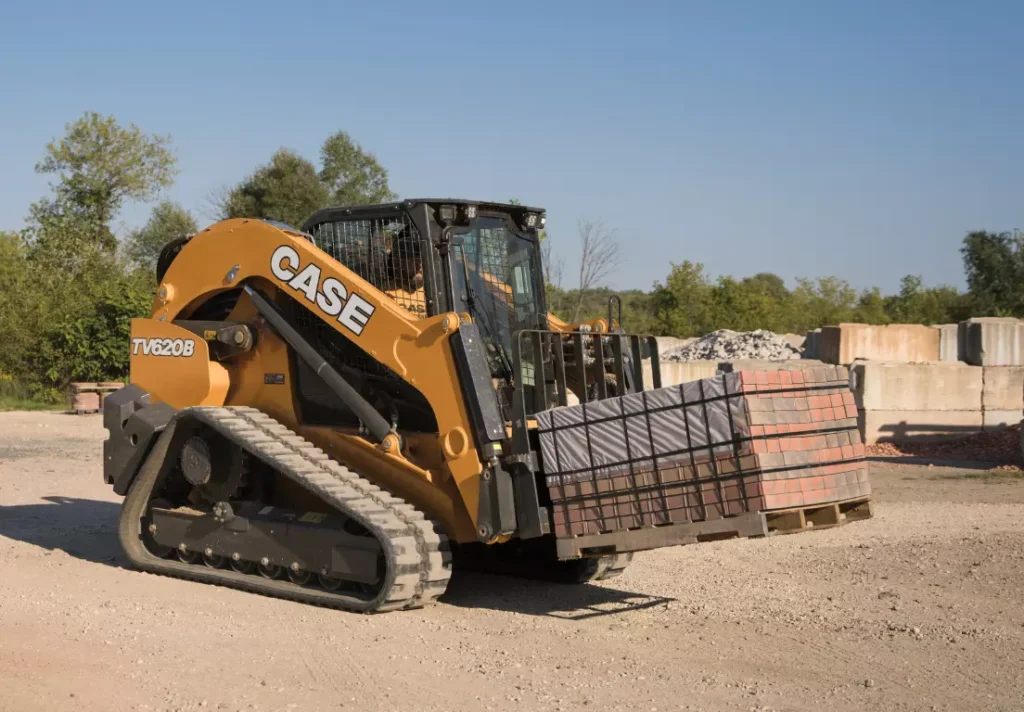
A skid steer scoops, carries and dumps material using a bucket or attachment on a front-mounted lift frame, steering by varying the speed of the wheels on each side. A forklift lifts a pallet on a pair of forks, raising and lowering the load rather than scooping it. That distinction, loose material versus a fixed load, shapes almost every other difference between the two machines covered below.
What Is a Skid Steer?
A skid steer is a compact, wheeled machine built around a rigid frame, a pair of lift arms and a quick-attach system at the front. It’s rated by operating capacity and horsepower rather than lift height, and its tight turning circle comes from skid steering rather than a conventional steering axle. Quotor lists them in the loaders category alongside compact track and wheel loaders; see what is a skid steer loader for the full breakdown.
What Is a Forklift?
A forklift, also called a lift truck, transports loads on a pair of forks, with a counterweight at the rear keeping it stable while carrying weight out front. Standard counterbalance forklifts are built for firm, level surfaces such as warehouse floors and paved yards; rough-terrain forklift variants exist for uneven job sites but are a different piece of equipment with a different tyre and chassis design. See what is a forklift for the full rundown.
Skid Steer Strengths
Manoeuvrability on Construction Sites
Skid steers turn within their own footprint, which makes them useful on sites where a wheel loader or forklift can’t get in or out cleanly. Fenced yards, partially built structures and staged laydown areas favour a machine that pivots on the spot without repeated forward-reverse manoeuvring. New operators can review how to operate a skid steer loader before their first day on hire.
Attachment Versatility
Buckets, augers, grapples, brooms and trenchers all fit the same quick-attach plate, so one skid steer can move between digging, grading and material handling tasks in a single day, and can excavate a short trench run without a dedicated excavator on site. The full range of skid steer attachments is worth checking against the job list before booking, which makes a skid steer a versatile machine on sites where the task list changes hour to hour.
Best Jobs for Skid Steers
Landscape work, site clean-up, demolition debris removal, snow removal and light excavation on tighter urban sites all suit a skid steer’s combination of compact size and attachment range. Across landscaping jobs, moving between spreading mulch, digging garden beds and clearing waste in one visit saves swapping equipment. Quotor’s skid steer listings let you filter by rated lift, so you’re comparing machines suited to your actual load rather than the cheapest option.
Forklift Strengths
Pallet Handling and Vertical Lifting
A forklift’s mast is built to lift heavy loads straight up and stack pallets several tiers high, something a skid steer’s shorter reach can’t match. That reach is why forklifts dominate warehouses and shipping yards, handling loads on and off trucks and into racking rather than digging or shifting loose material.
Stability on Firm, Level Surfaces
A forklift’s stability depends on its counterweight staying balanced against the load on the forks, which is why tip risk rises sharply on a slope, a soft surface or an edge, and why standard forklifts are rated for firm, level ground rather than a rough job site. Operators keep the load low while travelling, for stability and forward visibility, lifting fully only once stationary and square to the racking or truck bed.
Best Jobs for Forklifts
Forklifts suit warehouse put-away, container and truck loading, and moving heavy materials short distances across a paved yard where the surface stays consistent for the whole job. New operators can review how to operate a forklift safely before their first shift. Quotor lists forklifts by specifications such as lift capacity and lift height, so you can match the machine to both the load and the racking it needs to reach.
Skid Steer vs Forklift Comparison
The key differences between a skid steer and a forklift come down to how each machine moves material and what ground it needs to do it on, not just which job title matches the machine.
Machine Design and Working Method
A skid steer’s frame carries its own weight low and central, so the whole machine works as its own counterbalance; a forklift carries a fixed rear counterweight to offset the load on the forks, and the safe lift drops as that load sits further from the front of the machine. Skid steers turn by varying wheel speed side to side; forklifts steer through the rear wheels, giving a tight turn at the back but a wider front swing than new operators expect.
Lift Capacity and Load Handling
A forklift’s rated capacity is specified for a load at a defined load centre and is designed around carrying and stacking that load. A skid steer is rated by operating capacity, with usable capacity also affected by the attachment fitted and how far the load sits from the machine. Checking the rated load centre and what’s fitted up front matters more than comparing a single capacity figure alone.
Site Access and Manoeuvrability
A forklift needs a clear, firm run to manoeuvre: wide aisles, a loading dock or a paved yard, since rear-wheel steering swings the back end wide. A skid steer needs less clearance since it turns inside its own footprint, but the attachment up front still has to clear gateways and stacked material, so small doesn’t mean it fits everywhere a hand trolley would. The two often end up handling different zones of the same site rather than competing for the same space.
Ground Conditions and Surface Requirements
Standard counterbalance forklifts perform best on firm, reasonably level prepared surfaces such as concrete, asphalt or suitable compacted yards. Soft ground, mud, significant unevenness or steep slopes can compromise traction and stability, which is where a rough-terrain forklift becomes the better option. A wheeled skid steer tolerates more variation, compacted unsealed ground, gentle slopes, uneven ground, though it isn’t a substitute for a tracked machine on soft or wet conditions. Matching the machine to the actual surface matters more than matching it to the task.
Attachments and Versatility
Skid steer attachments swap on a single quick-attach plate and change what the machine does, a bucket becomes an auger becomes a set of heavy-duty forks in minutes. Forklift attachments change what they do rather than replacing the whole working end: fork extensions for oversized loads, a clamp for drums or bales, a sideshift for lining up with racking. Both have a variety of attachments, but a skid steer’s range covers a wider spread of task types.
Popular Brands and Model Availability
Skid steer hire fleets are dominated by a handful of established brands, Bobcat, Caterpillar, Case and Kubota among them, with models organised by rated lift rather than one badge fitting every job. Forklift fleets draw on an equally established set of manufacturers, Toyota, Hyster, Linde and Crown are common, with models split by fuel type as well as lift height. Some contractors cross-shop a compact tractor for lighter ground work, trading attachment-swap speed for lower running cost. Availability varies by region, so it’s worth checking what’s on the yard rather than assuming.
Hire Cost Comparison
Comparing a skid steer’s day rate against a forklift’s misses the point, since the two are usually hired for different jobs; the better comparison is cost against output, how much material a skid steer moves per hour against how many loads a forklift shifts. A rough estimate of equipment cost before hiring avoids paying for more machine, or more days, than the job needs.
Choosing the Right Machine to Hire
Choosing between forklifts and skid steers, or booking both for different stages of the same job, is part of the wider equipment procurement process, and comes down to ground conditions, load type and how many tasks the machine needs to cover.
When to Hire a Skid Steer
Reach for a skid steer loader when the job involves multiple tasks in one visit, digging, clearing, landscape work, and site access is tighter than a straight run for a forklift. If the site is unsealed or uneven but not genuinely soft or wet, a wheeled skid steer usually copes; if not, a tracked alternative is worth asking Quotor about.
When to Hire a Forklift
Reach for a forklift when the job is lifting and shifting loads on firm ground, warehouse put-away, container unloading, yard-to-truck transfers, and height matters more than reach. Confirm the crew holds a forklift licence before booking; if not, factor in training time or book an operated hire.
Site Conditions and Load Requirements
Ground condition and load type together usually point to one machine before cost even comes into it: firm ground leans forklift, uneven landscape and mixed material leans skid steer. Where both conditions apply, some sites use both machines for different stages, a forklift for receiving deliveries at the gate, a skid steer for distributing material once it’s on site.
Hire Cost and Project Duration
Hire duration should match the stage of work, not the whole project length; bringing a skid steer on for earthworks and a forklift on separately for a delivery-heavy stage usually costs less than keeping either machine on site the whole job. See how to hire construction equipment for a step-by-step guide. Quotor lets you compare quotes for both machine types from multiple suppliers before you commit to dates.