
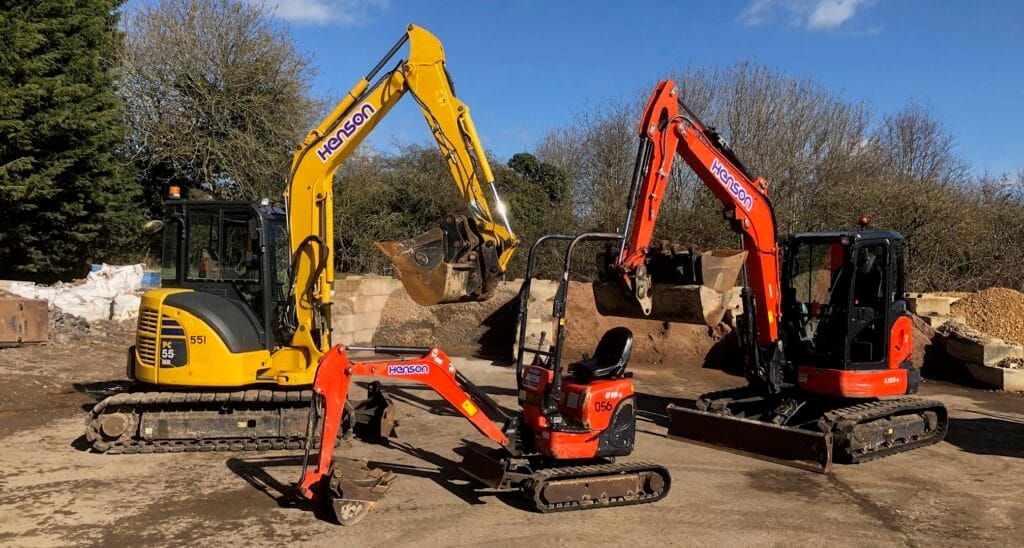
Knowing you need an excavator is the easy part. The harder question is which size, and getting it wrong in either direction costs money: a machine that’s too small drags a job out over days it should take hours, while one that’s too big can’t fit down the side of the house or through a shed door. This guide breaks excavator size down by operating weight, walks through the site factors that decide the right class for a job, and matches size to the work Australian contractors and homeowners actually hire excavators for.
Understanding Excavator Sizes
What Does Excavator Size Mean?
When someone asks what size excavator they need, they’re really asking about operating weight, the main figure used to group excavators into size classes and a useful starting point for comparing digging depth, lift capacity, transport requirements and hire cost. A guide to what an excavator is covers the different types in more depth, but for sizing purposes, weight is the number to start with. Dig depth, reach and bucket capacity all scale with it, though not in a fixed ratio, so two machines in the same tonne class can still differ on the numbers that matter for a specific job.
Excavator Operating Weight and Tonne Class
Quotor groups excavators into six weight classes, from micro machines under 1.7 tonnes through to extra-large mining units:
| Class | Operating weight | Typical use |
|---|---|---|
| Micro | Under 1.7 tonnes | Tight-access and indoor work, light landscaping |
| Mini | 1.7 to 9 tonnes | Residential digging, drainage, general earthmoving |
| Small | 10 to 19 tonnes | Subdivisions, roadworks, utility trenching |
| Medium | 20 to 35 tonnes | Civil infrastructure, bulk earthmoving |
| Large | 36 to 70 tonnes | Quarrying, mining support, deep excavation |
| Extra-large | 70 tonnes plus | Mining, major infrastructure work |
These bounds aren’t identical across every hire company, but they’re a reliable starting point for narrowing the search before comparing individual machines.
Why Excavator Size Matters
Hiring the wrong size shows up fast on site. A machine that’s too small means more digging cycles, slower trenching and a job that runs into overtime. One that’s too large can’t access the work area at all, or sits half-loaded because there’s no room to swing a full bucket. Size drives hire cost directly too: a bigger excavator costs more per day, needs a bigger float to deliver, and may need transport permits a smaller machine doesn’t. Matching size to the job, rather than hiring the biggest machine available “to be safe,” is usually the difference between finishing on budget and blowing it.
Common Excavator Size Classes
Each class suits a different scale of work. Here’s what separates them beyond the weight on the spec sheet.
Micro Excavators
Micro excavators weigh under 1.7 tonnes and are built for jobs where access matters more than raw digging power. Many retract to around 700mm wide, narrow enough to pass through a standard side gate or an internal doorway, which makes them the only practical option for indoor demolition, backyard work behind a fence, or trenching close to an existing structure. What they give up in return is dig depth, lift capacity and the grapple or breaker work a larger machine handles more easily, covered under selection factors below. Quotor’s guide to what a micro excavator is covers the class in more depth.
Mini Excavators
Mini excavators run from 1.7 to 9 tonnes across three common bands, and it’s the class most Australian contractors and homeowners hire. Roughly speaking, 1.7 to 3 tonnes suits small footings and residential trenching, 3.5 to 5.5 tonnes closes the gap on depth and breakout force for heavier site prep, and 6 to 9 tonnes starts handling grapple work that smaller minis can’t manage. Exact dig depth and lift figures for each band are covered under selection factors below. The guide on what a mini excavator is breaks the bands down further.
Small Excavators
Small excavators, generally 10 to 19 tonnes, are the step up once a job outgrows a mini excavator: subdivision earthworks, deeper utility trenching for stormwater and sewer lines, and commercial site preparation where cycle time matters more than manoeuvrability. The 13 to 14-tonne band is the most widely hired size in this class on Australian job sites.
Medium Excavators
Medium excavators, 20 to 35 tonnes, are the workhorse of civil construction in Australia: bulk earthworks, infrastructure projects and site development where productivity outweighs the need to fit into a tight corner. Their added hydraulic capacity lets them run larger attachments and dig faster than anything smaller, which is why they’re often the first machine specified once a project moves past residential scale.
Large Excavators
Large excavators weigh 36 to 70 tonnes and are built for continuous heavy output rather than the varied, stop-start work typical of a construction site. Quarrying, mining support, deep excavation and major civil infrastructure are where this class earns its keep, moving substantially more material per cycle than a medium excavator can manage.
Extra-Large Excavators
Extra-large excavators, over 70 tonnes, sit at the top of the conventional excavator range and are reserved for open-cut mining, quarrying and major resource projects where production volume is the only thing that matters. These machines aren’t hired for anything smaller; mobilising one to a job that doesn’t need that much digging power wastes money the day it arrives.
Matching Excavator Size to the Job
Size class is a starting point. The actual job usually narrows the choice further.
Landscaping and Residential Work
Garden beds, sleeper retaining walls, small pool excavations and general backyard reshaping rarely need more than a micro or 1.7 to 3-tonne mini excavator. Site access is usually the deciding factor here, an 800mm side gate rules out anything bigger than a micro machine before dig depth or lift capacity even come into it.
Trenching and Utility Work
Trenching for stormwater, power, sewer and irrigation lines is a task mini and small excavators handle better than almost anything else their size, since a narrow bucket cuts a consistent depth a loader can’t match. As required trench depth increases beyond what a smaller mini can reach, a larger mini or small excavator becomes more practical, but maximum digging depth should be checked on the individual model rather than inferred from tonne class alone, since it varies with boom and arm configuration as well as weight.
General Construction and Earthmoving
Subdivision earthworks, footings and cut-and-fill on a commercial site usually call for a small or medium excavator, where the extra breakout force and bucket capacity cut the number of cycles needed to move the same volume of material. Dump height is worth checking too, since a truck-loading operation caps out a machine that can’t clear the tray, and hydraulic flow starts to matter as much as weight once bucket capacity climbs.
Demolition and Heavy Excavation
Breaker size should be matched to both the demolition task and the excavator’s approved attachment range rather than assumed from job type alone. Mini and small excavators handle lighter concrete demolition, garden sheds, driveways, small slabs, without trouble, while heavier structural or production breaking generally calls for a medium or large excavator with greater hydraulic capacity to match.
Quarry and Large Civil Projects
Moving overburden, extracting material and running continuous cycles on a quarry or major civil site is where large and extra-large excavators earn their keep. Production volume, not manoeuvrability, drives the size decision at this end of the scale, and a medium excavator running flat out simply can’t match the tonnes-per-hour a large machine delivers.
Excavator Size Selection Factors
These are the variables that turn a size class into an actual machine choice for a specific job.
Digging Depth and Reach
Digging depth rules machines in or out before anything else matters, since a trench or footing that needs to go deeper than a machine’s maximum reach simply can’t be dug with it. As a rough guide, a micro excavator manages around 1.5 to 1.8 metres, a 1.7 to 3-tonne mini reaches 1.8 to 2.5 metres, and a 6 to 9-tonne mini gets close to 4 metres, with small, medium and large excavators digging deeper again as weight climbs. Reach, measured from the centre of rotation to the bucket at full extension, matters just as much where the machine works from one fixed position, such as along a fence line without repositioning.
Lift Capacity and Breakout Force
Breakout force determines how hard a bucket can dig into compacted or rocky ground, while lift capacity determines how much the machine can safely handle with a grapple or pallet forks fitted. Horsepower is a poor proxy for either; hydraulic flow and pressure drive breakout force and lift far more directly than engine size does. These are separate specs from digging capability and worth checking independently if a job mixes trenching with material handling. If the work involves suspending a load, lifting pipe sections or precast elements rather than digging, treat that as its own category: check the excavator’s rated lifting capacity, its approved lifting point, and the licensing requirements in your state or territory. In Western Australia, for example, an excavator used as a crane has required a High Risk Work Licence since 10 August 2025 once the safe working load passes three tonnes. Lifting and dogging requirements vary by jurisdiction, so confirm the current rules with the relevant WHS regulator before planning a lift-heavy job.
Site Access and Working Space
Gate widths, side passages and overhead clearance usually set the size ceiling before digging performance does. A standard side gate is often as narrow as 700 to 900mm, which is why micro and small mini excavators dominate residential and tight-access work. Zero tail swing models keep the counterweight within the track width, useful near fences and parked cars in confined spaces, and an expandable undercarriage narrows for the trip through a gate before widening out for stability once it’s digging.
Ground Conditions
Soft, sloped or rocky ground can rule out a machine that would otherwise suit the job. Tracked excavators spread weight over a wider footprint than wheeled machines, giving better traction on soft or uneven terrain. Very soft ground is a matter of checking ground pressure, track width and bearing capacity rather than machine weight alone, since a larger excavator on a wider or LGP-style undercarriage can exert less ground pressure than a smaller machine running narrow tracks. Rocky conditions generally call for a heavy-duty rock bucket rather than a bigger machine outright.
Attachment Requirements
Match the attachment to the machine before matching the machine to the job. Bucket capacity ranges from a fraction of a cubic metre on a micro excavator up to well over a cubic metre once you’re into 20-tonne-plus machines, and it needs to suit both the material being dug and the excavator’s hydraulic output; a bucket too large for the machine slows cycle efficiency and strains the hydraulic system. Two of Quotor’s guides are useful here: excavator bucket sizes for matching capacity to material and job, and the parts of an excavator for how the arm and hydraulic system work together to power an attachment. Augers, breakers and grapples all need enough hydraulic flow to perform properly; an attachment sized for a 10-tonne excavator will generally underperform on a 3-tonne machine.
Excavator Size Comparison
Micro vs Mini Excavators
The decision between these two rarely comes down to job type, since both handle similar light digging. It comes down to access: if the site has a gate or doorway narrower than about 900mm, a micro excavator is the only option regardless of how much digging remains. Where access allows either, a 1.7 to 3-tonne mini digs deeper and lifts more, so it’s the better choice once the job needs more than light landscaping or backyard work.
Mini vs Medium Excavators
This comparison usually comes up on subdivision or small commercial jobs sitting between the two classes. A 6 to 9-tonne mini still fits through most site access points, but a medium excavator moves far more material per cycle and handles larger attachments, the dig depth and lift figures under selection factors above set the exact crossover point for a given job. If a project involves ongoing bulk earthmoving rather than occasional trenching, the extra hire cost of a medium excavator often pays for itself in reduced project time.
Medium vs Large Excavators
Medium and large excavators overlap mainly on civil infrastructure work, where either could technically get the job done. The deciding factor is usually production volume and how continuously the machine runs: a medium excavator suits a project with mixed tasks and some downtime between cycles, while a large excavator suits sustained bulk material movement, such as quarry loading, where the higher hire cost is offset by moving significantly more tonnes per hour.
Choosing the Right Excavator Size to Hire
When a Smaller Excavator Is Enough
If the job is mostly trenching, footings or landscaping on a residential or small commercial site, a mini excavator usually handles it without the extra hire cost and transport hassle of a bigger machine. Defaulting to a larger excavator “to be safe” is one of the most common, and most avoidable, ways hire budgets blow out.
When to Move Up a Size Class
Signs a machine is undersized show up quickly on site: digging cycles taking noticeably longer than expected, a bucket that can’t reach the required depth, or an attachment that stalls the hydraulic system rather than powering through it. Any of these means the next size class up will finish the job faster, and often cheaper overall, even at a higher daily hire rate.
Avoiding an Oversized or Undersized Excavator
Getting size wrong in either direction adds cost. Undersizing means more machine hours and a longer project timeline; oversizing means paying for capacity the site can’t use and, in tight spaces, a machine that simply can’t get to the work. On commercial sites, it’s also worth confirming the operator holds the right competency for the machine and task, since larger classes generally call for more experience than a mini excavator does. Quotor’s guides on becoming an excavator operator and how to operate an excavator cover what’s generally expected.
Hire Cost and Transport Considerations
Hire rates rise with excavator size, and so does everything around the hire: bigger machines need bigger floats to deliver, may need transport permits smaller excavators don’t, and cost more to reposition mid-project. Wet hire, machine and operator together, costs more than dry hire but removes the need to source a qualified operator separately. Getting quotes from more than one supplier is the most reliable way to check a fair rate for the size actually needed. Quotor compares excavator hire options across all six size classes, making it straightforward to find the right size and supplier for a specific job rather than settling for whatever’s available first.