
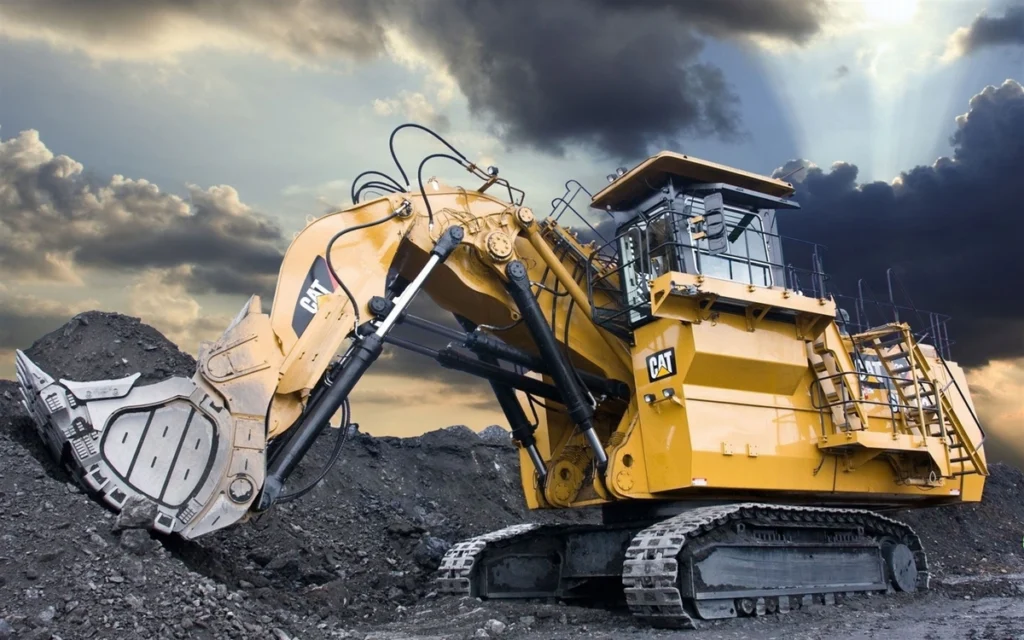
A mining excavator is a purpose-built hydraulic or electric excavator designed for continuous, high-volume digging and loading in open-pit mines and quarries. Where a construction excavator handles trenching, footings and general earthworks in short, varied bursts, a mining excavator does one job at enormous scale: strip overburden and load haul trucks, shift after shift, at the largest end of the excavator range Quotor lists for hire.
Understanding Mining Excavators
What Is a Mining Excavator?
A mining excavator sits within the broader earthmoving equipment family, but at a scale most construction sites never need. Within Quotor’s taxonomy, mining-scale excavators typically sit in the Large and Mining classes, from about 36 tonnes upward, although mining and quarry operations can also use smaller excavators depending on the task. The largest hydraulic mining shovels run well past 300 tonnes, with electric rope shovels bigger again, and the class is built for quarrying, mining support and major infrastructure work rather than the general digging most construction-grade machines handle. Their job is narrow but heavy: load haul trucks directly from the pit face, strip the waste rock covering an ore body, and move bulk material at a rate that keeps a mine’s truck fleet running.
How Mining Excavators Differ from Construction Excavators
A general-purpose excavator is built for flexibility, switching between digging, trenching, lifting and grading across a varied job site. A mining excavator gives up that flexibility for production. It runs a reinforced structure and heavier counterweights to handle sustained digging forces, uses much larger bucket capacities, with the payload per pass determined by bucket volume, material density and fill factor, and is usually set up in one configuration, backhoe or front shovel, matched to how the pit face is worked rather than swapped between tasks. Most stay on one site for years rather than moving between jobs, which is why mobilisation and transport matter more here than for almost any other excavator class.
How a Mining Excavator Works
Hydraulic System and Digging Equipment
On a hydraulic mining excavator, the engine drives hydraulic pumps that pressurise oil to extend and retract the cylinders on the boom, arm and bucket, the same basic layout set out in the parts of an excavator, scaled up considerably. Larger cylinders, higher hydraulic capacity, reinforced structures and heavy-duty linkage let mining excavators generate and withstand the digging forces required for blasted rock, while higher pump flow supports the cycle speeds needed for production.
Undercarriage, Swing System and Stability
Wide track pads spread the machine’s weight to keep ground pressure manageable on uneven pit floors, while reinforced track frames and heavy counterweights keep the machine stable when swinging a full bucket of dense rock. A slewing ring and hydraulic swing motors rotate the upper structure so the operator can dig, swing and load without repositioning the machine between passes, a technique covered in more detail in how to operate an excavator.
Types of Mining Excavators
Backhoe Excavators
A backhoe-configured mining excavator digs by pulling the bucket toward the machine, working at or below track level. This makes it the more adaptable of the two configurations: it can work a blast pile with an uneven floor, dig below bench height, and rotate a full 360 degrees, which suits overburden removal and general mining excavation where site conditions vary.
Front Shovel Excavators
A front shovel pushes the bucket upward and outward into the material, attacking the face directly rather than digging down into it. Front shovels work best from a stable floor against a suitably sized face or bench, with the required bench height depending on the machine, bucket and material, but reward that setup with faster cycle times and higher loading rates when paired with rigid haul trucks. Front shovels are production tools built for fixed, high-volume open-pit operations rather than varied conditions.
Electric Mining Excavators
Two different machines sit under this heading. The largest is the electric rope shovel, a rope-and-pulley digging machine powered entirely by electricity rather than hydraulics, tethered to a fixed power supply and reserved for the biggest open-pit and coal operations, where its scale means it is almost always owned outright rather than hired. Separately, a small but growing number of hydraulic mining excavators now run on grid power through a trailing cable rather than a diesel engine, cutting fuel costs and emissions at sites with reliable mine electrical infrastructure, without giving up the manoeuvrability of a conventional hydraulic machine. It is this second category that sits within reach of Quotor’s hire network.
What Are Mining Excavators Used For?
Loading Haul Trucks
The core job of a mining excavator is loading haul trucks directly from the pit face or a stockpile, and productivity comes down to how well the bucket size and cycle time match the truck being loaded rather than the excavator’s raw size alone.
Overburden and Rock Excavation
Before ore or mineral can be extracted, the waste rock and soil sitting above it, the overburden, has to be stripped and moved clear. Mining excavators also handle the material left after drill-and-blast operations, breaking down and loading fragmented rock that a construction-grade machine isn’t built to move at volume.
Quarrying and Bulk Material Handling
In a quarry, the same digging and loading role applies to aggregate, sand and gravel deposits rather than ore, feeding crushers or stockpiles. Quarry operations generally run at a smaller scale than a mine and with a shorter-lived pit, which is why quarry work tends to sit at the lighter end of the mining excavator size range covered below.
Choosing the Right Mining Excavator
Match Excavator Size to the Operation
Quotor groups mining-scale excavators into two classes based on operating weight:
| Quotor Class | Approx. Operating Weight | Typical Use |
|---|---|---|
| Large | 36-90 tonnes | Quarrying, mining support, deep excavation |
| Mining | 100 tonnes plus | Mining, major infrastructure |
Operating weight alone is a rough guide at best. Checked against the excavator sizing guide and the actual production target for the pit, it gives a far more reliable match.
Match Bucket Size to Haul Trucks
Excavator and haul-truck capacity should be matched, using excavator bucket sizes as a starting point, so the truck is filled in a practical number of passes without leaving either machine waiting excessively. The optimum pass count depends on bucket payload, truck capacity, cycle time, material density and operating conditions.
Consider Material and Ground Conditions
Rock hardness and blast fragmentation determine how much digging force is actually needed, which affects both machine size and bucket choice. Floor stability and bench height decide the configuration question from the Types section above: a clean, high face favours a front shovel, while a broken or uneven floor favours a backhoe.
Diesel vs Electric
A diesel mining excavator stays flexible on developing or remote pits without established grid power, and it can be relocated as the pit progresses. A cable-fed, grid-tied electric machine lowers running cost and emissions on a site with reliable power infrastructure already in place, at the cost of the cable management and reduced mobility that come with it.
Hiring or Sourcing a Mining Excavator
Availability and Mobilisation
The general process for how to hire construction equipment still applies at mining scale, but availability and lead time matter far more. Mining excavators are rarely sitting idle and ready to move. Larger mining excavators may need partial disassembly for road transport, with major components moved separately under oversize-load arrangements and reassembled on site. Smaller mining and quarry excavators may move with less disassembly depending on transport dimensions and jurisdiction. Quotor researches the market and contacts suppliers directly to find a mining excavator matching the required class and configuration, which matters most here given how far ahead mobilisation needs to be booked.
Wet Hire vs Dry Hire
As explained in dry hire vs wet hire, wet hire supplies the machine with an operator, while dry hire supplies the machine only. Wet hire can suit contractors or mine sites that need both the machine and experienced operating capacity, while dry hire can suit operations that already have competent operators and maintenance support in place. Quotor lists both hire types so the choice can be filtered to what the site actually needs.
What to Confirm with the Supplier
Before confirming a hire, check the machine’s service history and the condition of the bucket and ground engaging tools, and clarify who is responsible for transport and reassembly. On the operator side, the operator is generally expected to demonstrate competency for the machine and task, which may be supported by relevant training, experience or a site-based verification of competency, a topic covered in how to become an excavator operator. Insurance and site induction requirements are worth confirming upfront too, to avoid delays once the machine is on the ground, and Quotor can help compare available units against all of these before a supplier is locked in.