
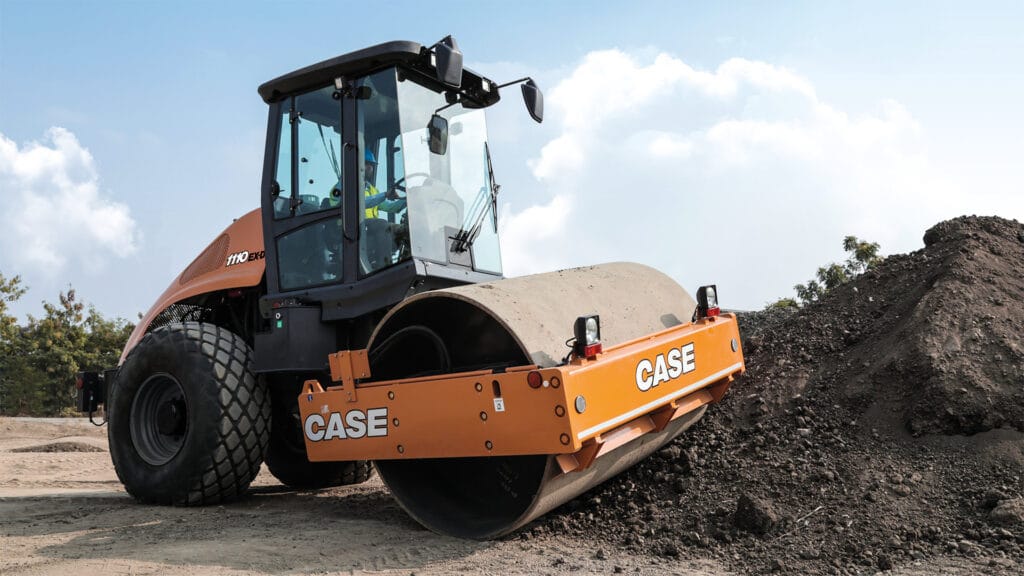
A compaction roller is a common sight on Australian construction sites, using weight and often vibration to press soil, gravel and asphalt into a dense, stable base before building continues. Quotor’s guide to compaction rollers spans from compact trench units to heavy three-point road rollers, and picking the right one starts with knowing how each works.
Understanding Compaction Rollers
What Is a Compaction Roller?
A compaction roller is a self-propelled machine that uses its own weight, and often vibration, to compact loose soil, gravel or asphalt into a denser material. A roller’s whole job is density: pressing air pockets out of the ground so it can bear the load on top, whether it’s a road, slab or foundation.
How Compaction Rollers Work
The compaction process works one of two ways. Static rollers use static weight alone to press material down. Vibratory rollers add vibration on top of that weight, reducing air pockets and knocking particles together. A heavier roller running higher vibration settings can achieve deep compaction, though the wrong setting can loosen material rather than compact it.
What Compaction Rollers Are Used For
Compaction rollers turn up wherever ground needs to bear weight without settling: preparing the base beneath a road, packing crushed stone around a foundation, or firming a driveway’s sub base. The material being compacted, cohesive clay, gravel or asphalt, dictates which type of roller suits the job. These common uses span roadworks, foundations, driveways and landscape projects.
Compaction Roller Comparisons
Static vs Vibratory Rollers
The static versus vibratory choice depends on the material and depth needed. Static rollers are lighter and easier to control, suiting finishing passes where surface finish matters more than depth. Vibratory rollers knead granular materials into a denser mass and compact deeper layers than static weight alone. Too much vibration on wet clay can loosen it, so operators finish with a lighter pass.
Single Drum vs Double Drum Rollers
A single drum roller has one steel cylinder up front and tyres behind, for traction. Double drum rollers, also called tandem rollers, swap those tyres for a second cylinder, so both ends compact at once. Both are a type of road roller; Quotor’s guide to choosing between them shows why two vibrating drums together get a smooth finish in fewer passes than a single drum machine.
Smooth Drum vs Padfoot Rollers
Surface texture is what really separates these two, not just whether the roller is static or vibratory. Smooth drum rollers use a plain steel cylinder, suited to granular surfaces and asphalt, for an even, compact surface rather than deep penetration. Padfoot rollers swap that smooth steel for tapered pads that knead cohesive clay from inside the layer out, and many padfoot units are vibratory too, since kneading and vibrating are complementary rather than competing mechanisms. Quotor’s comparison of the two is worth checking, since the wrong type can leave material under compacted no matter which roller is running.
| Feature | Smooth | Padfoot |
|---|---|---|
| Surface | Plain steel cylinder | Steel cylinder with projecting pads |
| Best suited to | Sand and base course material | Cohesive soil such as clay |
| How it compacts | Surface pressure, often vibrating | Kneading through the lift, often vibrating |
| Typical use | Base courses, surface finishing | Embankments, cohesive fill |
Three-Point Rollers
Three-point rollers are heavier, purpose-built machines: three metal drums self-propel evenly across large, open areas of soil, gravel or asphalt, seen mainly on major road jobs rather than smaller sites. Their own weight is usually enough to reach the density without vibration, keeping them simple to run but less suited to tight spaces.
Soil Compactors
A soil compactor sits at the heavy-duty end of the family, built as earthmoving machinery for large-scale ground compaction rather than paving. They’re common on landfill sites, dam works and foundation jobs, where load-bearing capacity and structural integrity matter more than surface finish. Rather than relying on static weight alone the way older designs did, modern soil compactors combine substantial operating weight with a vibrating drum to work deeper soil layers efficiently, often with interchangeable smooth or padfoot shells depending on the material.
Other Types of Compaction Rollers
A few specialised machines round out the family. Combination rollers pair a smooth drum with pneumatic tyres in one chassis, useful where a site needs both density and a sealed finish without swapping machines mid job. Quotor’s rundown of other roller configurations covers these and other less common types.
Compaction Roller Applications
Soil Compaction
Soil compaction is used to compact the ground beneath foundations, retaining walls and pavements, turning loose or cohesive soil into a stable base that won’t shift or cause subsidence later. Cohesive soils such as clay generally suit padfoot drums, whose projecting feet work the material through the lift, and many padfoot compactors also add vibration for extra effort. Loose or sandy soil responds better to a plain, vibrating drum, with particles to shake into place rather than a lift to work. The soil type being compacted decides which roller suits the job.
Asphalt Compaction
Asphalt compaction happens in stages while the asphalt layers are still hot: a breakdown pass, an intermediate pass adding density, and a finishing pass, often with a multi-tyre roller, for the smooth finish and durable base needed. Double drum rollers are ideal for the breakdown pass, since asphalt that cools too far simply won’t compact.
Road Construction
Road construction can use several roller types in sequence: padfoot compactors on cohesive fill, smooth vibratory rollers on the loose sub base and base material, then tandem and pneumatic rollers during asphalt compaction. Crushed stone and aggregate particles must lock together at each layer, standard practice across the construction industry, before the next goes down.
Site Preparation and Civil Works
Beyond roads, rollers help with site preparation and civil works: compacting the base under a shed slab, stabilising a landscape feature like a retaining wall footing, or preparing access tracks before heavier machinery moves in. This range of compaction uses is why most construction projects need a roller pass regardless of site conditions.
Benefits and Limitations of Compaction Rollers
Efficient Ground Compaction
A roller’s biggest advantage is speed: a single vibratory pass, achieving consistent density across the ground, beats hand tamping, and machine weight does the heavy lifting. Good roller work, run at the right pace, produces even compaction from edge to edge, and a well maintained roller stays long-lasting under heavy loads on site.
Improved Surface Stability
Proper compaction adds durability and strength to a surface by collapsing air gaps between particles, so the finished surface layers carry traffic without cracking or rutting. Skipping this step, or under compacting to save time, is a common cause of structural damage, since a void left behind becomes a problem once weight sits on top.
Suitability for Different Materials
Choosing based on material type is the single biggest factor for good compaction. Gravel and crushed stone respond best to vibration, since particles need shaking rather than squeezing. Cohesive materials such as clay respond well to a padfoot drum’s kneading action, and many padfoot units are vibratory too, adding extra compaction effort on top of the kneading. Too much shaking on wet clay can pump water to the surface and weaken the material instead of strengthening it.
Limitations in Confined or Specialised Work
Not every job suits a full-size roller. Larger rollers need room to turn and clearance to work safely, ruling them out for trenches or tight backfill. Trench rollers fill that gap: compact, often remote-controlled machines built for confined spaces, trading coverage and travel speed for access, though they still deliver real vibration once in position.
Choosing the Right Compaction Roller
Choosing the right roller comes down to four practical factors.
Material Type
Material type should narrow the shortlist first. A smooth drum roller is best for granular surfaces, a padfoot roller is best for cohesive soils, and a combination roller works as a middle ground for mixed sites. Whether that roller is also vibratory is a separate question, driven by the depth needed rather than the material alone. Selecting the correct type matters more than machine size alone.
Operating Weight and Drum Width
Two rollers with the same specs can differ in operating weight and width. A wider roller covers more ground per pass on open sites, while a heavier one reaches deeper into the material. Many modern compaction rollers feature adjustable vibration settings, so vibration use scales with the material rather than one fixed setting.
Compaction Depth
Getting compaction depth right on the first pass avoids costly rework later. Depth depends on weight and vibration working together, along with drum diameter, rather than any single spec. A heavier static roller and a vibratory roller with the right settings can both reach deeper compaction than a lighter machine manages alone.
Site Access and Ground Conditions
Site access and ground conditions decide the shortlist before material type matters. A tight urban block, a sloped landscape or a trench that a full-size roller can’t fit into, all call for something smaller. Trench rollers and other compact machines exist for this reason, delivering real compaction in spaces standard rollers can’t reach.
Compaction Roller Hire
When to Hire a Compaction Roller
Hiring makes sense for every construction project that isn’t running rollers daily, since buying used rollers means covering maintenance, transport and storage between jobs. Roller hire gives access to the right type of roller for each stage of work, a smooth drum one week, a padfoot the next, without owning either. It also opens up specialised types like a trench or three-point roller for the one job that needs one.
Factors to Consider When Hiring
Match the machine to the job first. Operating weight and, for wet hire, operator experience with the material affect the result more than the daily rate. Wet hire pairs the roller with a qualified operator; dry hire is the machine alone for trained contractors. Confirming whether the job needs a multi-tyre roller or a combination roller helps ensure the roller that turns up is right.
Compaction Roller Hire Costs
Costs vary by drum type, machine weight and wet versus dry hire, so a single figure isn’t meaningful from a compact trench roller to a three-point road roller. Rates rise with size, an operator, and minimum hire periods, delivery and fuel. Comparing quotes is the best way to judge a fair price for a successful construction outcome, which is exactly what Quotor helps contractors do.