
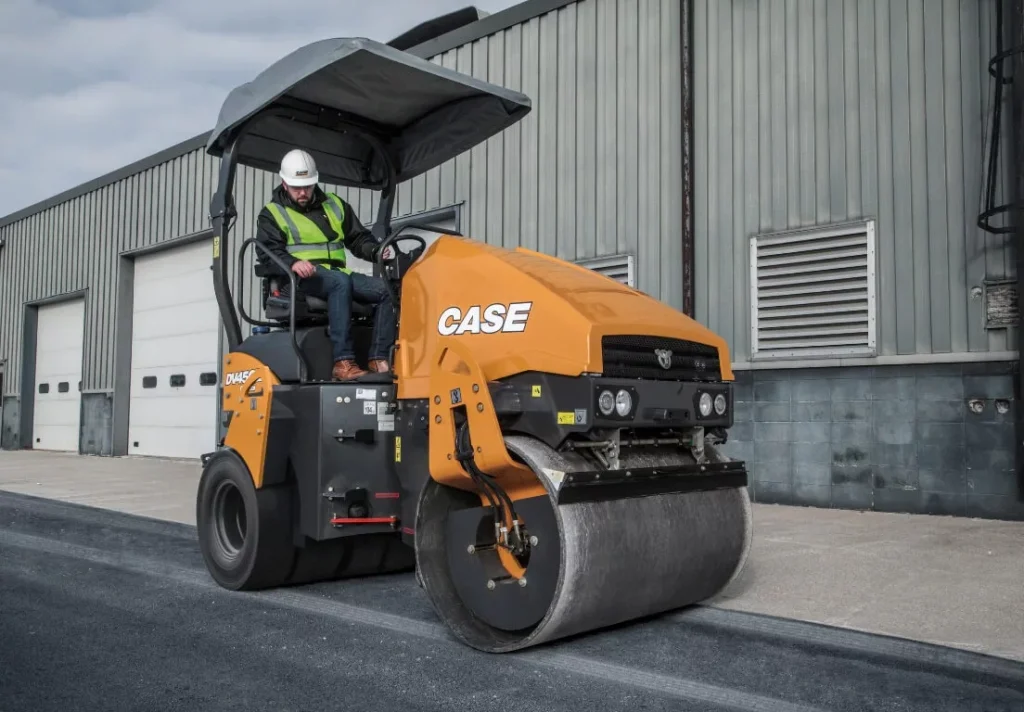
A combination roller pairs a smooth steel drum with pneumatic tyres on the same chassis, so one machine handles the compaction and finishing passes that asphalt work usually needs in separate stages. Quotor lists combination rollers as their own equipment category, alongside other earthmoving and construction equipment used across Australia.
Understanding Combination Rollers
What Is a Combination Roller?
A combination roller is a compaction roller with one smooth steel drum at the front and a bank of rubber tyres at the rear, rather than two drums or an all tyre layout. Quotor’s combination roller category treats these machines separately from double drum and multi tyre rollers, since the mixed configuration works differently on site. The drum provides static and vibratory compaction; the tyres add a kneading motion no single configuration roller can replicate alone.
How Combination Rollers Work
The front drum applies steady static and vibratory pressure that sets initial density, while the rear tyres knead the surface behind it, sealing small gaps a drum alone tends to leave. A water spray system on many units stops hot asphalt sticking to the drum. Running both actions from one machine is an effective way to cut passes and equipment moved between jobs. Quotor’s guide to compaction rollers covers the drum only and tyre only designs too.
Combination Roller vs Tandem Roller
A tandem roller, also called a double drum roller, replaces the rear tyres with a second steel drum, so both ends compact with the same static and vibratory action. That gives a tandem roller two steel compaction surfaces and generally greater vibratory compaction capability, suiting higher-production asphalt work and larger paving jobs. A combination roller trades some of that capability for the tyres’ sealing ability, suiting jobs that need both the structural pass and the surface finish from one machine.
Combination Roller vs Pneumatic Tyre Roller
A multi tyre roller, also called a pneumatic tyre roller, uses pneumatic tyres front and rear with no steel drum, and is commonly used for intermediate or finishing compaction, where its kneading action helps build density, improve layer bonding and seal the surface. A combination roller’s front drum lets it start that compaction itself instead of waiting on a separate machine, then finish with the same kneading motion a multi tyre roller relies on. The trade off is fewer tyres in contact with the surface, so a dedicated multi tyre roller covers more area per pass.
Combination Roller Applications
Asphalt Compaction
Combination rollers are used primarily on asphalt, where the drum’s static and vibratory pressure compacts the hot mix while its temperature is still workable, and the tyres seal the surface for fewer voids that would otherwise trap water and shorten the pavement’s lifespan. On thinner layers common in general paving, one combination roller can often finish a job that would otherwise need two separate rollers.
Road Construction and Maintenance
Combination rollers handle the initial compaction of new asphalt and the patch repairs that maintenance crews carry out on Australia’s transport infrastructure more often than full repaves. The same drum and tyre combination that suits a repave also works well on smaller repair sections, where bringing in two separate rollers for one patch isn’t worth the cost or truck movements.
Car Parks and Access Roads
Car parks and other lower traffic surfaces are a common fit for combination rollers, since a compact machine suits confined environments better than a larger tandem roller. Quotor’s roller range includes smaller combination models built for exactly this kind of lower volume paving application, where manoeuvrability matters more than maximum compaction force.
Residential and Commercial Paving
Driveways, footpaths and small commercial car parks are typically paved with thinner asphalt mixes, and a combination roller’s drum and tyre pairing is usually enough to achieve a dense, well sealed finish without hiring a second machine. Larger commercial developments with thicker pavement design may need a heavier tandem roller for the base course.
Benefits and Limitations of Combination Rollers
Combined Drum and Tyre Compaction
Having both compaction mechanisms on one chassis is the combination roller’s main advantage: the drum’s static weight and vibration set density early, much as a dedicated smooth drum roller would, and the tyres finish with a kneading action, but both happen in one pass. That combined pass eliminates the need for a second roller on smaller jobs, lifting productivity on a tight schedule.
Improved Surface Finish
The tyres’ kneading motion presses down high spots and closes small gaps a steel drum alone tends to leave, and delivers a smoother, more even asphalt finish. Quotor’s guide to multi tyre rollers explains the same principle, since the finishing tyres on a combination roller operate the same way, just paired with a drum rather than standing alone.
Versatility Across Asphalt Work
Because one machine covers two compaction roles, a combination roller adapts to a wider range of asphalt applications than a single configuration roller, from full repaves to smaller patch and maintenance work. That flexibility is part of why hire fleets offer a versatile combination roller alongside more specialised tandem and multi tyre rollers, rather than choosing one type over the others.
Limitations Compared with Dedicated Rollers
A combination roller generally can’t match a heavy tandem roller’s compaction force on thick base courses, or a full multi tyre roller’s sealing coverage on a wide finishing pass, since it’s doing a version of both jobs rather than either at full capacity. On large paving projects, contractors typically still bring in dedicated rollers for each stage, so a combination roller suits small to mid sized work better.
Choosing the Right Combination Roller
Operating Weight and Drum Width
Combination rollers used on Australian construction projects generally range from around 1.5 to 4 tonnes for compact models suited to car parks and driveways, up to 8 tonnes or more for larger units used on resurfacing work. Drum width usually sits between roughly 1 and 1.5 metres, and a wider drum allows more surface per pass, which matters on bigger jobs where finishing before the asphalt cools is the priority.
Compaction Force and Vibration
The drum’s static weight and vibration output provide the compaction force, and modern vibration technology increases density but risks damage on thin layers or sensitive material if set too high. Quotor’s guide comparing single and double drum rollers covers the same trade offs, since the underlying principle is shared across drum types. Matching vibration to the material and layer, rather than defaulting to the maximum, ensures proper compaction performance.
Asphalt Layer Thickness
Thinner asphalt layers used on driveways and footpaths generally require less compaction force than the thicker layers laid on major routes, and a compact combination roller usually suits the former application. On thicker layers, checking that a machine’s compaction force and drum width suit the asphalt mix before booking avoids an underpowered roller turning up when the job requires a heavier tandem unit.
Site Access and Working Width
A combination roller’s size also needs to suit the location, since narrow access points, sloped driveways and confined car parks affect which machine is practical. Working width determines how much surface the machine covers per pass, so matching it to the available space matters as much as matching the asphalt.
Combination Roller Hire
When to Hire a Combination Roller
Hiring a combination roller makes sense whenever a job needs both compaction and finishing but doesn’t justify two separate rollers, which covers most small to mid sized asphalt work, from driveways to local patching work. Quotor’s guide to compaction roller types is a useful place to check whether a combination roller or other equipment fits a bigger construction project, and hiring also avoids the cost of ownership and ongoing expense of buying a machine used only occasionally.
Factors to Consider When Hiring
Operating weight, drum width and compaction force should match a job’s project requirements before price becomes the deciding factor, since underpowered equipment can mean redoing a pass and an oversized machine is harder to manoeuvre in a confined space. Wet hire pairs the roller with an operator, useful for contractors without anyone experienced on combination rollers specifically, while dry hire suits crews with a competent operator already. Either way, the operator is generally expected to demonstrate competency for the machine and task, which may be supported by relevant training, experience or a site-based verification of competency.
Combination Roller Hire Costs
Hire costs vary with operating weight, drum width and whether the hire is wet or dry, so a single daily rate isn’t meaningful across this range of equipment, from a compact car park roller to a larger resurfacing unit. Rates rise with equipment size, an operator on wet hire, and minimum hire periods, delivery and fuel. Comparing quotes from multiple suppliers is the most reliable way to judge a fair price, and Quotor’s advice is to always compare more than one before booking.