
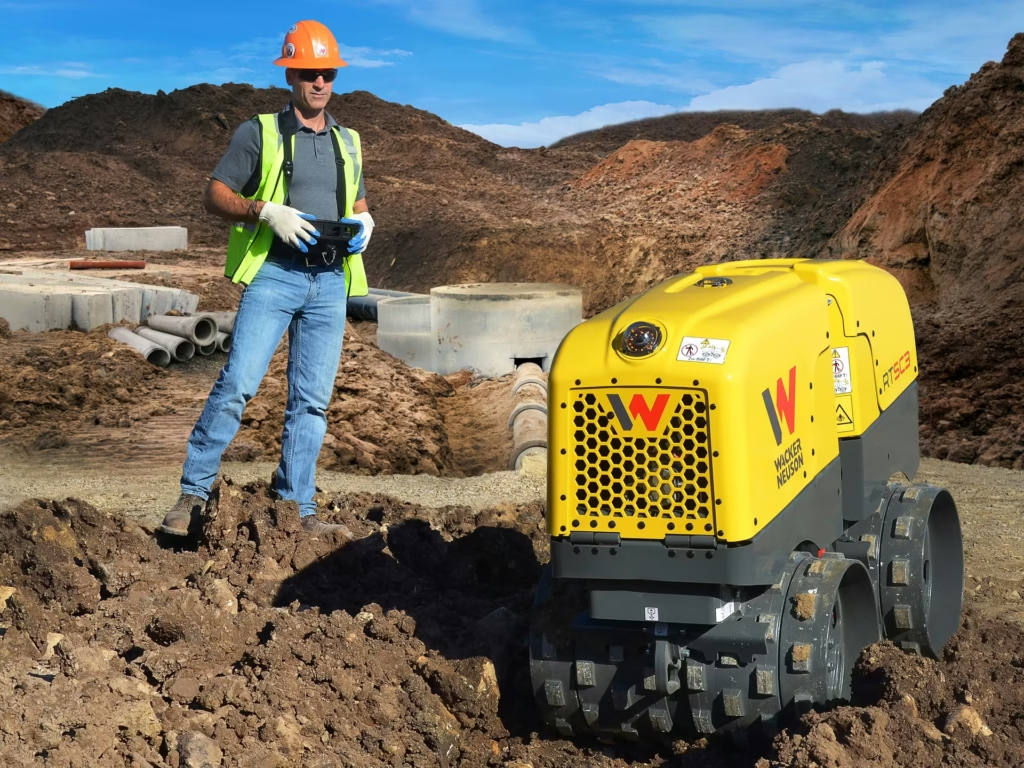
A trench roller is a compact roller, operated by remote control, built for narrow trenches, pipeline corridors and other confined spaces a standard ride-on unit can’t fit into. Also called a trench compactor, it runs two vibrating drums on an articulated frame to knead and compact backfill soil around pipes and cables, delivering more compaction force than a walk-behind plate compactor in the same footprint. Within Quotor’s roller category, trench rollers are a distinct type built for trench and foundation work rather than open-area compaction, used across Australian construction and civil sites.
Understanding Trench Rollers
Before choosing one for a job, it helps to know what defines a trench roller and how it compacts soil in spaces most rollers can’t reach.
What Is a Trench Roller?
A trench roller is a small, heavy-duty roller purpose built for soil compaction in tight trenches and other confined spaces, rather than a scaled down ride-on roller. Its drums are compact enough to work inside a trench without disturbing the walls, and most models run on remote control rather than being ridden like a standard roller. This compact design is what earns trench rollers their own category with Quotor, distinct from the padfoot and smooth drum rollers used on larger, open sites.
How Trench Rollers Work
Two drums, usually fitted with padfoot shells, sit on an articulated joint that lets the operator steer it around bends in the trench. Vibration combines with the kneading action of the pads to compact soil in layers, unlike traditional rollers that rely on one wide cylinder and someone riding or walking directly behind it. Trench rollers typically run on a small diesel engine, and an infrared or radio remote, sometimes backed up by a cable option, lets one person operate the machine from outside the trench with precise control. The articulated joint also improves stability on uneven ground inside the trench, something a rigid frame can’t match. Many remote-controlled models also include proximity or operator-safety systems that stop the machine if the operator moves too close.
Trench Roller Applications
Whether called trench rollers or trench compactors, these machines cover a specific slice of civil and construction work in spaces like trenches, foundations and confined pits where a full-size roller has nowhere to go.
Trench and Pipeline Compaction
Trench rollers compact the base of a trench before pipe is laid and the backfill above it once the pipe is in, work that comes up constantly on water, sewer and telecommunications routes. As part of the wider compaction roller family, they handle this tight, linear compaction that bigger rollers are too wide to reach.
Utility and Civil Works
Council and civil works bring trench rollers into stormwater pits, kerb and channel repairs and footpath subgrade preparation. On larger sections of the same job, a double drum roller often takes over the open ground while the trench roller handles the tighter tie-ins, reducing disruption on urban sites where a full-size roller would struggle to work at all.
Backfilling Around Pipes and Services
Compacting backfill in lifts around pipes and cables protects the infrastructure it surrounds and helps prevent voids that settle later, causing damage to the walkway or pavement above.
Confined-Space Compaction
Basements, retaining wall footings and other tight spaces or hard-to-reach areas often call for a trench roller simply because nothing bigger will fit. Once a trencher or excavator has opened the ground, the trench roller is what finishes the job, and here precision matters as much as raw compaction force.
Benefits and Limitations of Trench Rollers
Like any compaction equipment, a trench roller suits some jobs far better than others.
Compaction in Narrow Areas
The roller’s working width adjusts on many models to match the trench, and twin drums and an articulated joint make trench rollers manoeuvrable enough to follow a winding run without repositioning constantly. That manoeuvrability matters more on site than raw size once the trench narrows.
High Traction on Cohesive Soils
Padfoot drums knead the soil surface, giving trench rollers traction that smoother rollers tend to lose on wet or sticky ground. Adjustable vibration settings let a trench roller adapt to changing moisture and compaction conditions, though padfoot trench rollers are particularly effective on cohesive soils such as clay.
Remote-Control Operation
Remote control operation keeps the operator a safe distance from the roller and away from unstable trench walls or nearby underground services. Safety features like this make remote operation safer than older, manually steered units, particularly when working near live services.
Limitations on Asphalt and Open Areas
Their drums leave pad marks unsuitable for a finished asphalt or granular surface such as sand and gravel, so a smooth drum roller is the better fit once the trench work is done. On large open areas, a full-size roller simply compacts more ground per pass.
Trench Roller vs Other Compaction Equipment
Trench rollers are one entry in Quotor’s broader range of compaction roller types; comparing them with the alternatives makes the differences concrete.
Trench Roller vs Plate Compactor
A plate compactor is lighter and walk-behind, suited to granular soil and short backfill sections such as a single service crossing. A trench roller weighs more and carries greater compaction force. Trench rollers can handle fine-grained soil and longer trench runs that would wear a plate compactor out.
Trench Roller vs Padfoot Roller
Many trench rollers use padfoot drums, which is why the two categories are often confused. The difference is scale and purpose: Padfoot rollers range from compact machines through to large single-drum soil compactors built for open earthworks, while a trench roller is purpose-built around a compact articulated frame for confined access.
Trench Roller vs Single Drum Roller
A single drum roller is built around one wide steel cylinder, suited to sub-base and road work across open ground, and can’t fit inside most trenches at all. Choosing between single and double drum rollers comes down to coverage per pass, while a trench roller trades that coverage and travel speed for the ability to manoeuvre and work where neither can.
Choosing the Right Trench Roller
Drum Width and Machine Size
Drum widths adjust on many models through removable extensions, matching the roller to different trench widths without swapping the whole unit. Checking the manufacturer’s specification for operating weight alongside width helps ensure the roller will fit and compact effectively.
Compaction Force and Vibration
Adjustable compaction settings, including vibration frequency and force, let each model match the lift being compacted, and some signal when optimal compaction has been achieved rather than leaving it to guesswork. Matching force to the lift thickness and soil density target helps achieve uniform compaction, avoids costly rework once backfill is in place, and protects its working lifespan; regular maintenance on the bearings and vibration exciter helps ensure that same force stays consistent over a full day’s work.
Soil Type and Moisture Conditions
Soil conditions call for different compaction methods, and matching the two is what separates a properly compacted trench from one that settles later. Clay and other fine-grained soils generally suit the kneading action of a padfoot drum, but vibrating very wet, fine-grained soil can pump water to the surface and weaken it rather than helping it hold together. Being able to adjust vibration settings for the ground on site makes a single trench roller versatile enough to cover jobs that would otherwise need two separate machines, and that versatility is a big part of why hire remains more common than ownership for occasional trenching work.
Site Access and Trench Width
Trench depth, shoring and how close the roller needs to work to existing structures all affect which model will fit safely. To ensure the right size turns up rather than just the right type, most contractors compare these details against Quotor’s full roller range before committing to a hire.
Trench Roller Hire
When to Hire a Trench Roller
Most contractors use a trench roller for one project or a handful of trenching projects rather than owning another piece of machinery that spends most of its time sitting idle.
Factors to Consider When Hiring
Wet hire pairs the roller with an operator, while dry hire is the machine alone for a site with its own trained staff; either way, the operator is generally expected to demonstrate competency for the machine and task, which may be supported by relevant training, experience or a site-based verification of competency. A supplier’s maintenance record is worth checking too, since a well-maintained roller holds its durability and longevity across hire cycles and cuts the downtime risk mid-project.
Trench Roller Hire Costs
Costs vary with roller size, drum configuration and whether the hire is wet or dry, so a single daily rate isn’t meaningful across the wide range spanning a compact trench roller and a larger padfoot roller. Comparing quotes from more than one supplier remains the most reliable way to judge a fair price, which is exactly what Quotor helps contractors do across Australia.