
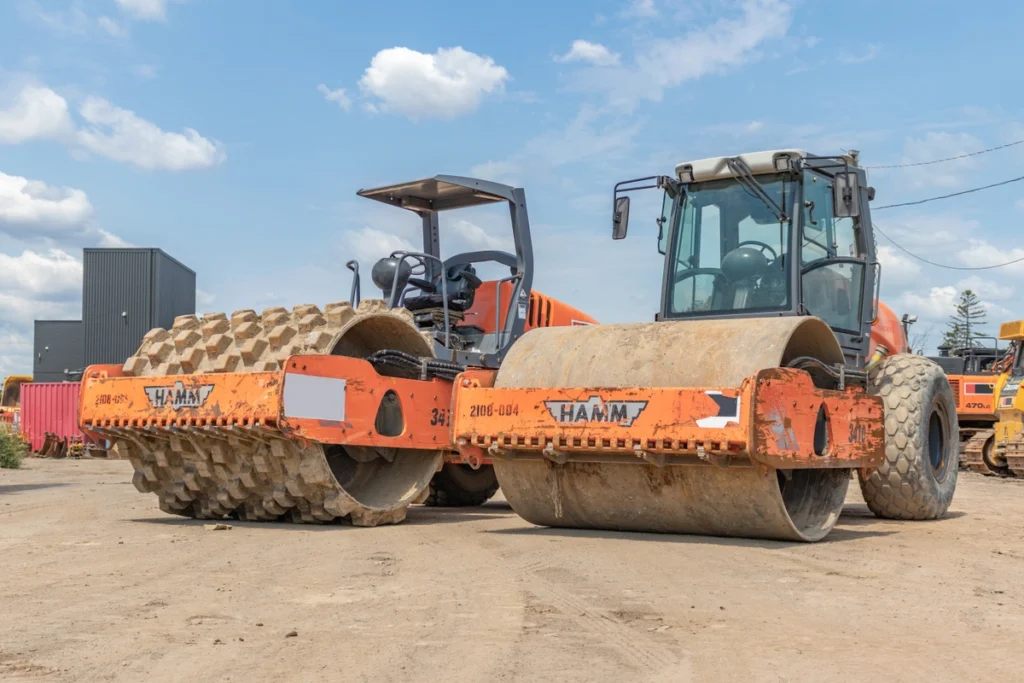
Padfoot rollers and smooth drum rollers are both compaction rollers, but they compact material differently and suit different stages of a job. Getting the choice wrong can mean soil that never reaches the density an engineer specified, or a finished surface left with ridges through it. This guide compares the two types of compaction rollers to match the machine to the ground, from a clay heavy building pad to an asphalt overlay. Quotor stocks both machine types across most of the sites it services in Australia.
Understanding Padfoot and Smooth Drum Rollers
How Padfoot and Smooth Drum Rollers Compact Material Differently
The two rollers reach a compacted surface through different mechanical actions, though both sit under the same broad compaction roller category. A padfoot roller’s studded drum digs into material and kneads it from within, working air pockets out layer by layer. A smooth drum roller relies on static weight and, on vibratory models, vibration to compact material evenly from above. That distinction drives most of the differences covered below.
What Is a Padfoot Roller?
A padfoot roller is a compactor with a steel drum studded with raised pads, or feet, that penetrate the material as the drum turns, compacting from the bottom of the lift upward rather than just at the surface. Padfoot rollers are sometimes called sheepsfoot rollers, an older term for the same style of tamping drum, and the two names are largely interchangeable in the Australian hire market.
What Is a Smooth Drum Roller?
A smooth drum roller uses a flat steel cylinder instead of a studded one. Some models are single drum, with a rubber tyred wheel set at the other end, while others are double drum, with a smooth steel drum at both ends. Vibratory models add a rotating weight inside the drum to increase compactive force without adding weight.
Padfoot Roller Best Uses
Cohesive Soils such as Clay
Cohesive soil like clay holds together in clumps that resist compaction from surface pressure alone. A padfoot roller kneads through those clumps, working air and moisture out from within each lift, which is why it’s the standard choice for cohesive soil on building pads. Run a smooth roller over the same clay instead and it tends to bridge over the clumps and seal a crust on top, leaving voids underneath that settle unevenly later.
Trench and Site Preparation Work
Trench backfill and site preparation work, part of the broader earthmoving equipment category, often means compacting material in confined spaces across multiple lifts, since too thick a layer at once leaves the trench base under compacted. A padfoot roller’s feet penetrate into the lift and concentrate compactive effort below the surface, producing the kneading action cohesive soils need. On tight sites, a smaller padfoot unit can compact backfill around pipework or footings without repeated passes.
Jobs Requiring Deeper Soil Compaction
Where a job calls for deeper soil compaction, an embankment or a foundation over several lifts, the padfoot roller’s ability to compact from the bottom of each lift upward becomes the deciding factor rather than a nice to have. The trade off is a rough, pocked surface that then needs a smooth roller pass before anything else goes down. Quotor’s padfoot roller range runs from compact units for tight access to larger machines for bulk embankment work.
Smooth Drum Roller Best Uses
Granular Soils and Aggregate
Granular soil and aggregate, materials like sand and crushed rock, compact differently to clay. With little cohesion holding particles together, kneading doesn’t help much, they just need pressing and vibrating into a denser arrangement. A smooth roller’s flat drum and, on vibratory models, its eccentric vibration mechanism do exactly that, compacting sand and gravel base layers evenly without the tearing a padfoot’s studs cause. The same lack of penetration limits it on cohesive fill.
Asphalt and Surface Finishing
Asphalt and surface finishing work needs a roller that won’t mark or gouge the material it’s compacting, which rules padfoot rollers out entirely. A smooth drum roller presses the hot mix down and levels it in the same pass. Double-drum models compact with steel drums at both ends, making them particularly well suited to consistent asphalt compaction and finishing. This is the one application where the two machines aren’t really competing, a padfoot roller isn’t suited to finished asphalt or any other exposed surface.
Road Construction and General Compaction
On a typical road job, a smooth roller handles the upper granular layers and the asphalt surface, while a padfoot roller has usually already compacted the cohesive subgrade underneath. For general compaction across mixed fill, footpaths, driveways and car parks, a smooth roller’s ability to compact and finish in one pass makes it the more efficient choice, provided the material underneath doesn’t need kneading first. Quotor’s smooth drum roller fleet spans pedestrian rollers up to larger vibratory units.
Padfoot vs Smooth Drum Roller Comparison
Drum Design and Compaction Method
Drum design is the root difference the rest of this comparison builds from. A padfoot drum’s raised feet concentrate the machine’s weight into a small contact area, so each foot exerts high pressure directly beneath it as the drum passes. A smooth drum spreads that weight across its full width, lower pressure per point but even coverage. Vibratory versions of either roller add a rotating eccentric weight to increase compactive effort without adding static weight.
Soil and Material Suitability
Matching the roller to the material comes down to how the soil behaves under load. Cohesive soil resists compaction until something works air out from within it, which favours a padfoot roller. Granular material compacts once its particles press closer together, which a smooth roller does well without needing to knead anything. Mixed fill sites sometimes need both, a padfoot roller for the subgrade and a smooth roller above it.
Compaction Depth
Padfoot drums concentrate force through their raised feet and penetrate into cohesive material, while smooth drums apply compactive effort across the surface. Effective depth for either machine still depends on lift thickness, operating weight, vibration settings, moisture and the material itself.
Surface Finish
Surface finish is where the two rollers diverge most visibly. A padfoot roller leaves a pocked, uneven surface because its feet disturb the top of the lift while compacting what’s underneath it. A smooth roller leaves a flat, sealed surface in the same pass, which is why it follows a padfoot roller onto a site rather than working the same layer, and why it’s the only choice for a finished driveway or road surface.
Ground Conditions and Site Requirements
Ground conditions on site affect how either roller performs. Wet, sticky clay can clog a padfoot’s feet, reducing how well they knead the material until cleared, while dry, hard ground can be difficult for the feet to penetrate. A smooth roller is less fussy about ground condition day to day but needs an even surface underneath to compact consistently. Reading these conditions correctly is part of what an experienced heavy equipment operator brings to the job, and tighter sites usually call for a smaller version of whichever roller suits.
Hire Cost Comparison
Comparing hire cost is more useful measured against output than as a straight rate comparison. A padfoot roller earns its cost on jobs where getting the subgrade right the first time avoids reworking it later, while a smooth roller’s value shows in how much area it finishes per shift. Quotor’s listings show rates across both sizes, and the equipment cost estimation guide covers weighing cost against productivity.
Choosing the Right Roller to Hire
When to Hire a Padfoot Roller
Hire a padfoot roller when the job involves cohesive soil that needs compacting in lifts before anything else goes on top, building pads, retaining wall backfill, embankments, or any subgrade with a decent clay content. If a geotechnical report identifies cohesive subgrade such as clay and specifies a required density and lift thickness, a padfoot roller is often the appropriate starting point. The roller should be selected to suit the material and compaction specification rather than the density target alone.
When to Hire a Smooth Drum Roller
Hire a smooth drum roller once the material underneath is granular rather than cohesive, or once the job reaches the surface stage, base course, gravel driveways, footpaths or asphalt. If the finished result needs to be flat and sealed rather than compacted in depth, a smooth roller is the right call regardless of what compacted the layers below it. Vibratory versions suit larger areas needing more compactive effort; browse the rollers range to compare sizes.
Soil Type and Project Requirements
Soil type is the first thing to check before booking either machine, since it settles most of the decision on its own; the suitability differences already covered hold for most sites. Where it’s less clear cut, mixed fill or a project spanning multiple stages, hire the padfoot roller for the early lifts and follow with the smooth roller at the surface, rather than making one machine do both.
Hire Cost and Project Duration
Hire cost and project duration are usually decided together, since a short job at the wrong stage of work can cost more in delays than the roller itself. Both machines are available on dry hire, where you supply an operator, or on wet hire, with one included.
For projects moving through several stages, subgrade to surface, it often makes more sense to plan hire around each stage rather than booking one long block. The equipment procurement guide covers planning staged hire against a timeline.
Quotor lets you check availability for both machine types through its construction equipment hire guide, so comparing options doesn’t mean separate bookings.