
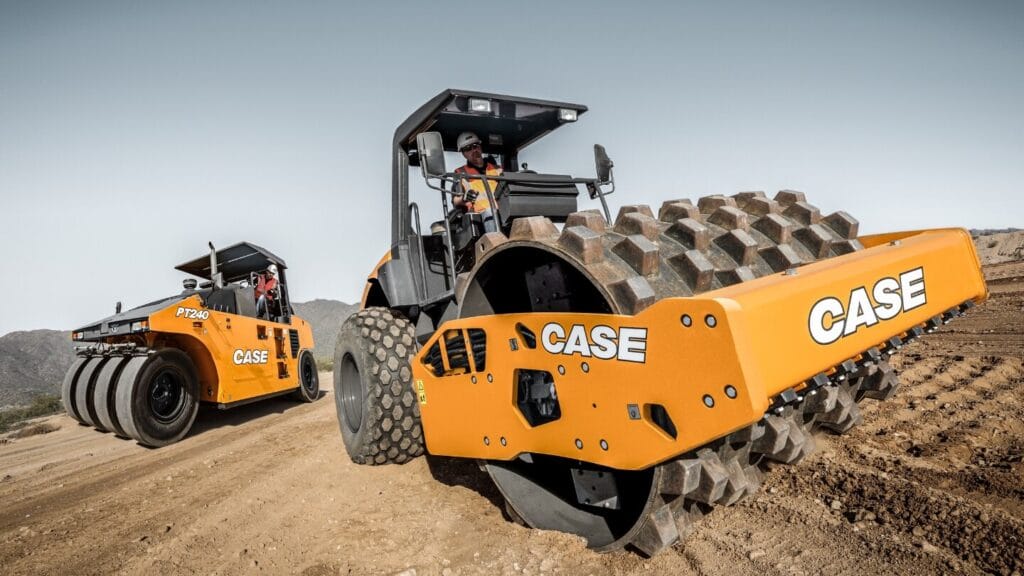
Compaction rollers range from small remote controlled trench units to heavy static three-point rollers, and the type of roller you choose affects compaction quality and rework risk. This guide covers the main types of compaction rollers used on Australian sites, how they compare and how to choose the right one for your soil, site and project. Quotor’s roller category brings these machines together in one place, making it a useful starting point for comparing hire options.
Understanding Compaction Rollers
What Is a Compaction Roller?
Compaction rollers, also known as roller compactors, are a type of compaction equipment that use weight, vibration or both to press soil, aggregate or asphalt into a denser layer. The generic term road roller also still gets used informally for the whole category. Most rollers use steel drums, rubber tyres, or a mix of the two, and this configuration separates one type of roller from another. Rollers sit within Quotor’s broader compaction equipment category alongside plate compactors and rammers. Quotor’s guide to compaction rollers covers this further.
How Compaction Rollers Work
Rollers compact the soil in one of three ways: static weight pressing particles together, vibration shaking soil into a tighter arrangement, or a kneading action that reshapes cohesive soil around a drum’s pads. Smooth drums rely mostly on weight and vibration, padfoot drums add kneading, and rubber tyres apply a squeezing action that also helps seal the surface. The right combination depends on the soil and the compaction depth required.
Why Compaction Method Matters
Choosing the wrong roller for the soil does more than slow the job down. Under compaction leaves a surface that settles once loaded, while over vibrating wet or fine grained clay can loosen rather than tighten it. Soil moisture plays a part too, since ground too wet or too dry resists reaching target density regardless of roller type. This is why operators run trial passes and check soil density before committing to one roller type.
Types of Compaction Rollers
Smooth Drum Rollers
Smooth drum rollers use one or two flat steel drums to compact granular material such as sand, gravel and road base, and suit the final pass on asphalt or grading under paving.
Padfoot Rollers
Padfoot rollers, also called sheepsfoot rollers, use rows of raised pads instead of a flat drum surface. As the drum turns, the pads knead cohesive soils such as clay and silt, working out air pockets a smooth drum would push past. As compaction progresses, the pads gradually work the roller up out of the fill, a useful visual sign the layer is nearing target density. This suits embankments and fill work with heavy, cohesive soil.
Single Drum Rollers
Single drum rollers describe the chassis rather than the drum surface: one drum sits at the front, with rubber tyres carrying the rear for traction. Many use interchangeable smooth or padfoot shells, so the same machine suits granular or cohesive soil, making it a common hire for general earthworks.
Double Drum Rollers
A double drum roller, also called a tandem roller, replaces the rear tyres with a second steel drum, so both ends compact as it travels. This twin drum layout is standard for asphalt work, producing uniform compaction without the tyre marks a single drum machine can leave. Some double drum rollers also offer an oscillation setting as an alternative to straight vibration, which reduces the vibration transmitted to nearby structures while still compacting effectively.
Multi-Tyre Rollers
A multi-tyre roller, also known as a pneumatic roller, uses a row of overlapping rubber tyres instead of a drum, flexing as it passes to knead the surface and seal asphalt.
Combination Rollers
Combination rollers pair one steel drum with rubber tyres on the same chassis, combining a drum’s crushing action with a tyre’s kneading and sealing action. They suit asphalt work where a contractor wants both without swapping machines. Quotor covers combination rollers in a dedicated guide for readers weighing up the options.
Trench Rollers
Trench rollers are compact, often remote controlled units built to compact backfill in narrow trenches that other rollers cannot reach. Many are articulated for tight runs, and several come with padfoot shells for backfill around pipework. Remote operation keeps the operator out of the trench and away from the machine while it compacts, reducing exposure to unstable trench walls and other hazards. Quotor’s trench roller guide covers sizing this equipment.
Three-Point Rollers
Three-point rollers are static machines with three evenly spaced drums and no vibration mechanism, relying on weight alone to compact. This suits vibration sensitive zones near buildings or bridges, and they are often used for proof rolling before paving. Grid rollers, with a mesh pattern drum, better suit rock fill than fine grading.
Soil Compactors
Quotor uses the term soil compactors for heavier single drum machines built for large scale earthworks such as embankments and bulk fill. They use substantial operating weight and vibration for bulk earthworks, with smooth drums suited to granular material and padfoot drums or shells used for cohesive fill.
Comparing Compaction Roller Types
Static vs Vibratory Rollers
Static rollers compact using weight alone, which is predictable and safe near structures but limits depth per pass. Vibratory rollers add mechanical vibration, letting a lighter machine achieve greater compaction than static weight alone. Most earthworks and road jobs use a vibratory roller, with static machines kept for finishing passes and vibration sensitive sites.
Single Drum vs Double Drum Rollers
Single drum rollers are built for soil, with one drum and tyres for traction, while double drum rollers replace the tyres with a second drum and are built around asphalt. Single drum rollers handle deeper, less uniform fill, while double drum rollers finish thinner, graded asphalt layers. Single drum soil rollers are also usually heavier, since asphalt work generally needs less mass to reach the required density. Quotor’s single drum versus double drum guide goes through this further.
Smooth Drum vs Padfoot Rollers
The choice between a smooth and padfoot drum comes down to the soil rather than the job. Smooth drums suit granular material like sand and gravel, where the priority is a flat, even surface. Padfoot drums suit cohesive soils like clay, where the pads knead the soil to remove air voids weight alone would not shift. Quotor’s padfoot versus smooth drum guide covers this choice in more detail.
Drum Rollers vs Multi-Tyre Rollers
Drum rollers and multi-tyre rollers, sometimes written multi-tyred rollers, are often used on the same asphalt job at different stages rather than as competing choices. A drum roller compacts through weight and vibration through a steel drum, suiting base layers and both granular and cohesive soil, though it can leave drum marks on soft asphalt. A multi-tyre roller compacts through kneading and sealing as its tyres flex, suiting asphalt sealing and finishing passes and smoothing out minor irregularities the drum roller leaves behind.
Choosing the Right Compaction Roller
Soil and Material Type
The type of soil or material on site is usually the first filter when choosing the right type of roller.
| Soil or Material | Recommended Roller |
|---|---|
| Sand, gravel, road base | Smooth drum roller |
| Clay, silt, cohesive fill | Padfoot roller |
| Mixed or unknown soil | Single drum roller with interchangeable shell |
| Asphalt | Double drum or multi-tyre roller |
| Rock fill, oversize material | Grid roller |
Compaction Depth
Once the correct drum type has been matched to the material, compaction depth is influenced heavily by operating weight, vibration amplitude and lift thickness. Heavier, higher amplitude rollers achieve deep compaction in fewer passes, since re-lifting soil for extra passes is costly. Lighter rollers suit thin lifts and finishing work, where too much force can overcompact or crack the surface. This is why contractors keep lift thickness within what the chosen roller can effectively reach, rather than compacting an oversized lift and hoping extra passes make up the difference.
Operating Weight and Drum Width
Operating weight and drum width set the practical limits of a roller. Heavier machines compact more per pass but need wider access and stronger haul routes, while narrower drums suit confined areas at the cost of coverage per pass.
Site Access and Ground Conditions
Site access often decides the kind of roller before soil type does. Trench rollers and smaller single drum machines fit through gates and narrow runs a full size double drum roller cannot reach, while soft or wet ground may rule out heavier machines until the surface firms up. Overhead clearance is also worth checking under structures, verandas or power lines where a taller roller may not fit. Checking access first helps you select a roller that can reach the work.
Compaction Roller Applications
Rollers and their uses often overlap across a job, though each type still suits a particular stage.
Soil Compaction
General soil compaction covers footings, building pads and bulk earthworks, aiming for a stable, evenly load bearing base. Single drum and soil compactor rollers handle most of this work, padfoot drums or shells for cohesive soil and smooth drums for granular material.
Asphalt Compaction
Asphalt compaction typically runs through a sequence of rollers: a heavier double drum roller for the initial compaction pass, followed by a multi-tyre or combination roller for sealing and finishing. Timing matters because asphalt cools and stiffens quickly, and a roller arriving too late can crack the surface rather than compact it.
Road Construction
Road construction uses several roller types, from padfoot rollers compacting the subgrade through to double drum and multi-tyre rollers finishing the wearing course. Because each layer differs, road jobs often need more than one roller type.
Trenching and Confined Areas
Trenching and confined areas call for trench rollers or small single drum machines that compact backfill around pipes without disturbing the surrounding ground. Because trenches are often backfilled around live services, compacting in shallow, even lifts reduces the risk of damaging pipework and avoids the settlement that follows a poorly compacted trench.
Civil and Site Preparation
Civil and site preparation work, such as car parks, driveways and building pads, generally starts with a single drum or padfoot roller to establish the base before finishing with a smooth drum for grading.
Comparing hire terms rather than taking whatever is on the yard is usually worth it. Quotor compares hire rates and availability across suppliers for each of these roller options, making it easier to find the right roller for the soil, site and project rather than just the closest option on the day.