
Understanding Bulldozers and Wheel Loaders
How Bulldozers and Wheel Loaders Move Material Differently
Bulldozers and wheel loaders are two of the most common types of heavy equipment on an Australian job site, and deciding between them starts with how each one moves material. A bulldozer pushes material with a blade mounted at the front of the machine, using its tracks for grip and its weight for pushing power. A wheel loader lifts material in a front-mounted bucket, then carries or dumps it elsewhere, work a blade can’t do. Neither machine digs below its own standing surface the way an excavator does; both work at or above grade. That’s the split behind most of the differences between bulldozers and wheel loaders covered on this page: one machine moves material along the ground, the other lifts and carries it. Both sit within the broader category of earthmoving equipment, but they’re built for different halves of the job, and Quotor lists hire options for both across Australia.
What Is a Bulldozer?
A bulldozer is a tracked machine built around a front-mounted blade, used to push, spread and shape material. Bulldozer tracks spread the machine’s weight over a wide footprint, which gives it grip on soft or uneven ground that would bog a wheeled machine. Most Australian hire fleets use tracked dozers, while wheel dozers are a more specialised alternative used where higher travel speed and mobility matter.
What Is a Wheel Loader?
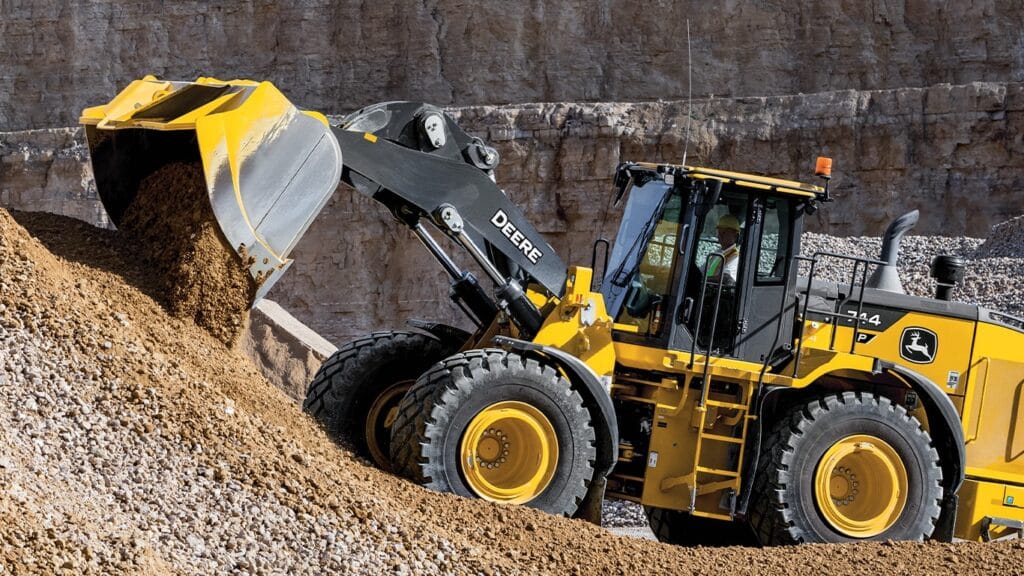
A wheel loader is a wheeled machine with a bucket on the front, used to scoop, lift and carry material like rocks or debris. Some call the same machine a front loader or front-end loader. Loaders are used to load trucks, stockpile material and shift loose product around a site. A compact wheel loader suits tighter yards and smaller loads, while a large wheel loader can carry several tonnes in a single pass. Not to be confused with a backhoe loader, which pairs a loader with a rear digging arm.
Bulldozer Applications
Land Clearing and Site Preparation
On a clearing job, a bulldozer’s blade pushes scrub, stumps, felled timber and large rocks into piles ready for removal, and a rear ripper can break up compacted ground before grading starts. A straight blade pushes more material in a single pass on flat ground, while an angled blade windrows debris to one side. Anyone planning to run one should understand how to operate a dozer first, since blade control on a slope takes practice.
Pushing and Spreading Material
Spreading fill, topsoil or aggregate evenly across a site is a job bulldozers are built for: the blade levels material as it pushes, so a site can go from a raw stockpile to a level base in fewer passes than a loader would take, and stays level as fill goes down. Bulldozers move large quantities of material across short distances, which is what makes them best suited to road construction and pad preparation work.
Rough Grading and Bulk Earthmoving
Rough grading knocks a site down close to design height before finishing work begins, and a bulldozer’s blade angle and weight make it the machine of choice for bulk earthmoving on rough ground. Quotor lists current dozer hire options for projects that need one for grading or earthmoving work.
Wheel Loader Applications
Loading and Stockpiling Material
A loader’s bucket curls upward to scoop and lift material, then dumps it into a stockpile, hopper or another machine’s reach. Loaders are versatile on yard work: swap across a range of attachments, a grapple or forks, to handle logs or pallets instead of loose material. This scoop-lift-carry-dump cycle is what a blade can’t replicate, and it’s why Quotor’s wheel loader listings cover everything from compact to full-size machines.
Truck Loading and Material Handling
Filling dump trucks is one of the most common loader jobs on a site: the loader fills a truck bed in a handful of passes, then repositions for the next one. This role, feeding trucks, hoppers or crushers, is where a loader’s speed and lift capacity matter more than raw pushing power. Loaders also handle attachments such as forks for pallets or a broom for cleanup between jobs.
Quarry, Construction and Yard Work
Quarries run wheel loaders to load haul trucks and crushers, while construction sites use them for general site duties and yard work between trades, alongside other construction equipment on hand. The broader loaders category spans everything from small yard machines to heavy quarry loaders, so the right size depends on the job’s scale.
Bulldozer vs Wheel Loader Comparison
Blade vs Front Bucket
A bulldozer’s blade sits low at the front, built to push rather than lift. A wheel loader’s bucket sits on the front end and curls upward, built to lift, carry and dump material. That’s the primary attachment for bulldozers versus loaders in one line: one attachment displaces material along the ground, the other collects and carries it. Different types of buckets, general purpose, rock, high-tip, extend what a loader can do, much like different blade types extend a bulldozer’s reach.
Pushing Power vs Loading Capacity
A bulldozer converts its operating weight, traction and engine power into sustained pushing force, while a wheel loader directs more of its capability through the hydraulic lift system and bucket cycle. A wheel loader trades raw pushing power for the ability to lift, carry and load in one cycle.
Ground Conditions and Traction
Tracks give a bulldozer stability and traction on soft, wet or rough ground that would bog a wheeled machine, thanks to a heavy-duty undercarriage and wider footprint. Wheels give a loader greater travel speed and efficiency on established surfaces, while tracks spread a bulldozer’s weight across a larger footprint for traction and flotation on softer ground. A job site with soft clay or freshly cleared ground usually favours the bulldozer; a compacted yard or sealed quarry floor suits the loader.
Manoeuvrability and Travel Speed
Loaders travel faster between tasks and turn more tightly than a tracked bulldozer, which makes them better suited to repetitive cycle work across a large construction site. A bulldozer’s maneuverability is limited by comparison; it’s built for controlled, low-speed pushing rather than covering ground quickly.
Material Handling Versatility
A wheel loader’s swap between buckets, forks and a grapple gives it more versatility for moving materials across a working day than a bulldozer’s blade allows. For sites that need both loading and pushing done, a track loader sits between the two, tracked for grip like a bulldozer but bucket-equipped like a loader, worth a look if neither straight option fits.
Hire Cost Comparison
Equipment rental costs for wheel loaders and bulldozers both scale heavily with size and specification, so there isn’t a reliable rule that one category always costs less than the other. Transport, attachments, hire duration and local availability can matter as much as machine type. Comparing rates side by side on Quotor, alongside a guide to how equipment hire costs are estimated, makes for easier budgeting.
Choosing the Right Machine to Hire
When to Hire a Bulldozer
Choose a bulldozer for land clearing, bulk earthmoving, rough grading or any job where pushing large volumes of loose material matters more than lifting it. If the job needs a qualified operator as well as the machine, operator training pathways are worth checking before hire.
When to Hire a Wheel Loader
Choose a wheel loader for stockpiling, truck loading, or any job that needs material picked up, carried and placed rather than pushed. Wheel loaders are also a practical choice where a single machine needs to switch tasks through a shift. Anyone new to the industry can look at what it takes to start operating heavy machinery more broadly before specialising in one machine type.
Site Conditions and Project Requirements
Whether you need to push material or pick it up and carry it is the starting point for choosing the right type of heavy equipment. Deciding between a bulldozer or wheel loader from there comes down to ground conditions and material volume on the construction project at hand, not horsepower on a spec sheet. Soft, uneven ground or freshly cleared sites favour a bulldozer’s tracks, while a compacted site or yard suits a wheel loader’s wheels and speed. Project needs around volume also matter: large volumes of loose material moved short distances point to a dozer, while material that needs picking up and placed onto trucks or into stockpiles points to a loader. Some road construction and civil projects use both machines in sequence rather than choosing one.
Hire Cost and Project Duration
Once you’ve decided on a machine type, comparing hire providers for cost and availability is the next step, since rates and lead times vary by region and by how long the job runs. Quotor lists both machines from hire companies across Australia, so a project can find the right equipment and compare equipment options for the actual dates and duration needed.