
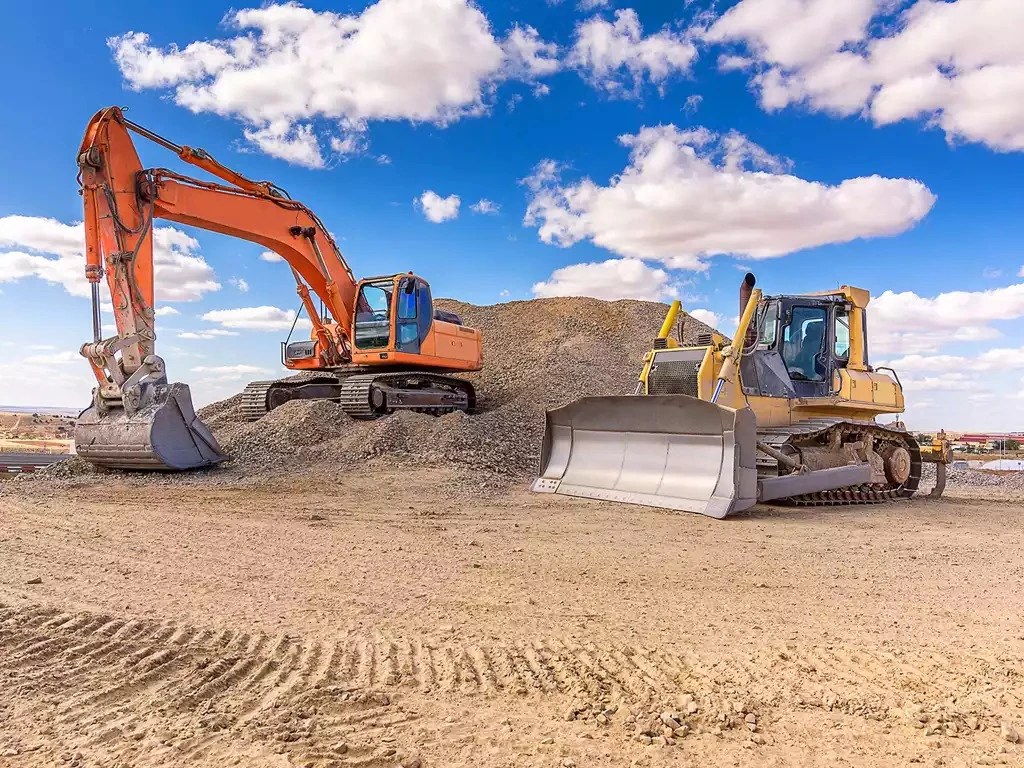
Understanding Dozers and Excavators
How Dozers and Excavators Work on Construction Sites
A bulldozer and an excavator are two types of heavy equipment, and how each one works on construction sites comes down to how it moves material. A bulldozer uses a flat blade on the front of the machine to push soil, rubble, and debris across the ground rather than lifting it. An excavator works the opposite way: its boom, arm, and bucket dig down, lift material, and swing it to a truck or a spoil pile. A backhoe loader combines a small front bucket with a rear digging arm but doesn’t replace either machine on a bigger job. Both are heavy machinery Quotor lists for hire, and matching machines to the right stage of a project is really a question of managing equipment across the job: that distinction between pushing and digging drives most of the key differences below.
What Is a Dozer?
A bulldozer is a tracked or wheeled machine built around a front blade and, usually, a rear ripper. A conventional dozer, often called a crawler bulldozer because it runs on tracks, holds traction on rough, soft, or sloped ground where a wheel bulldozer would struggle. Bulldozer blades come in straight, angled, and U shapes, and a heavy-duty ripper at the rear breaks up compacted ground before the dozer blade pushes it clear.
What Is an Excavator?
An excavator is built around a rotating house, a hydraulic arm, and a bucket, powered by a hydraulic system that drives the arm and swings the house independently of the tracks. Some sites still call it a “digger,” though it’s the same machine. A mini excavator suits a tight residential yard, while larger machines handle large-scale projects such as mine sites and major infrastructure work.
Dozer Applications
Land Clearing and Site Preparation
Any job that starts with a need to clear land almost always calls in a bulldozer first. The blade pushes trees, stumps, and scrub debris into piles, and a rear ripper tears through compacted ground or shallow rock that would otherwise need breaking up. Site prep sometimes means clearing and leveling land before any digging starts. A bulldozer can clear continuously across an open area without repeatedly digging, swinging and dumping individual loads, which makes it particularly productive on broad clearing work.
Pushing and Spreading Material
Once a site is cleared, the same blade gets used to push heavy materials such as soil, gravel, or sand back across the site. A bulldozer can push and spread large volumes efficiently over short distances because it works continuously rather than loading and hauling individual trips. This makes it the standard choice for building pads, backfilling large digs, and preparing a base layer before compaction.
Rough Grading and Bulk Earthmoving
A bulldozer is usually the fastest way to clear land and bring a site to an approximate finished level before an excavator or a grader tackles the fine work. It can shift large amounts of land and material in a single shift, and its low ground pressure keeps it from sinking into soft or freshly disturbed ground. Quotor lists dozer hire by blade size and operating weight, matching the parts of a dozer to the job in front of them.
Excavator Applications
Digging and Trenching
Digging trenches for utility lines, drainage, and footings is where an excavator has no real substitute. The bucket cuts a defined trench to a set depth and width, and because the house rotates independently, the machine can swing the spoil straight into a truck without repositioning. A mini excavator handles this work in narrow sites or residential areas where a full-size bulldozer won’t fit.
Demolition and Material Handling
Excavators can also handle demolition work when fitted with a hydraulic breaker for concrete, a grapple for sorting debris, or a shear for cutting steel. The range of attachments gives an excavator real versatility, and the arm and bucket give it reach a bulldozer’s flat blade doesn’t have, which matters near structures that need to stay standing.
Foundation and Utility Work
Foundation and utility work depends on digging to a precise depth and keeping the sides of the excavation stable. An excavator handles digging deep holes for footings, piers, and pits, then backfills once pipework is in. This is one of the clearest cases where an excavator is better suited than a bulldozer: a blade can’t dig down, only push. Quotor’s excavator equipment page lists machines by dig depth and bucket capacity, and the parts of an excavator guide covers each attachment point.
Dozer vs Excavator Comparison
The excavator vs bulldozer choice on most sites comes down to one question: does the job need digging or pushing?
Machine Design and Working Method
A bulldozer’s blade sits fixed to the front of the chassis and moves with the machine; it’s built to grade land and push material, not dig it. An excavator’s bucket sits at the end of a hydraulic arm attached to a rotating house, so it digs vertically and lifts what it digs. That single design difference is what the rest of this bulldozer vs excavator comparison keeps coming back to: a blade pushes, a bucket digs.
Pushing Power vs Digging Capability
A bulldozer’s low centre of gravity, wide tracks, and heavy blade let it move large volumes of loose material in a straight line or a shallow arc. A bulldozer’s blade would ride straight over ground an excavator would break into without trouble, and an excavator could take days to dig and dump what a bulldozer clears in an afternoon. Neither advantage transfers: ask a bulldozer to dig a two-metre trench and it can’t.
Grading and Land Preparation
Grading work splits between the two machines by scale. A bulldozer handles the wide, rough end of it, cutting and filling to bring a site to level quickly. An excavator can shape or tidy smaller confined areas where a dozer cannot manoeuvre, particularly around structures, but neither replaces a motor grader where precise final trim is required.
Site Access and Mobility
Site access often settles the choice on a tight block. A bulldozer needs open ground to manoeuvre and isn’t built for tight spaces between buildings or fences. Excavators, particularly mini excavators, can turn within their own footprint, making them ideal for narrow side yards and laneways a full-size bulldozer can’t reach.
Hire Cost Comparison
Hire cost varies by machine size, but a mid-size bulldozer and a mid-size excavator sit in a broadly similar daily rate, with cost driven more by operating weight and attachment needs than machine type. A small excavator on a short residential job usually costs less than a large bulldozer on a major earthworks site.
Choosing the Right Machine to Hire
Choosing between a bulldozer for pushing and an excavator for digging isn’t complicated once site access and job type are clear, though whether the next hire ends up a bulldozer or excavator can still come down to cost and timing.
When to Hire a Dozer
Bulldozers are ideal for clearing large blocks fast, which is why they’re usually the first machine on a subdivision or land-development site. Dry hire suits contractors with an experienced dozer operator already available, while wet hire can make more sense where the site needs both the machine and an experienced operator. Quotor’s guide on becoming a dozer operator covers what that training involves.
When to Hire an Excavator
If the job needs digging to a set depth rather than pushing material, you need an excavator, not a bulldozer. Tasks like trenching or foundation digging call for it, along with confined-space work a bulldozer can’t reach. Wet hire suits complex digging where precision matters, and the guide on becoming an excavator operator is worth a look before deciding either way.
Site Conditions and Project Requirements
Site conditions usually make the right choice obvious before cost enters the picture. A confined urban block with limited access points toward an excavator, regardless of how much grading is also needed, since a bulldozer won’t fit. An open site with plenty of ground to clear and level land favours a bulldozer, even where some trenching is needed too, since that can usually wait for a smaller machine.
Hire Cost and Project Duration
Cost control on any construction project starts with matching hire to what the project needs. Hire duration should follow the stage of work. A dozer may be needed early for clearing and bulk earthmoving, while an excavator may stay longer for trenching, foundations and service work. Quotor’s guide to hiring construction equipment covers comparing quotes across providers, and getting the right equipment on-site the first time avoids costly delays. The full equipment range groups excavators and bulldozers by size, so comparing options takes minutes, not phone calls. On a lot of sites, bulldozers and excavators end up working side by side, and comparing both through Quotor makes it easier to choose the best machine for the site.