
Understanding Bulldozers and Backhoes
How Bulldozers and Backhoes Handle Site Work Differently
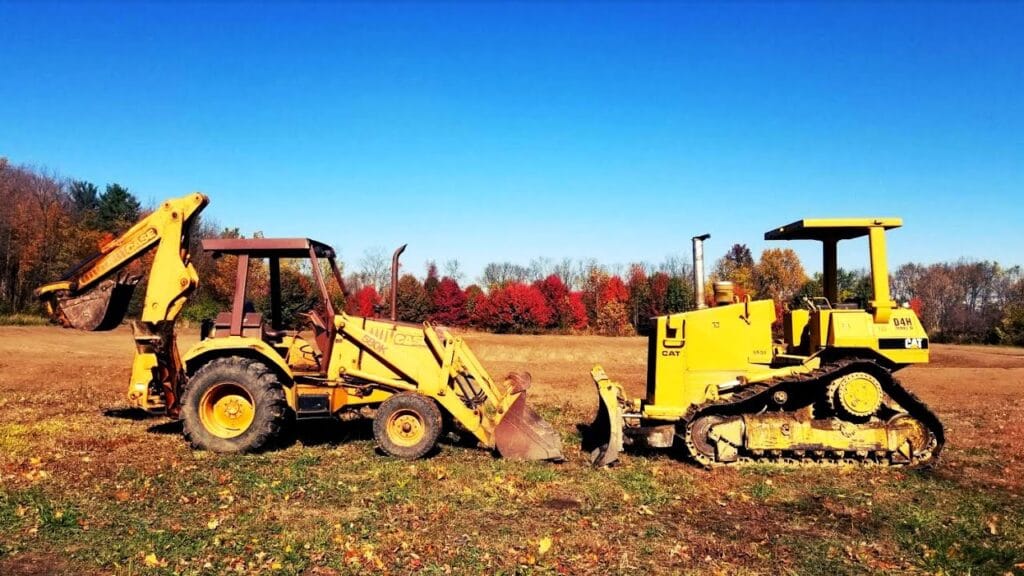
A bulldozer pushes; a backhoe loader digs. A bulldozer runs on tracks with a heavy blade at the front, built for shifting, spreading and levelling material. A backhoe loader carries a front bucket for loading and a rear arm for trenching and excavation, closer to a wheel loader and an excavator combined into one chassis. Bulldozers handle bulk earthmoving and large-scale grading; backhoe loaders handle digging, material handling and smaller jobs a full-size excavator would be overkill for.
What Is a Bulldozer?
A bulldozer is a tracked machine with a large blade on the front, powered by a heavy engine built for constant pushing rather than speed. Tracks give it traction to move heavy materials across soft or uneven terrain without losing grip. Sizes range from compact machines for smaller projects to large-scale units used on major road construction and land development projects.
What Is a Backhoe Loader?
A backhoe loader is a wheeled machine that pairs a front loader and backhoe arm, so one unit can load and dig without swapping equipment. It’s sometimes called a tractor loader backhoe, and compact versions are sold as mini backhoe loaders or compact backhoe loaders for tighter sites. The rear arm works more like a mini excavator than a bulldozer, useful anywhere a job needs digging, loading and utility work from one machine.
Bulldozer Uses
Land Clearing and Site Preparation
Bulldozers excel in clearing overgrown or built-up sites before other trades move in, using the blade for pushing and clearing vegetation, rubble and topsoil in one pass. Land clearing is one of the most common bulldozer jobs on site, particularly ahead of large-scale projects where large areas need stripping back before grading starts. Quotor’s dozer category lists compact and full-size machines for hire, matching blade width to the job.
Pushing and Spreading Material
Once ground is stripped, the same machine switches to pushing and spreading fill, gravel and spoil, levelling it as the blade moves forward. A bulldozer’s power and stability come largely from its tracked undercarriage, keeping the blade planted even when pushing large volumes of heavy materials. Learning how to operate a bulldozer comes down to blade control: too shallow and material spills past the edges, too deep and the engine bogs down.
Rough Grading and Bulk Earthmoving
For grading, bulldozers cut and fill in the same pass, bringing a site to an approximate finished level before an excavator or grader takes over for fine detail. This is where they’re used for tasks like heavy earthmoving and bulk cut-and-fill work, moving more material per hour than almost any other piece of equipment, so large-scale road construction projects lean on them before finer grading takes over.
Backhoe Loader Uses
Digging and Trenching
The backhoe’s rear arm sets a backhoe loader apart from a straight loader, giving it the reach to dig trenches for pipes, cables and drainage without a separate excavator. It can work along a planned line section by section, holding a set depth in tight runs, suiting utility work better than a large-scale earthmoving machine could. Quotor’s backhoe loader listings cover standard and compact backhoe loaders, useful when working width is limited by nearby services.
Loading and Material Handling
The front bucket handles the loader half of the job, scooping, carrying and tipping spoil, gravel or demolition material into a truck or skip bin. One operator switches between loader and backhoe controls from a single seat, so a backhoe loader can dig a trench, then pivot to loading a waiting truck. Learning how to operate a backhoe loader takes longer than learning a straight loader, since the operator manages two sets of controls instead of one.
Utility and General Construction Work
Away from trenching, backhoe loaders handle a range of tasks: breaking up old pavement with a hydraulic breaker, backfilling pipework, and general construction work that mixes digging with material handling in the same visit. Compact tractor loader backhoes are common on tighter construction sites where a full-size excavator and loader wouldn’t fit, letting one machine cover work that would otherwise need two hires.
Bulldozer vs Backhoe Comparison
The key differences between a backhoe loader and a bulldozer come down to six practical areas, starting with the tool each one puts on the ground.
Blade vs Loader Bucket and Backhoe Arm
A bulldozer’s working end is one wide, fixed blade, so its part list stays simple: blade, ripper, track frame and engine bay (see parts of a dozer for the full breakdown). A backhoe loader carries two separate tool ends, a front bucket for loading and a rear arm for digging, each with its own hydraulics (the parts of a backhoe loader breakdown covers both). One tool built to push; two built to load and dig.
Pushing Power vs Digging Capability
A bulldozer’s pushing power comes from tractive effort, not raw horsepower: a heavy machine with a powerful engine can push loads that would stall a lighter one with similar horsepower on paper. A backhoe loader’s digging capability depends on arm reach and breakout force instead, rated more like a mini excavator than a blade’s push rating. That favours bulldozers for shifting volume and backhoe loaders for precision digging in confined spaces.
Grading and Material Handling
A bulldozer’s blade produces a flatter, more even grading finish across a wide site than a backhoe loader ever could, since the blade keeps continuous contact with the ground rather than scoop-and-dump cycles. For material handling in smaller volumes, a backhoe loader is usually faster, since the front bucket can load a truck directly without a second machine. Choosing between a backhoe loader and a bulldozer for a grading-heavy job comes down mostly to which task takes up more of the schedule.
Site Access and Manoeuvrability
Backhoe loaders run on wheels and are easier to travel around developed sites and between separate work areas, while a bulldozer’s tracks favour traction and sustained pushing on rough ground. That mobility matters most on a job site spread across several zones, saving a low loader booking just to reposition the machine. On rough, soft or sloped terrain beyond what a wheeled machine can handle, a bulldozer’s tracked traction becomes the deciding factor instead.
Versatility and Attachment Use
A backhoe loader’s versatility comes largely from attachments: swap the bucket for a hammer, grapple or breaker and it can break concrete, handle scrap or lift materials. A bulldozer takes fewer attachments, since the blade and optional ripper cover most of what it’s asked to do, so versatility shows up more in size range than tool variety. Quotor’s loader category covers backhoe loaders alongside wheel loaders and skid steers where attachment flexibility matters most.
Hire Cost Comparison
Hire cost for either machine depends heavily on size, duration, transport and whether an operator is included. A backhoe loader may reduce total project cost where one machine can cover both digging and loading, while a bulldozer can justify its higher mobilisation cost where sustained bulk pushing substantially shortens the earthmoving stage.
Choosing the Right Machine to Hire
When to Hire a Bulldozer
Whether a job needs a bulldozer depends mostly on how much material has to move and how open the site is. Hire one when the work is bulk earthmoving: clearing large sites, cutting and filling a building pad, or spreading imported fill before other trades start. If the ground is soft or uneven and the job calls for raw power over precision, a bulldozer usually suits it better than a backhoe loader stretched beyond what it’s built for.
When to Hire a Backhoe Loader
A backhoe loader suits jobs that mix digging, loading and site work in the same day: utility trenching, footings, backfill and material handling on a site too tight for an excavator and loader working separately. It’s also the practical choice for smaller jobs where hiring two machines wouldn’t make sense, since it can perform multiple tasks a single machine would otherwise split across two hires.
Site Conditions and Project Requirements
Site access is the deciding factor. A wheeled backhoe loader can travel between nearby work areas under its own power and, where appropriately registered and compliant, may travel on public roads. A tracked bulldozer generally requires transport on a low loader between sites, adding cost and lead time to book. Matching a machine to the project means checking ground conditions, working radius and how many tasks need handling at once. Quotor’s category pages for bulldozers and backhoe loaders set out working weights and reach specs to help, and getting it right at the planning stage is part of what equipment procurement on a construction project involves.
Hire Cost and Project Duration
Hire duration usually follows the stage of work rather than a fixed rule: a bulldozer might only be needed for a few days of bulk earthmoving at the start of a job, while a backhoe loader often stays on site through footings, services and backfill over several weeks. Before booking either machine, estimate equipment cost for the stage of work involved, since day rates, weekly rates and transport affect the total differently for a tracked bulldozer versus a wheeled backhoe loader. Quotor lists both machines side by side with current availability and pricing, making it easier to compare them for the same job rather than guessing. The guide on how to hire construction equipment covers the booking process end to end.