
Understanding Skid Steers and Compact Wheel Loaders
How Skid Steers and Compact Wheel Loaders Handle Material Differently
A skid steer and a wheel loader both move material across a construction site, but they get the job done in different ways. Both are compact loaders built for tight sites, yet a skid steer uses a compact frame with a quick-hitch coupler to scoop, carry and place material in short, repeated cycles, while a wheel loader relies on a larger front bucket and loader arm to shift bigger volumes in fewer passes. That difference shapes almost everything else that separates the two, including size, tooling and hire cost. Quotor’s loader hire range covers both machine types side by side.
What Is a Skid Steer?
Skid steer loaders are compact, rigid-frame machines that steer by varying the speed of the wheels on each side rather than turning them. That skid-steering system gives it a tight turning radius, which is why it works well in confined spaces a larger machine cannot reach. Skid steers run on wheels, with sub-compact models starting under 25hp and full-size units pushing past 90hp. Quotor’s what is a skid steer loader guide breaks down the different frame sizes.
What Is a Compact Wheel Loader?
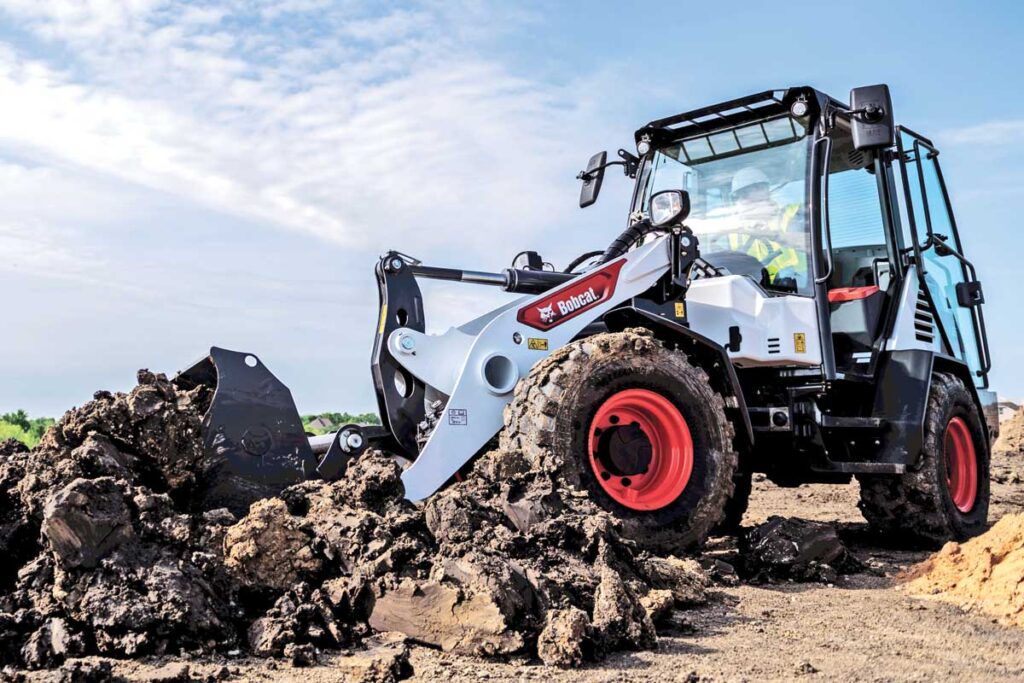
A compact wheel loader is a type of wheel loader scaled down for construction and landscape sites, built smaller than the machines used in quarries and bulk earthmoving. It uses articulated steering, where the frame bends in the middle to turn, and a hydraulic loader arm to lift and dump material from a front bucket. See the what is a wheel loader guide for how the different size classes compare.
Skid Steer Strengths
Compact Size and Manoeuvrability
Its small frame gets it through gaps a wheel loader cannot fit through: narrow gateways, tight laneways and cramped renovation sites. Skid steers are highly manoeuvrable in these tight spots, since the turning circle needs almost no clearance beyond the machine’s own footprint, which matters on a job site where space to operate is limited. Quotor’s skid steer loader hire listings cover the range of sizes available.
Attachment Versatility
A quick-hitch coupler lets one skid steer run a variety of attachments, buckets, an auger, a trencher, a broom and a grapple, without a second machine arriving on site. The skid steer attachments guide runs through the wide range of attachments available for hire.
Best Jobs for Skid Steers
Skid steers suit landscape work, site clean-up, pallet handling and small-scale grading, covering a wide range of tasks in a single day where digging depth matters less than manoeuvrability and tool range. On a residential renovation, a skid steer fitted for pallet work and general loading can often cover a full day’s work without a second machine arriving, making them ideal for jobs with tight access. Renting a skid steer for short, varied jobs like these is usually more cost-effective than booking a larger machine. Read how to operate a skid steer loader before your first hire.
Compact Wheel Loader Strengths
Higher Loading Capacity
The bucket of a wheel loader is usually wider and deeper than a skid steer’s, holding more material per pass and cutting the number of cycles needed to move the same volume. Wheel loaders are capable of loading trucks and clearing stockpiles in far fewer passes than the smaller machine needs for the same job. Quotor’s wheel loader hire listings cover the size range available for this kind of work.
Better Ride and Travel Speed
Compact wheel loaders generally give a smoother ride over uneven ground because their articulated chassis, larger tyres and oscillating axle arrangement allow the machine to follow the surface without relying on skid steering. Wheel loaders also travel faster between tasks on a larger site, and some models are road-registrable, letting them move between nearby sites without a trailer.
Best Jobs for Compact Wheel Loaders
Wheel loaders are typically better suited to stockpile management, bulk material handling and loading trucks on larger sites where volume matters more than tight access. A landscape supply yard moving mulch or aggregate all day gets far more out of a wheel loader’s bucket capacity than repeated skid steer cycles would offer over the same hours.
Skid Steer vs Compact Wheel Loader Comparison
| Dimension | Skid Steer | Wheel Loader |
|---|---|---|
| Size and access | Compact, tight turning radius | Larger footprint, wider turning circle |
| Loading capacity | Smaller, faster short cycles | Larger, fewer passes for bulk work |
| Steering | Skid steering via drive speed | Articulated steering |
| Ground impact | Can scuff soft or finished surfaces when turning | Generally gentler on surfaces when turning |
| Tooling | Broad attachment range, including powered tools | Strong bucket, fork and material-handling attachment range |
| Popular brands | Bobcat, CAT, Kubota | CAT, Volvo, Case |
| Hire cost | Depends on size and configuration | Depends on size and configuration |
Size and Site Access
What sets skid steers and wheel loaders apart first is usually access. A skid steer’s small frame clears tight gateways and narrow laneways a wheel loader cannot enter, while a wheel loader needs more room to manoeuvre and turn. Site access is worth checking before booking either machine, since it rules options out faster than any other factor.
Loading Capacity and Lift Height
A compact wheel loader generally carries more material per bucket and is better suited to sustained truck-loading and stockpile cycles, while actual lift height depends on the specific loader and boom configuration. The smaller machine makes up ground on cycle time in confined areas, where its manoeuvrability lets it load and dump faster over short distances.
Manoeuvrability and Turning Method
A skid steer turns by varying speed on each side, giving it a genuinely tight turning radius in a small footprint. A wheel loader turns by articulating at the centre pivot, which is smoother on the ground but needs more clear space to complete.
Ground Conditions and Surface Impact
Skid steering can scuff soft ground, gravel or finished surfaces because the tyres slide slightly with every turn, which is worth considering on paved or delicate sites. The articulating turn on a wheel loader keeps it rolling rather than scrubbing, gentler on these surfaces but needing more room to complete.
Attachments and Versatility
A skid steer generally offers the broader attachment ecosystem, particularly for powered tools such as augers, trenchers and brooms. Compact wheel loaders can also use quick-coupled buckets, forks, grapples and other material-handling attachments, but their tool range is usually more focused on loading and handling work. See the wheel loader tooling guide for what’s available.
Popular Brands and Model Availability
Skid steer loaders are widely available through the brand range, including Bobcat, CAT and Kubota. Wheel loaders are generally supplied in this compact class by manufacturers such as CAT, Volvo and Case, brands with a long history building larger loaders for quarrying and bulk earthmoving.
Hire Cost Comparison
Cost is one of the key differences that’s hardest to generalise, since neither machine has a fixed hire rate and pricing depends on size, configuration, bucket capacity and hire duration rather than machine type alone. Quotor’s guide on estimating equipment cost explains the variables that drive rates for both machines.
Choosing the Right Machine to Hire
When to Hire a Skid Steer
Hire a skid steer where site access is tight, the job calls for several different tools, or work is spread across small tasks that benefit from quick changeovers. It also suits a job site with narrow gateways or laneways that a larger machine cannot reach.
When to Hire a Compact Wheel Loader
Hire a wheel loader where the job is primarily used for bulk material movement, stockpile work or truck loading, and the site has enough clear space for its wider turning circle. A larger construction site moving aggregate or spoil all day gets more value from higher loading capacity than from repeated skid steer cycles.
Site Conditions and Project Requirements
Whether you hire a wheel loader or skid steer depends on what the site and the job actually need, not which machine looks more capable on paper. Measure gate widths and turning space before booking, check whether the ground is soft, paved or finished, and confirm what tooling the job actually needs, so you choose the right option before work starts. The equipment procurement guide covers how to plan hire around these project requirements.
Hire Cost and Project Duration
Total hire cost depends on machine size, attachments, duration and productivity for the task. A skid steer can be more economical where access and tool changes dominate the work, while a compact wheel loader can lower cost per tonne where the job consists mainly of repetitive loading and stockpile cycles. Quotor’s guide on how to hire construction equipment walks through comparing quotes for either machine before your next project.