
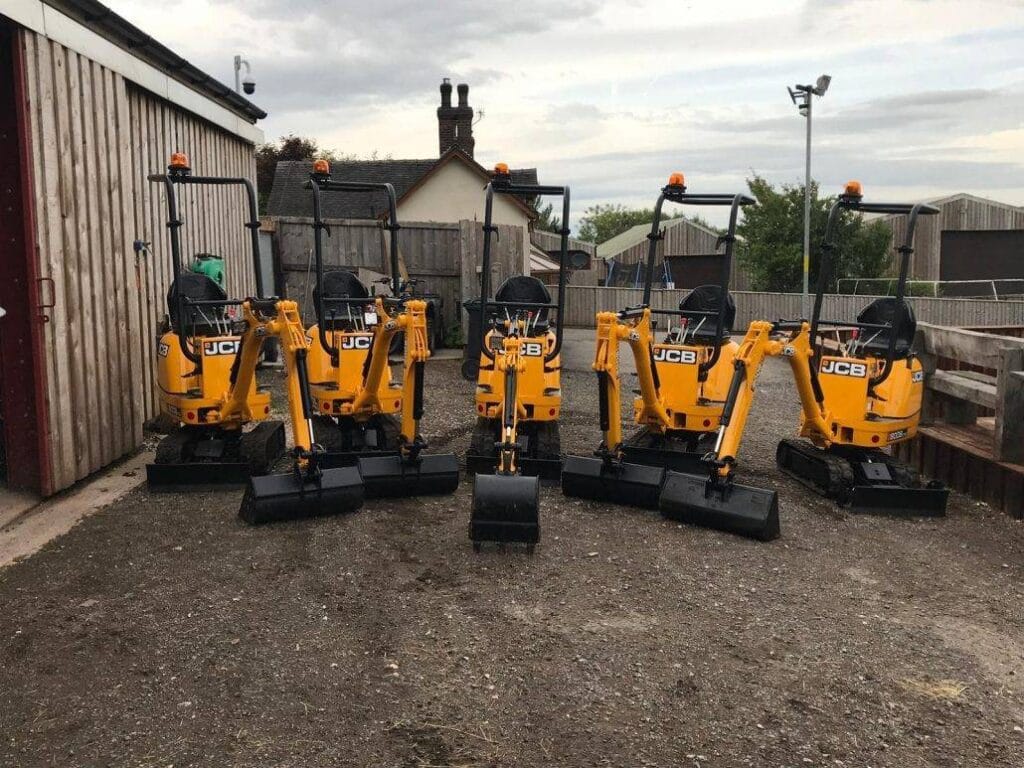
Micro diggers and mini excavators both fall under the broader excavator category, but they’re built for different jobs. Choose the wrong one and you’re either stuck with a machine too wide to get through the gate, or one that can’t dig deep enough or lift enough to finish the job on time.
Understanding Micro and Mini Diggers
What Is an Excavator?
An excavator is a machine built around a hydraulic arm and bucket, mounted on a rotating cab and tracked undercarriage, used for digging, trenching, grading and moving material. The category runs from full-size construction excavators down to machines small enough to fit through a doorway, and micro diggers and mini excavators both sit at the compact end of that range. Quotor’s full excavator guide covers how the category breaks down.
What Is a Micro Digger?
A micro digger, sometimes listed as a micro excavator, is the smallest class of excavator on the hire market, typically weighing somewhere between 0.8 and 1.7 tonnes, a practical hire-market grouping rather than a fixed industry definition. Many of the smallest models sit around one tonne. Its narrow track width, with some models narrowing to around 700–750mm, is built specifically to pass through a standard doorway or side gate. What it gives up in dig depth and lift capacity, it makes up for in access: it’s designed for precision work close to walls and fences, in a courtyard that a bigger machine simply can’t reach.
What Is a Mini Digger?
A mini digger, more commonly called a mini excavator, is slightly larger and more powerful than a micro digger, covering a much wider weight range, roughly 1.5 to 6 tonnes depending on the model, with a deeper dig reach, higher lift capacity, and a broader range of attachments. It’s still compact next to a full-size excavator, but it’s sized for jobs that need more digging power than a micro digger can deliver.
The mechanics are the same in both cases. What changes is scale, and that scale affects almost everything else about how each machine performs on site.
Advantages of Micro Diggers
Space Efficiency and Manoeuvrability
A micro digger’s compact frame is its main selling point. It can navigate a narrow side pathway, work close to an existing fence line or retaining wall, and turn within a small courtyard without the wide tail swing of a larger machine. In urban environments, that precision is often the deciding factor, with minimal ground disturbance to lawns and garden beds along the way. A bigger machine risks damaging landscaping or paved surfaces already in place.
Lower Hire Cost
Because it’s lightweight and easier to transport, a micro digger typically costs less to hire per day than a mini excavator, and it can often be towed on a small trailer rather than needing separate machinery transport. For a short job on a tight budget, that difference adds up. Quotor lists micro digger hire rates from multiple suppliers, so you can compare before booking.
Ideal Applications for Micro Diggers
Micro diggers are ideal for garden landscaping, small drainage trenches, digging holes for fence posts, footing prep for garden structures, and hard-to-reach corners of indoor or renovation jobs where a full-size machine won’t fit through the door. They’re also a common choice for first-time hirers. The smaller machine size and lower operating weight can make them less intimidating for straightforward residential work, and it’s worth reading the guide on how to operate an excavator before your first job.
Advantages of Mini Excavators
Greater Versatility
A mini excavator can be equipped with a wider range of attachments than a micro digger, breakers, augers, grapples, and multiple bucket sizes, which makes it a versatile machine for a wider range of tasks than digging alone. The same machine that trenches a drainage line in the morning can switch to a breaker for removing a concrete slab in the afternoon.
Increased Power and Performance
More engine power translates into greater lift capacity and deeper dig reach, so a mini excavator handles heavier material and tougher ground conditions than a micro digger can manage, which keeps productivity up on bigger jobs. That extra capacity counts for more on jobs where the volume of material, not the access, is the real constraint.
Common Mini Excavator Applications
Mini excavators handle larger trenching runs, foundation work for bigger structures, site grading, and moving materials on construction sites. Quotor lists mini excavator hire options by weight class, which makes it easier to match the machine to the size of the job.
Micro vs Mini Digger Comparison
Once you know roughly what your site and dig depth need, these are the five areas where micro diggers and mini diggers actually diverge. If you’re not sure where to start, Quotor’s excavator sizing guide walks through it step by step.
Size and Operating Weight
Micro diggers generally sit between 0.8 and 1.7 tonnes. Mini excavators start around 1.5 tonnes and run up to 6 tonnes, so there’s some overlap at the smaller end of the mini excavator range.
Digging Depth and Reach
A micro digger typically reaches down to around 1.5 to 2 metres. Mini excavators dig deeper, commonly 2.5 to 4 metres depending on the model, which makes a real difference for anything beyond a shallow trench or garden bed.
Power and Lift Capacity
Micro diggers have lower breakout force and lift capacity, suited to lighter digging and material handling. Mini excavators lift and break out significantly more, which is what lets them run heavier attachments like breakers and augers.
Site Access and Manoeuvrability
Micro diggers are built to fit through a standard single doorway or narrow side gate, with some models narrowing to around 700–750mm wide. Mini excavators need wider access, generally a metre or more, in exchange for their added power and reach, and that width can restrict them on tighter residential sites.
Hire Cost Comparison
Micro diggers cost less to hire per day and are cheaper to transport. Mini excavators cost more, but on a job that needs their extra depth or lift, they can finish the work in less time, which sometimes closes the cost gap.
Choosing the Right Digger to Hire
When to Hire a Micro Digger
A micro digger is the ideal choice when the job site is tight and access, not digging power, is what’s limiting your options: side passages, indoor spaces, confined areas, small residential yards, or anywhere a bigger machine can’t physically get in.
When to Hire a Mini Excavator
A mini excavator is the right choice when the job needs more depth, more lift, or a wider range of attachments than a micro digger can provide, and the site has enough clearance for a wider machine to manoeuvre.
Site Access and Project Requirements
Before booking, assess your gate and doorway widths against the machine’s specs, confirm the dig depth the job actually needs, and factor in your budget and timeline. Operators must also be competent to use the machine and any fitted attachments, so check the relevant site and state requirements before operating one yourself. Quotor’s guide to excavator licences and operator requirements covers that distinction in more detail.
Once you’ve settled on a size, Quotor lets you compare hire cost and availability for both micro diggers and mini excavators from suppliers in your area, so you can book efficiently. If you’re not certain a machine will suit the job, a short-term hire can be cheaper than committing to the wrong size for a longer project.