
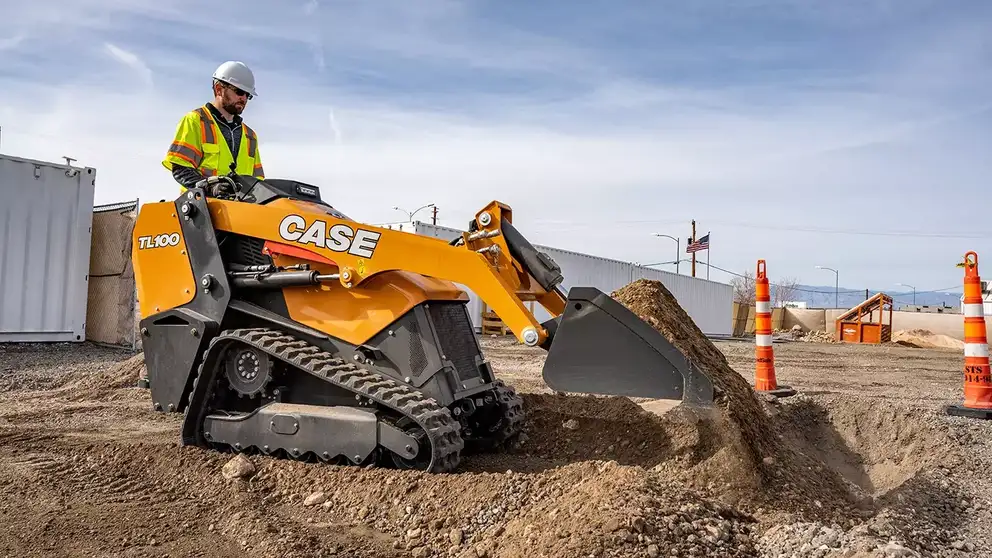
A mini loader is a compact, engine-powered loader for tight spaces where a full-size skid steer will not fit or is not needed. Fitted with attachments from buckets to augers and sweepers, mini loaders are common on landscaping, construction and utility sites across Australia. This guide covers what a mini loader is, where it is used and what to weigh up when hiring.
Understanding Mini Loaders
What Is a Mini Loader?
A mini loader, sometimes called a mini skid steer, is a small, manoeuvrable loader for earthmoving, materials handling and landscaping work in spaces too tight for larger machinery. Sitting below skid steer loaders in size, mini loaders typically weigh around 500 kilograms to 1.5 tonnes, though the range varies by model. Quotor lists mini loaders as their own category within the wider loaders range, since the machine belongs inside the broader loader family. Products marketed as Dingo and Kanga are well known examples in the Australian hire market.
How Mini Loaders Work
Most mini loaders use a hydraulic lift arm to raise and lower an attachment, powered by a small diesel engine, often from Kubota or Perkins. The operator works from a stand-on platform or compact seated position rather than an enclosed cab. Most steer by varying drive between the left and right sides, while some articulated mini loaders use a central pivot instead. Auxiliary hydraulic flow lets attachments run directly off the machine, so changing tasks means changing the attachment, a system shared with the rest of Quotor’s loaders range.
Benefits of Using a Mini Loader
The main benefit of a mini loader is access. A narrow frame, often under a metre wide, can pass through a standard side gate or into a backyard larger machines cannot reach. Attachments swap in minutes using a quick-hitch system, so one machine can dig, lift, trench and clear a site without separate equipment. Tracked models also spread weight over a wider area, reducing the risk of marking lawns.
Types of Mini Loaders
Tracked Mini Loaders
Tracked mini loaders run on rubber tracks rather than wheels, spreading weight over a larger footprint and giving more traction on soft, muddy or uneven ground. They suit wet sites, sloped terrain or ground needing protection from rutting, similar to how compact posi-track loaders are chosen over wheeled skid steers.
Wheeled Mini Loaders
Wheeled mini loaders move faster on hard, flat surfaces such as concrete or hardstand, and are generally lighter and cheaper to hire than an equivalent tracked model. They suit driveway work, indoor clean-up and jobs where the machine travels on a formed surface rather than digging into it, similar to the trade-off between a skid steer and a posi-track loader.
Mini Loader vs Skid Steer Loader
A mini loader and a skid steer loader work on the same principle, an engine-powered chassis with a front-mounted attachment run by hydraulics, but they suit different jobs. A mini loader is smaller and lighter, built to fit through gates and work in confined residential settings, while a skid steer loader is larger, with more lift height and capacity, suited to earthmoving where payload matters more than access. Quotor’s comparison of the two breaks it down further.
| Feature | Mini Loader | Skid Steer Loader |
|---|---|---|
| Typical weight | Around 500 kg to 1.5 t | Around 2 t to 4 t |
| Typical width | Under 1 m | Around 1.5 m to 1.8 m |
| Site access | Fits standard gates | Needs wider access |
| Typical use | Landscaping, tight sites | Construction, earthmoving |
Mini Loader Attachments
A quick-hitch mounting system lets an operator move between attachment types without changing machines. Some suppliers also stock flail mowers, stump grinders, concrete mixers and forks for more specialised jobs.
Buckets
General purpose and heavy-duty rock buckets are the most common mini loader attachment, used for moving soil, mulch, aggregate and other loose material. Matching bucket size to hydraulic flow and lift capacity keeps the machine working efficiently rather than straining at the edge of its rating, a principle Quotor’s guide to skid steer attachments covers further.
Augers and Post Hole Diggers
An auger attachment turns a mini loader into a post hole digging machine, useful for fencing and decking footings. Auger diameter is matched to the job, a narrow bit for fence posts, a wider one for tree planting or larger footings, with the loader supplying the hydraulic torque to drive it.
Trenchers and Rippers
A trencher cuts a narrow, consistent trench for irrigation, drainage or underground cabling. A ripper is a fixed tooth used to break up compacted or rocky ground rather than dig a continuous trench. Unlike a mini excavator, a mini loader with a trenching attachment is not built for deep excavation, but covers most shallow utility trenching.
Grapples and Sweepers
A grapple uses hydraulically closing jaws to lift irregular material such as branches or rubble a bucket cannot hold securely. A sweeper, usually a rotary brush, clears loose material such as gravel or debris from paths and hardstand at the end of a job.
Mini Loader Applications
Landscaping and Gardening
Landscaping is one of the most common uses for a mini loader, covering moving soil, spreading mulch, levelling garden beds and clearing debris before planting. Its narrow width lets it work through a side gate without the access works a larger machine needs.
Construction and Earthmoving
On construction sites, mini loaders move materials, backfill and clear up in areas too tight or light-duty for larger equipment. For larger-scale earthmoving or heavier handling, a skid steer loader or small excavator generally suits the job better.
Utility and Trenching Work
Fitted with a trenching or auger attachment, a mini loader is commonly used for laying irrigation pipe, running stormwater drainage or digging post holes. Because it is narrow enough to work along an existing path, it completes this digging without disturbing surrounding garden beds.
Site Preparation and Cleanup
Before and after a project, mini loaders clear vegetation, remove rubble and prepare a level base for paving, turf or building work. A sweeper often finishes a job, clearing loose material before handover.
Choosing the Right Mini Loader
Machine Size and Operating Capacity
Mini loader size is generally chosen around two factors, the width needed to access the site and the operating capacity needed for the heaviest load. A machine sized for a narrow gate may have less lift capacity than a wider model, so both figures are worth checking. Where a job regularly needs more lift height or payload, a skid steer loader is usually the next size class to consider.
Site Access and Ground Conditions
Ground conditions and site access generally decide between a tracked and a wheeled mini loader. A tracked model suits soft, sloped or wet ground and reduces the risk of surface damage, while a wheeled model is typically faster and cheaper to hire on hard, flat sites. Gates and tight turning areas should also be measured against the machine’s width before booking, since not every mini loader fits the same access point. Their relatively low operating weight can make transport simpler than with larger loaders, although trailer and tow-vehicle capacity still need to match the machine and attachments.
Attachment Requirements
The attachments needed for the job should be confirmed before hire, since not every supplier stocks every attachment and hydraulic flow can rule out some combinations. Matching attachment to machine avoids delays on site.
Mini Loader Hire
When to Hire a Mini Loader
Hiring suits most mini loader jobs, since the machine is generally only needed for the length of a landscaping, construction or utility project. It also means choosing the size, attachment set and configuration that best matches the job, rather than a machine bought for general use.
Factors to Consider When Hiring
Site access, ground conditions and required attachments are the main factors deciding which mini loader to hire, alongside hire duration and whether an operator is required. Commercial sites generally expect the operator to demonstrate competency for the machine and task, which may be supported by relevant training, experience or a site-based verification of competency, regardless of how small the loader is. Quotor’s guide to hiring construction equipment covers these considerations further.
Mini Loader Hire Costs
Mini loader hire cost is driven mainly by machine size, configuration, hire duration and included attachments, not a single flat rate. Longer hire periods typically reduce the daily rate, while short hires cost more per day. Rates vary between suppliers and regions, so comparing current quotes beats budgeting off one published figure.
Hiring vs Buying a Mini Loader
For occasional jobs, hiring is generally more cost-effective, since it avoids ownership, maintenance and storage costs for a machine used a few weeks a year. Buying starts to make more sense for a business running mini loader jobs on a near-constant basis, where ongoing hire costs outweigh the cost of ownership over time. Businesses that regularly need more capacity may find that a skid steer loader better suits their workload, whether hired or bought.