
Dozers and motor graders are two of the most common pieces of construction equipment on a heavy construction site, and they get mixed up more than most equipment pairings, since both carry a large blade and move earth. This comparison covers blade design, ground conditions and hire cost to help you understand the differences between a dozer and a motor grader, so you can pick the machine that fits the job, whether that’s clearing a site or grading it to finish.
Understanding Dozers and Motor Graders
How Dozers and Motor Graders Fit Into Earthmoving
Both motor graders and bulldozers fall under the broader earthmoving equipment category, machinery built to shift, shape or level ground on a site. Where they split is the type of work each one does: a dozer moves bulk material, and a motor grader finishes and shapes a surface.
What Is a Dozer?
A dozer, also called a bulldozer, is a tracked machine with a wide steel blade mounted on the front. As an earthmoving machine, a bulldozer is built to move bulk material rather than finish a surface: tracks give it stability and traction on rough terrain, and the blade is used to push, clear and flatten material rather than cut it to a fine finish. See what is a dozer for a full breakdown.
What Is a Motor Grader?
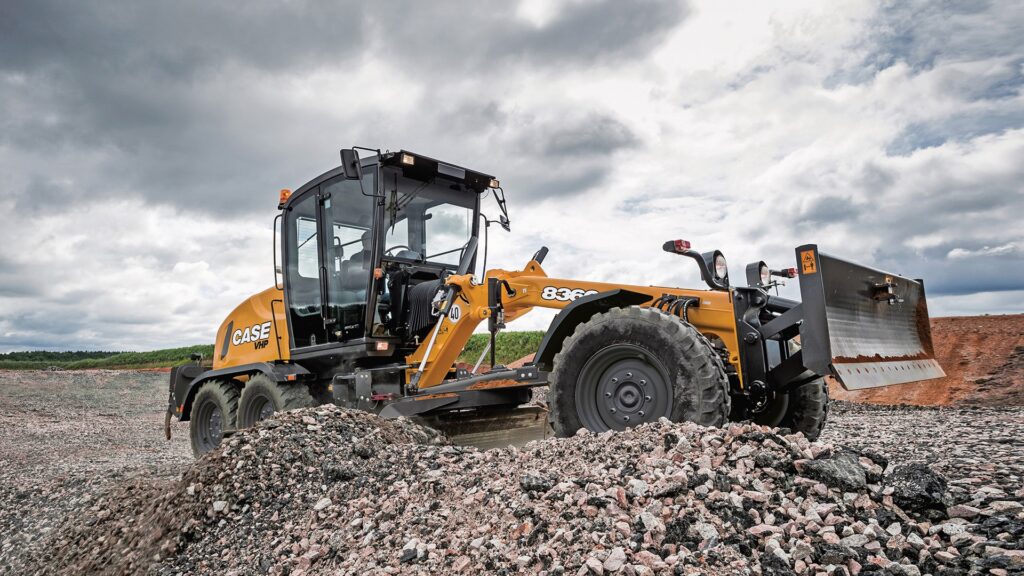
A motor grader is a wheeled machine with a long metal blade, called a moldboard, mounted underneath the frame between the front and rear axles. The moldboard can be tilted forward or backward, angled and shifted side to side, which lets the operator cut a road surface, a laneway or a pad to a level, even finish, all from the operator’s seat. Because motor graders work by shaving a thin layer rather than pushing bulk material, blade control determines the finish. More detail is in what is a grader.
Dozers Application
Site Clearing and Bulk Earthmoving
Bulldozers are the standard choice for clearing vegetation and stripping topsoil before a project starts, on construction sites that haven’t been touched yet. Tracks spread the machine’s weight over a stable base, which keeps traction on rough, rocky or wet ground where a wheeled machine would struggle. That combination of durability and grip is why hire companies reach for a bulldozer first on a large, undeveloped site.
Pushing and Spreading Material
The blade can tilt forward or backward and angle left or right, which lets the operator push soil, sand or a boulder in a controlled direction. Most bulldozers also carry a ripper, a claw-like attachment fitted to the rear, used to break up compacted soil or rock before the blade moves it. That mix of raw power and a rear ripper separates a bulldozer from most other earthmoving machinery.
Best Jobs for Dozers
A bulldozer suits site clearing, bulk earthmoving, rough grading ahead of finer leveling, and demolition work where heavy loads like rubble or tree stumps need pushing clear rather than picking up. On large projects a compact dozer still handles tight residential access, and Quotor’s dozer listings cover the size range from compact machines through to large-scale units for major earthworks.
Motor Grader Application
The core applications of motor graders are precision grading and road work, the opposite job to a bulldozer’s bulk pushing.
Precision Grading and Levelling
Where a bulldozer moves volume, a motor grader does precise grading. The moldboard’s tilt and angle control lets the operator take a thin, even layer off a large area, which is what fine grading and leveling require to bring a surface to grade. This is a job a dozer’s blade is not built to do to the same tolerance.
Road Construction and Maintenance
Motor graders, often called road graders, shape the base and surface of sealed and unsealed roads. As a road grader, the machine also spreads and trims gravel or asphalt base course ready to pave, and the blade cuts a curve, or camber, so water sheds to the sides instead of pooling, which cuts down on erosion. Graders also cut a drainage ditch alongside the road in the same pass, and once the base is shaped, a roller usually compacts it before sealing.
Best Jobs for Motor Graders
Motor graders are best suited to road construction, laneways, pads and any large area that needs a level, even finish rather than bulk material moved, and Quotor’s grader listings cover the blade-width and frame-size range for that work. A motor grader’s wheel grip matters more on loose or wet ground than a bulldozer’s tracks do, so tyre condition affects the finish. If the job is hauling large volumes of soil or gravel over distance rather than grading it in place, a scraper is the better fit; see motor grader vs scraper for that comparison.
Dozer vs Motor Grader Comparison
Once you know what each machine is built for, the key differences between motor graders and dozers come down to five things: design, power versus precision, terrain, productivity and cost.
Machine Design and Blade Configuration
A bulldozer runs on crawler tracks, with a straight or angled blade mounted at the front and, on many machines, a rear ripper for breaking hard ground. A motor grader runs on wheels and typically uses frame articulation, while its moldboard sits beneath the centre of the chassis and can tilt, angle and shift sideways for precise shaping. The distinction comes down to opposite jobs: one pushes, the other cuts a finish.
Pushing Power vs Grading Precision
A bulldozer’s tractor-like build gives it raw power to move large volumes of soil, rock or debris in a single pass. A motor grader trades that power for precision, shaping a surface to a consistent level and finish over a long run. Using one machine for the other’s job usually costs more time than it saves, part of why matching bulldozers and motor graders to the right task can save time on a tight schedule.
Ground Conditions and Terrain
Tracks give a bulldozer stability on uneven, muddy or rock-strewn terrain that would bog a wheeled machine down. A motor grader needs a reasonably firm, already-cleared surface to work on, so it isn’t the machine for a site that still has vegetation, boulders or soft ground to deal with.
Productivity and Work Type
Bulldozer productivity is measured in the volume of material moved per hour, which is why they suit large-scale bulk earthworks and clearing large areas on construction projects. Motor grader productivity is measured by the length or area of surface graded, which fits road construction, drainage work and finishing pads rather than moving material in bulk.
Hire Cost Comparison
Bulldozer hire rates track machine weight and horsepower, so a large-scale unit with a ripper attachment costs more per hour than a compact model, and rates climb on heavy-duty earthmoving jobs that need a bigger bulldozer. Motor grader rates track blade width and frame size in a similar way. Quotor’s guide to estimating equipment cost breaks down what drives hourly and daily rates for both pieces of heavy equipment, most relevant on a multi-week booking rather than a single day.
Choosing the Right Machine to Hire
When to Hire a Dozer
Hire a dozer when the job is to clear vegetation, move earth in bulk, demolish, or break up and push compacted ground, particularly on a site that isn’t level yet.
When to Hire a Motor Grader
Hire a motor grader when the ground is already reasonably clear and the job is fine grading, road construction or maintenance, cutting drainage, or leveling a large area to a consistent finish, which makes it the best choice for finishing work rather than bulk moves.
Site Conditions and Project Requirements
Match the machine to the site, not just the task. Rough or wet terrain calls for a bulldozer’s tracks regardless of how fine the finish needs to be later, while a firm, cleared site is where a grader’s precision brings a pad to grade, particularly on multi-stage grading projects where the surface has to hold a consistent fall. Quotor’s guide to equipment procurement covers how to weigh site conditions and project requirements against the right piece of equipment before booking either machine.
Hire Cost and Project Duration
Hire duration should follow the stage of work rather than the machine’s daily rate alone. A dozer may only be needed through clearing and bulk earthworks, while a grader may come in later for final trim and road formation. Quotor’s guide to hiring construction equipment explains that process, and Quotor’s equipment listings let you compare hire cost and availability for a bulldozer and a motor grader, and the differences between the two, in one place.