
Understanding Telehandler Attachments
What Is a Telehandler Attachment?
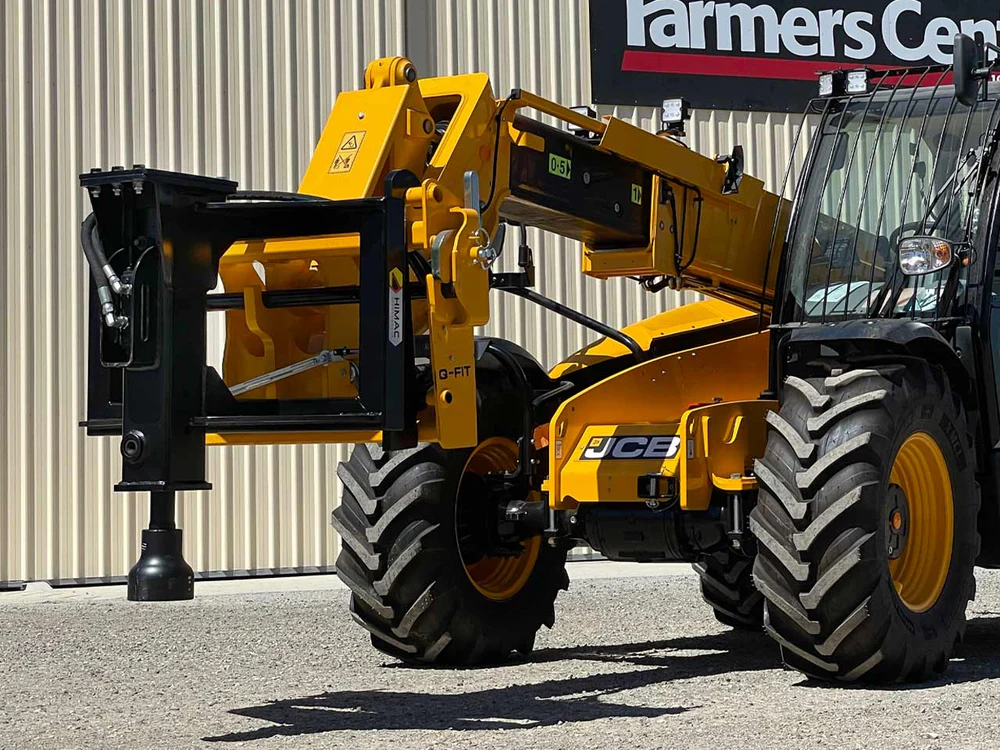
A telehandler attachment is any tool that fits onto the machine’s telescopic boom in place of, or alongside, its standard forks. Swapping pallet forks for a bucket, a jib or a work platform turns one machine into several without changing what’s under the bonnet. For the mechanics of the base machine itself, Quotor’s guide to what a telehandler is covers the telescopic boom, drivetrain and lift capacity in more depth.
Why Choosing the Right Telehandler Attachment Matters
The attachment fitted at the time decides what job the telehandler can actually do that day, and that versatility is exactly why the choice matters as much as the machine itself. Forks make it function much like a forklift for palletised loads, while a bucket, jib or platform pushes it into loader, crane or elevated work platform territory instead. Picking the wrong one does not just slow the job down, it can mean hiring a second machine to finish what the first one could have handled alone. Matching the attachment to the actual task, covered later in this guide, is what avoids that.
Types of Telehandler Attachments
Forks
Pallet forks are the attachment most telehandlers ship with, and the reason the machine gets compared to a forklift in the first place. They are carried on a fork carriage mounted at the end of the boom, handling palletised building materials, bricks, block packs and bagged product, lifted and placed at height or pushed deep into a stack thanks to the boom’s reach. Fork spacing usually adjusts to match pallet width, and some carriages let the operator sideshift the forks without repositioning the whole machine.
Buckets
A general-purpose bucket swaps the forks for a fixed or tilting bucket, letting the telehandler scoop, carry and place loose material such as sand, aggregate, soil or mulch. Bucket size and capacity vary with the machine’s own lift rating, and some buckets add a hydraulic side-tilt function, letting the operator angle the load evenly onto sloped or uneven ground rather than only tipping it straight ahead.
Jibs and Lifting Hooks
A jib attachment replaces the forks with a boom extension and hook, turning the telehandler into a mobile crane for heavy lifting jobs like placing roof trusses, precast panels, steel beams or utility poles. Some jibs add an integrated winch for finer control as the load is raised or lowered. A jib changes the attachment geometry and load centre, so lifting capacity must be taken from the approved load chart for that jib and boom position rather than from the fork rating.
Work Platforms
A personnel work platform, sometimes called a man basket, is available for some telehandlers and configurations to elevate workers for tasks like cladding, signage or maintenance, where the manufacturer permits personnel lifting. Because the attachment carries people rather than material, platform approval, machine configuration, inspection, training and any applicable High Risk Work Licence requirements need to be confirmed before use.
Bale Handling Attachments
Bale spears, single or double pronged, are built for agricultural and rural worksites, spearing round or square hay and silage bales to lift, stack or load them onto transport. They are a narrow, purpose-built attachment rather than a general one, and rarely useful outside farm or rural hire work.
Grapples and Other Material Handling Attachments
Grapples clamp down over a bucket or set of forks to hold irregular, loose or bulky material, such as scrap metal, timber, rubble or green waste, that would otherwise spill or roll off during a lift. Other attachments round out the range for more specific jobs: augers bore post holes, and sweeper or broom attachments clear loose material off finished surfaces. Each swaps onto the same single telescopic boom and carriage, which is why hiring one telehandler through Quotor often works out cheaper than hiring several single-purpose machines.
Telehandler Attachment Compatibility
Carriages, Couplers and Mounting Systems
Attachments mount to telehandlers through a carriage or quick-coupler interface, and compatibility depends on the telehandler’s specific interface as well as the attachment’s dimensions, weight and hydraulic requirements. Attachments should be checked against the particular machine, since compatibility varies across telehandler models rather than by size class alone. Some telehandlers use a hydraulic quick coupler that lets the operator swap attachments from the cab, while others rely on a manual pin system that needs someone on the ground. The forklift equipment listings list carriage and coupler type alongside lift specifications for this reason, since confirming the fit against the specific machine is what decides which attachments will actually work before capacity or hydraulics come into it.
Hydraulic Requirements
Passive attachments such as standard fork carriages and basic buckets are positioned using the telehandler’s normal boom and attachment-tilt hydraulics. Attachments with their own powered functions, such as grapples, augers, sweepers or some jibs, may require an auxiliary hydraulic circuit with suitable flow and pressure. Running an attachment on the wrong flow or pressure can strain the attachment itself or the machine’s hydraulics over time, not just leave it underpowered.
Matching Attachments to Telehandler Capacity and Reach
A telehandler’s lift capacity is read from a load chart rather than a single number, since it changes with boom height and forward reach. Different attachments change the machine’s load centre, geometry and usable capacity too, so the correct load chart for the fitted attachment must be used, not just the machine’s standard fork chart. Checking the chart for the specific attachment, height and reach combination is the only way to know what it can actually lift on the day.
Choosing the Right Telehandler Attachment
Match the Attachment to the Task
Forks suit palletised and unitised loads, a bucket suits loose bulk material, a jib suits free-hanging lifts like trusses or steel, a platform suits elevated personnel work, and bale spears and grapples cover their respective niches. Matching the attachment to what is actually being moved, rather than what happens to be on the machine already, is most of choosing the right telehandler attachment for a job.
Consider Load Weight and Lift Height
Beyond matching the attachment type, the specific load has to fit the load chart for that attachment at the height and reach the job needs, not just the machine’s general rated capacity. A load that sits comfortably within capacity at ground level can exceed it once the boom is extended and raised.
Check Site and Ground Conditions
Soft, sloped or uneven ground affects a telehandler’s stability more as the boom extends, since the load moves further from the machine’s centre of gravity. Tight spaces on a construction site also limit which attachment, and which telehandler, will fit and manoeuvre safely, worth checking before booking rather than after arrival.
Common Attachment Selection Mistakes
The most frequent mistakes are using a general bucket for material it was not built to handle, skipping the load chart check at the actual reach needed rather than the machine’s maximum rating, and assuming any attachment will fit any carriage without confirming compatibility first. Attachments with their own moving parts, like a jib or grapple, also demand more from the operator, and Quotor’s guide to becoming a heavy equipment operator covers the skill that involves.
Hiring Telehandler Attachments
Hiring Attachments with the Telehandler
Pallet forks usually come standard with a telehandler hire, since most telehandlers ship with them fitted. Buckets, jibs, platforms and grapples are typically optional add-ons rather than default inclusions, worth confirming when booking rather than assuming. Quotor’s telehandler listings show which attachments are available alongside each machine.
Hiring Attachments Separately
Where the machine on offer does not include the attachment needed, it can usually be sourced from a separate attachment supplier instead, provided the carriage and hydraulic specifications are confirmed as compatible with the hired telehandler beforehand.
Telehandler Attachment Hire Costs
Attachment hire cost depends mainly on attachment type and size, hire duration, supplier availability and whether it is bundled with the telehandler or sourced separately. A guide to estimating equipment cost breaks these factors down further, and Quotor helps line up the right telehandler and the right attachment together as one hire. For the wider process, Quotor’s guide to hiring construction equipment covers what to check before booking any machine.