
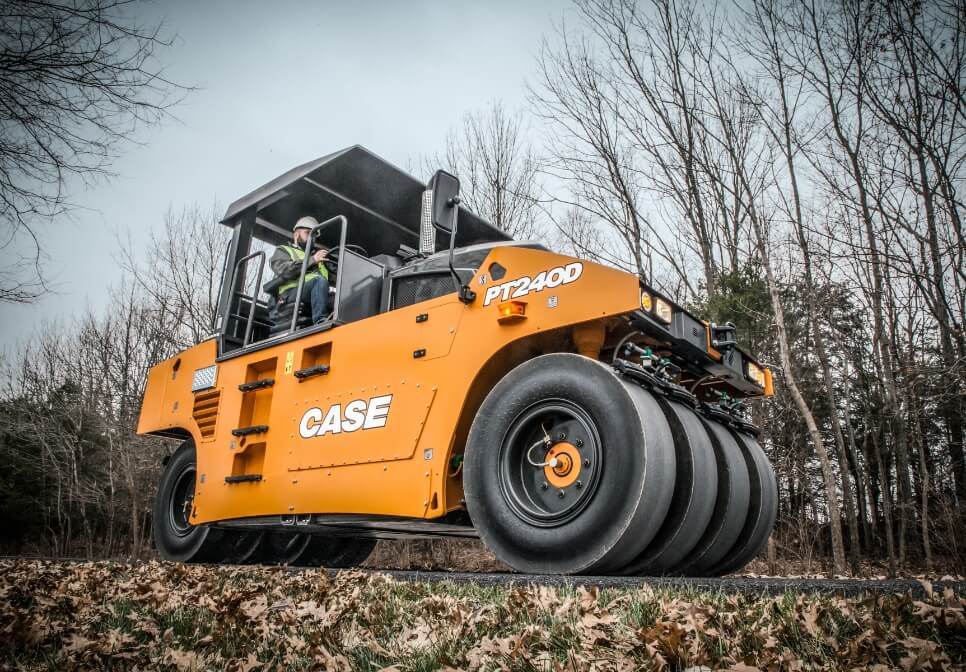
A pneumatic roller uses air filled rubber tyres instead of a steel drum to compact asphalt, granular base material and lightly cohesive soils. It’s one of the machines Quotor helps contractors source, from a small resurfacing job to a full construction project. This guide covers how they work, where they’re used, how they compare, and what to weigh up before hiring one.
Understanding Pneumatic Rollers
What Is a Pneumatic Roller?
A pneumatic roller is compaction equipment built around a box-section chassis carrying two axles of tyres filled with air, with ballast compartments that adjust the weight of the machine for the job. Pneumatic rollers rely on tyre flex and ballasted weight, not a rigid drum, to do the compacting. Quotor lists it within the wider roller category, alongside smooth drum, padfoot, double drum and combination rollers.
How Pneumatic Rollers Work
Each tyre deflects slightly as it rolls, conforming to the material being compacted and applying pressure to the surface in a kneading action, not a straight vertical impact. This reduces air voids in the material and helps particles bond for a smooth and even finish. Operators fine-tune compaction through a combination of ballast and tyre pressure, adjusting wheel load and contact pressure to suit the material and stage of compaction. For how compaction rollers generally work, see Quotor’s guide.
Pneumatic Roller vs Multi-Tyre Roller
Pneumatic roller and multi tyre roller describe the same machine. Pneumatic roller refers to the air filled tyre technology; multi tyre roller describes the tyre count and layout, and PTR is the industry abbreviation for both. Quotor’s equipment listings use multi tyre roller as the category name, while pneumatic roller is more common industry-wide, and some suppliers write it as multi-tyred rollers instead. There’s no functional difference between them.
Pneumatic Roller Applications
Asphalt Compaction
When compacting asphalt, a pneumatic roller is typically brought in after the initial breakdown rolling, while the mix is still workable. Its kneading action presses aggregate and binder together while conforming to the surface, helping reduce air voids and improve density without relying on a steel drum’s rigid contact. This suits binder courses and lower-bitumen mixes that need a gentler level of compaction.
Road Construction and Maintenance
Beyond new construction, pneumatic rollers are generally used in road maintenance work such as resealing and resurfacing, where a lighter, adaptable machine can work around existing infrastructure. Adjustable ballast and tyre pressure suit highway construction and maintenance crews.
Base and Sub-Base Compaction
For granular base and sub-base layers, a pneumatic roller compacts the material while helping seal the surface against moisture before the next layer goes down. Moisture content affects the result: too wet and the tyres churn the surface, too dry and density suffers. Pneumatic rollers are often paired with a vibratory roller for deeper base compaction.
Finishing and Sealing Work
Finishing and sealing is where pneumatic rollers do their most distinctive work. On chip seal projects, the tyres press aggregate into the binder without fracturing the stone, which a steel drum is more likely to do. The same kneading action closes small surface voids on freshly laid asphalt, improving finish quality on car parks, hardstands and surfaces such as airport runways.
Benefits and Limitations of Pneumatic Rollers
Kneading Compaction from Rubber Tyres
The kneading action sets a pneumatic roller apart from smooth drum rollers, which rely on static weight and, on vibratory models, mechanical vibration. Because the tyres flex and overlap slightly as they roll, they apply uniform pressure across variable material, unlike a rigid drum, which tends to bridge over softer spots.
Improved Surface Density
Fewer trapped voids and a better bond between particles leaves a denser, more uniform surface than static rolling alone achieves. This matters most on asphalt wearing courses, where higher density is linked to better resistance to water penetration, rutting and premature cracking.
Adaptability to Different Materials
Pneumatic rollers use adjustable ballast and tyre pressure to suit a range of materials, from asphalt through to granular sub-base and lightly cohesive soils, which is why they turn up across the construction industry, from a small project like a driveway through to larger road contracts.
Limitations Compared with Drum Rollers
Pneumatic rollers aren’t the right choice for every job. Compaction depth is more limited than a padfoot or heavy vibratory roller, so they’re generally not used for deep compaction or deep-lift compaction of cohesive soils such as clay. Coarse or unbound materials may require more passes to achieve density than vibratory rollers need, and the tyres add a maintenance cost that can mean higher operating costs.
Pneumatic Roller vs Other Rollers
Pneumatic rollers are rarely used alone. Here’s how they compare with the other types of rollers in Quotor’s roller range.
| Roller Type | Compaction Action | Best Suited For |
|---|---|---|
| Pneumatic (multi tyre) | Kneading, from tyre flex and ballasted weight | Surface sealing, finishing passes, chip seal |
| Double drum | Static weight plus vibration from steel drums | Large-scale surface compaction, fast coverage |
| Combination | Vibration from one drum, kneading from tyres | Single-pass jobs needing both compaction types |
| Padfoot | High-pressure tamping from protruding pads | Deep compaction of cohesive soils, subgrade prep |
Pneumatic Roller vs Double Drum Roller
A double drum roller, one of the more common steel drum rollers, uses two drums, typically with vibration, to compact asphalt across large areas. It’s faster for bulk coverage but doesn’t produce a pneumatic roller’s kneading effect. Many crews use both: a double drum roller for breakdown rolling, then a pneumatic roller for the finishing pass. See Quotor’s comparison of single and double drum rollers for how drum rollers are sized.
Pneumatic Roller vs Combination Roller
A combination roller pairs one steel drum with pneumatic tyres on the same chassis, applying vibratory compaction and tyre kneading in a single pass instead of needing two machines. This suits smaller sites or tighter schedules, though a dedicated pneumatic roller still gives finer control over ballast and pressure. More on how these machines are configured sits in Quotor’s combination roller category.
Pneumatic Roller vs Padfoot Roller
A padfoot roller uses protruding metal pads to tamp cohesive soils such as clay, reaching a compaction depth a pneumatic roller isn’t built for. The two rarely compete for the same task: padfoot rollers handle subgrades and embankment work, while pneumatic rollers take over once the surface is ready for asphalt or a sealed finish. Quotor’s padfoot versus smooth drum comparison covers the padfoot side of that distinction.
Choosing the Right Pneumatic Roller
Operating Weight and Tyre Configuration
Pneumatic rollers commonly range from around 5 tonnes on lighter models to 25 tonnes or more when fully ballasted, depending on machine size and configuration. Most models run seven to nine tyres across two axles, arranged so the front tyres track through the gaps left by the rear ones for full-width coverage. Higher tyre counts suit bigger road contracts, while smaller configurations bring better manoeuvrability on tighter jobsites.
Ballast and Ground Pressure
Ballasting systems, usually water, sand or steel, increase operating weight and ground pressure without changing the machine’s footprint. Combined with adjustable tyre pressure, this sets the compactive effort for a range of depths: more ballast and pressure for deeper densification, less for a gentler surface seal.
Material Type
The type of compaction a job needs shapes the ballast and pressure settings. Softer materials such as asphalt respond well to lower pressure and a kneading pass, while denser or coarser material may need higher ballast to reach the required depth.
Site Conditions and Working Width
Working width matters as much as raw compaction power on constrained sites. A wider machine covers more ground per pass, while a smaller roller suits confined sites, driveways or hardstand areas with limited turning space. Site access and nearby structures are worth checking.
Pneumatic Roller Hire
When to Hire a Pneumatic Roller
Hiring makes sense for most contractors, since pneumatic rollers are typically brought in for a specific compaction or finishing stage rather than run continuously across a project. Quotor connects contractors with suppliers whose fleets cover a range of pneumatic roller sizes, comparing options against a job’s material, weight and width needs. Hire is generally the more practical option for a one-off job.
Factors to Consider When Hiring
Hiring decisions come down to dry hire versus wet hire: whether the site needs an operator supplied with the machine or already has trained staff. The operator is generally expected to demonstrate competency for the machine and task, which may be supported by relevant training, experience or a site-based verification of competency. Delivery and minimum hire periods are worth confirming upfront.
Pneumatic Roller Hire Costs
Pneumatic roller hire rates vary with machine size, ballast capacity and whether the hire is dry or wet, with wet hire generally costing more per hour. Location and demand affect pricing, so rates are best confirmed with suppliers rather than assumed from one figure. Quotor gathers and compares quotes from suppliers across Australia, giving contractors a clearer picture of current pricing before committing.