
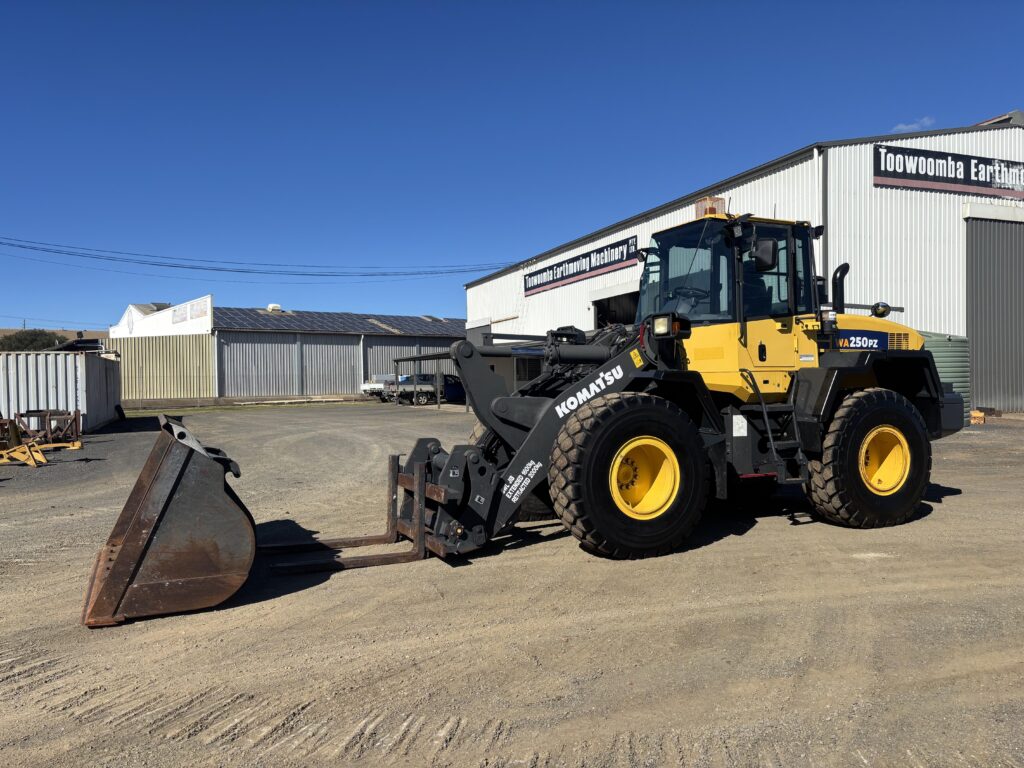
Understanding Integrated Tool Carriers and Wheel Loaders
How Integrated Tool Carriers and Wheel Loaders Handle Material Differently
Both are loaders, but each is purpose-built for different work in the earthmoving industry. An integrated tool carrier is a flexible, versatile machine, while a production-focused option works differently. Configuration, not size or the label, decides most of what separates the two in daily operation.
What Is an Integrated Tool Carrier?
An integrated tool carrier is a loader configured around material handling and attachment versatility, typically using a quick coupler and loader linkage designed to work effectively with forks, buckets and other tools. Tool-carrier linkage is designed to help keep forks and other attachments level through the lift cycle, making pallet handling and attachment work easier than with loader linkage focused primarily on bucket breakout. Quotor lists integrated tool carriers for hire across the civil construction industry, where configuration matters as much as raw size.
What Is a Wheel Loader?
This loader type is typically configured for high-volume production work, built for repeated loading and stockpiling at volume. Where an integrated tool carrier is configured for tool work, it’s built around load capacity per cycle instead. Quotor’s loader range runs from compact options to larger mining-spec ones.
Integrated Tool Carrier Strengths
Fast Attachment Changes
The main advantage of an integrated tool carrier is how efficient it is when it switches between tools during a shift. A quick-attach system lets the operator change tools without leaving the cab, which matters most where a shift covers a combination of small tasks rather than one continuous piece of work.
Material Handling and Fork Work
This is where an integrated tool carrier earns its keep: unloading a delivery, moving pallets and handling loads a fixed bucket can’t manage as cleanly. The tight turning circle and central operator position give strong visibility for close work around other plant and staff, so loads can be placed safely in confined areas.
Best Jobs for Integrated Tool Carriers
Across Quotor’s civil construction clients, an integrated tool carrier is a common sight on a busy construction site: it suits the civil industry and light infrastructure work with mixed daily tasks, where switching tools saves more time than more capacity would save on any single piece of work. It’s a poor fit for one repetitive high-volume application.
Wheel Loader Strengths
Higher Bucket Capacity
A loader’s bucket and breakout force are built for one job: moving a large load as fast as possible. Where an integrated tool carrier is judged on tool changes per hour, it is judged on tonnes shifted per hour, and its focused configuration is what gets it there.
Loading and Stockpiling Material
Loading and working down a stockpile is the loader’s core role. Some configurations also accept extra tools, but this style stays built around bulk loading rather than switching between them.
Best Jobs for Wheel Loaders
Among Quotor’s loaders, this configuration suits bulk earthmoving, quarry work and mining operations, and any work centred on shifting stockpiled loads at volume. A site moving large tonnages a day gets more from capacity than from switching speed, and loading vehicles for transport off site is where that capacity counts most.
Integrated Tool Carrier vs Wheel Loader Comparison
Machine Design and Linkage
An integrated tool carrier is configured specifically around attachment handling, typically combining a quick coupler with linkage that supports controlled, near-parallel lift for tools such as forks. Conventional wheel loaders vary more: many also accept quick couplers and multiple attachments, but machines configured primarily for bucket work may prioritise breakout force and digging performance.
Attachment Versatility
Both machine types can use multiple attachments, but an integrated tool carrier is designed around using those tools as a core part of its workload rather than as an occasional alternative to the bucket.
Loading Capacity and Breakout Force
A loader configured for production work generally delivers more capacity and higher breakout force than an integrated tool carrier, because its hydraulics and frame are tuned around one duty. A tool carrier’s numbers reflect its role as a multi-tool machine: enough capacity and breakout force for general work, without the extra structure a dedicated production loader carries for doing one thing at high volume.
Lift Height and Material Handling
ITCs are particularly suited to fork and attachment handling where load control and parallel lift matter. Wheel loaders configured for production loading may instead prioritise bucket capacity, breakout force and dump clearance.
Site Conditions and Manoeuvrability
Manoeuvrability depends largely on machine size rather than whether it is labelled an ITC or wheel loader. The more useful distinction is workload: ITCs suit sites where material handling and tool changes are frequent, while production loaders suit repetitive bucket cycles.
Hire Cost Comparison
Hire cost depends on machine size, attachment package, supplier and duration rather than the ITC or wheel-loader label alone. An ITC can lower total project cost where one machine replaces several attachment-specific tasks, while a production wheel loader can be cheaper per tonne where the job is continuous bucket loading.
Choosing the Right Machine to Hire
When to Hire an Integrated Tool Carrier
Hire an integrated tool carrier where a shift mixes several small tasks: unloading a delivery, shifting pallets, general site work, especially where tool changes happen more often than high-volume loading cycles.
When to Hire a Wheel Loader
Hire a loader where the work is one high-volume job done repeatedly, such as building or working a stockpile, or bulk earthmoving where continuous loading cycles matter more than tool changes. Quotor’s loader range covers this configuration and larger, so checking availability is quick. If the work is mostly one continuous effort, the extra capacity earns its keep.
Attachment and Material Handling Requirements
List what the work actually needs before comparing options. A shift that needs to scoop, switch tools and manage unloading trucks points to a tool carrier; work that repeats the same single job all day points to a loader. Either machine needs someone who can operate heavy machinery safely, maneuver around other plant, and knows its limits; Quotor’s guide on becoming a heavy equipment operator covers what that role involves.
Hire Cost and Project Duration
Project duration alone doesn’t decide the choice: a tool carrier can be the right machine for a year-long mixed-duty operation, and a production loader can be needed for a single day of stockpile loading, valued for its efficiency doing just that. What matters more is whether the workload ahead needs frequent tool changes or the same loading cycle repeated efficiently. Comparing hire cost and availability for both options takes one search rather than two. For a broader look at sourcing the right machine, Quotor’s guide on procurement and its guide on how to hire construction equipment both cover the practical steps.