
Understanding Articulated and Rigid Dump Trucks
How Articulated and Rigid Dump Trucks Handle Hauling Differently
Rigid and articulated dump trucks both move earth, rock and other bulk material around a site, but they get there in very different ways. An articulated dump truck steers by bending in the middle, while a rigid dump truck steers through its front wheels like a standard highway truck, the key difference between articulated dump trucks and rigid dump trucks that shapes almost everything else. If you’re comparing earthmoving equipment for an upcoming job, understanding how each machine handles hauling is the fastest way to work out which one suits your site.
What Is an Articulated Dump Truck?
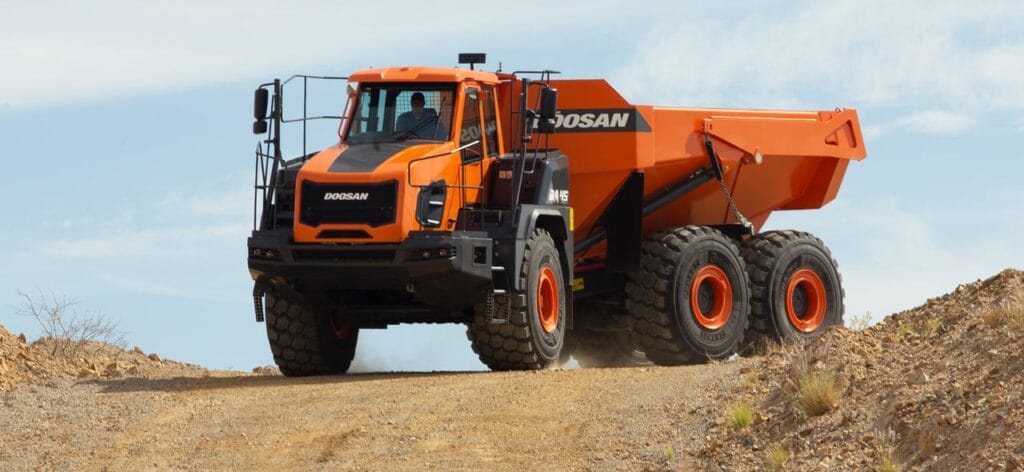
An articulated dump truck, or ADT, has two sections, a front cab and engine unit and a rear dump body, connected by a pivot joint, sometimes called a hinge. That joint lets the truck bend in the middle rather than turning its wheels, which gives ADTs a tight turning circle and strong traction on soft or uneven ground. Most run all-wheel drive, and you can compare the full range of articulated dump trucks available to hire through Quotor.
What Is a Rigid Dump Truck?
A rigid dump truck, or RDT, sometimes called a rigid hauler, has a fixed chassis and a standard cab and dump body layout, closer to a conventional truck. Steering runs through a single front steering axle rather than an ADT’s joint, and most models are rear-wheel drive. Rigid dump trucks are designed for higher payloads on well-formed roads, which is why they’re a common sight on large mine and quarry sites, and you can compare rigid dump trucks hireable through Quotor.
Articulated Dump Truck Strengths
Mobility on Rough and Uneven Ground
Because the ADT’s articulated frame lets the front and rear sections move relative to each other, the wheels can follow uneven terrain more effectively, helping maintain traction on rutted or disturbed ground. Combined with drive to every wheel, this gives articulated dump trucks strong off-road mobility where a rigid truck would struggle, wet clay, loose fill or freshly formed ground on a mine site included.
Better Traction and Site Access
All-wheel drive, differential control and the articulated chassis give an ADT strong traction on soft or unstable ground, while the tight turning circle helps on confined haul routes.
Best Jobs for Articulated Dump Trucks
Articulated dump trucks earn their keep on civil earthworks, subdivisions, mine access tracks and any job site where routes are unformed or change from week to week. They’re also the better call in wet weather, since grip on soft ground matters more than raw payload. The trade-off is capacity, an ADT generally won’t carry as much per load as a rigid truck of similar size, so weighing the pros and cons of articulated dump trucks against your haul distance matters before you commit. For operators still building experience, it’s worth reading up on how to become a heavy equipment operator before running one.
Rigid Dump Truck Strengths
Higher Payload Capacity
Rigid dump trucks typically carry more payload than an articulated dump truck of comparable size, since a fixed chassis supports a larger dump box without the weight and complexity of an articulation joint. On sites with engineered access roads, that extra payload per cycle adds up fast, whether it’s a construction and mining job or a straight bulk-haul run.
Efficient Hauling on Maintained Roads
Once the route is well formed and maintained, a rigid truck’s larger payload and efficient straight-line hauling become more valuable than an ADT’s off-road mobility. Fewer cycles are needed to shift the same volume of material, which is exactly why rigid haulers dominate large mining and quarrying operations built around well-maintained haul roads.
Best Jobs for Rigid Dump Trucks
Rigid dump trucks suit any construction or mining project moving high volumes of material over consistent, well-formed roads. They transport large volumes of overburden, ore or aggregate over a set haul route, but they’re less at home on rough or changing ground, where grip and manoeuvrability outweigh raw capacity, so weigh the pros and cons of rigid dump trucks against how established your route actually is. Browse the full range of dump trucks through Quotor to compare specs side by side.
Articulated vs Rigid Dump Truck Comparison
So what’s the difference once you get past the basic definitions? Some contractors frame it as rigid vs articulated, others simply say ADT vs RDT, either way, site conditions usually decide it first. Once you understand the differences between the two, choosing gets a lot easier.
Machine Design and Steering
Articulated trucks are built around a central joint that lets them steer by bending in the middle. Rigid dump trucks steer through the front wheels instead, with no joint in the frame at all. This one difference is why ADTs handle rough terrain better and rigid trucks handle straight-line hauling better.
Payload Capacity
Rigid dump trucks generally offer more hauling capacity than articulated dump trucks of a similar footprint, thanks to a simpler, heavier-duty chassis. ADTs carry solid payloads too, just usually less per load, trading raw capacity for mobility.
Terrain and Ground Conditions
The gap between ADTs and RDTs is widest here. Articulated dump trucks can handle wet, uneven or unformed terrain because pivot steering and all-wheel drive keep traction on every wheel. Rigid trucks are better suited to established, well-maintained roads than to shifting, rough ground; on slippery terrain, rear-wheel drive alone often isn’t enough to keep a rigid truck moving safely.
Haul Distance and Cycle Efficiency
Over short, rough hauls, an ADT’s manoeuvrability and traction can keep cycle times productive. Over longer, formed routes, a rigid truck’s greater payload can reduce the number of cycles required. The most economical option depends on payload, haul distance, gradients, rolling resistance and loading time.
Manoeuvrability and Site Access
That joint gives an articulated dump truck a noticeably tighter turning circle, useful on cramped or irregular sites. Rigid dump trucks need more room to turn and reverse, so they’re better suited to open pit, quarry or greenfield layouts with clear sightlines and formed roads.
Hire Cost Comparison
Hire cost for both machine types depends on tonnage class, project duration and site conditions rather than a flat rate per truck. Larger rigid trucks with higher hauling capacities often carry a premium over smaller articulated trucks, though site access and haul distance can shift that either way. Quotor’s guide to estimating equipment cost walks through the main variables before you commit.
Choosing the Right Dump Truck to Hire
There’s no single best type of dump truck for every job. Deciding whether a rigid or articulated dump truck suits yours comes down to site conditions, haul distance and how long you need the machine on site, and matching the type of job to the dump truck you need saves cycle time either way. It’s also worth thinking about where this decision fits into your broader equipment procurement process, since dump truck selection is rarely made in isolation from other machines on site.
When to Hire an Articulated Dump Truck
Choose an ADT when the ground is unformed, wet or likely to change during the job, civil earthworks, subdivisions, forestry and most general construction projects fall into this category. The tighter turning circle also helps where the size of the site limits how much room a truck has to manoeuvre.
When to Hire a Rigid Dump Truck
Choose a rigid dump truck when the route is already flat, formed and well-maintained, and you need to shift a high volume of material over a set haul route, mining and quarrying are the clearest examples. Rigid dump trucks can handle the volume; they just need the ground ready for them first.
Terrain and Haul Requirements
If you’re not sure which way to go, walk the route before deciding. Rough, uneven or challenging terrains point toward an articulated dump truck, while flat haul roads and long, consistent hauls point toward a rigid dump truck. Comparing options side by side through Quotor’s equipment range makes that easier.
Hire Cost and Project Duration
Short jobs with variable site conditions usually favour hiring an ADT for flexibility, while longer projects with an established route can justify a rigid dump truck’s higher capacity. Whether you’re comparing new or used dump trucks, Quotor helps you compare availability and pricing across both types. Reading up on how to hire construction equipment and managing the machine once it’s on site is worth doing before it arrives. Getting site conditions and haul distance right first is what gets you the right truck for your site.