
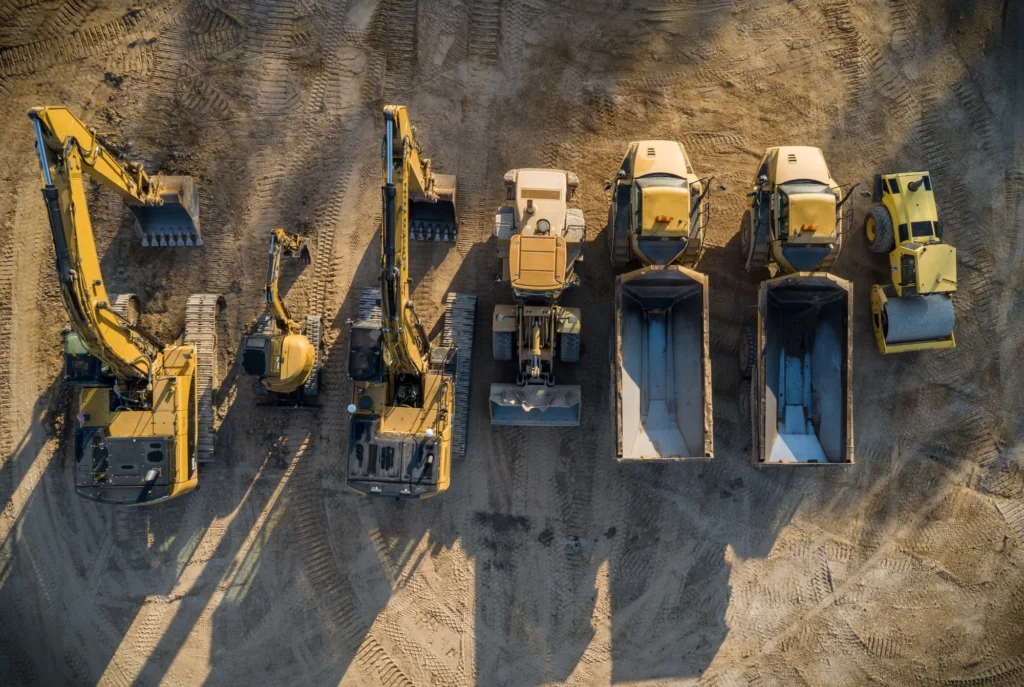
The choice comes down to three things: how long you need the machine, how many of those days it works, and what it costs you while it sits idle. This guide compares short-term hire, long-term hire, operating leases, finance leases and purchase, using current Australian listings and published hire rates, so you can test the figures against your own jobs.
How each option works
| Option | Who owns the machine | Typical term | Servicing |
|---|---|---|---|
| Short-term hire | Hire supplier | Days to weeks | Usually the supplier, depending on the agreement |
| Long-term hire | Hire supplier | Months | Usually the supplier, depending on the agreement |
| Operating lease | Lender | Fixed term, returned at the end | Set by the lease terms |
| Finance lease | Lender, until the final payment | Usually 1 to 5 years | Usually you |
| Purchase | You | Chattel mortgage loans usually run 1 to 7 years | You |
Suppliers quote hire dry (machine only) or wet (machine and operator), so compare like with like. Dry hire vs wet hire explains the split, and how to hire construction equipment covers the process. Suppliers discount longer hires. A finance lease ends with a residual payment, after which you can buy the machine, extend the lease or upgrade. An operating lease has no purchase option. Quotor covers the hire side: it contacts suppliers in New South Wales, Queensland, Victoria and South Australia and presents shortlisted options.
Cost comparison over 1, 6, 12 and 36 months
The table prices one 5-tonne excavator working a full 21-day month on dry hire. Hire is $55 + GST an hour over an 8-hour day (the short end of the usual 8 to 10 hours), which is $9,240 a month at list rate. The table takes 5% off the one-month hire and 20% off beyond two months, both equipment marketplace averages for longer hires. The buy column is cumulative repayments on an $85,000 + GST Komatsu PC55MR-5 (a 2023 listing with 127 hours) over a five-year chattel mortgage at 8%, about $1,723 a month. Fuel and operator costs are left out of both columns, and how fuel prices affect equipment hire costs covers how fuel moves hire rates. The buy column also leaves out insurance, servicing, storage and transport.
| Period | Hire (cumulative) | Buy: repayments (cumulative) | What the buy column leaves out |
|---|---|---|---|
| 1 month | $8,778 | $1,723 | Reselling a used machine after a month |
| 6 months | $44,352 | $10,341 | Resale value at month 6 |
| 12 months | $88,704 | $20,682 | A year of depreciation |
| 36 months | $266,112 | $62,046 | About $38,100 still owing, against the machine’s resale value |
At full-time use, repayments sit well below hire at every horizon. Hire cost falls in proportion to the days you use the machine while repayments stay fixed, so halve the hire column for half the days and compare again. The gap only means something once you know what the machine resells for and how many days it will work, which the next two sections cover. How to estimate equipment cost in construction shows how to build the rest of the estimate, and a Quotor request returns supplier pricing for the hire column.
Utilisation: the “hire if under 40% use” rule of thumb
Utilisation is the share of available working days a machine is on a job. Caterpillar’s buy-or-rent guidance sets the rule of thumb at renting below 40% and buying above 65%, with other factors deciding the range in between. That guidance was published for the US market, so check it against local numbers.
In the example above, the $1,723 monthly repayment equals 19% of the list-rate hire cost for a full month and 23% of the discounted cost. Below those shares of working days, repayments alone cost more than hiring. That is a floor, and the costs in the next section lift the real break-even above it. If you already own machines, construction equipment management covers tracking hours so utilisation is measured, not guessed. If you don’t, hire for a few jobs and log how many days the machine works before you commit to buying.
Hidden costs of owning
Depreciation never appears on an invoice, so owners miss it. Listings of the same model show a 2023 PC55MR-5 with 127 hours asking $85,000 + GST and a 2018 unit with 4,600 hours asking $49,500. Those are two dealers’ asking prices, not a depreciation schedule, but they show how far prices fall with age and hours.
Servicing and repairs fall to the owner, and how to maintain construction equipment covers the routine. A breakdown also leaves you without a machine unless you hire a replacement. Storage means a secure yard or shed. Transport means a float or trailer for every move, and a float you own earns nothing while the machine is on site. Insurance depends on the machine’s value and the cover you choose, and it is payable whether or not the machine works.
Tax treatment basics
This is general information, not tax advice. Hire charges are generally deductible as a business expense, while a purchased machine is a depreciating asset. For small businesses with aggregated turnover under $10 million, the ATO’s instant asset write-off lets you deduct assets costing less than $20,000 each in full, and the threshold became permanent from 1 July 2026. A machine costing $20,000 or more goes into the small business pool, depreciated at 15% in the first year and 30% a year after that. The $85,000 excavator above goes into the pool, while a $15,000 breaker or attachment could be written off outright.
Chattel mortgages, finance leases and operating leases are treated differently for GST and deductions. Check the structure with your accountant before you sign.
Leasing excavators and forklifts: typical terms
An excavator lease is usually a finance lease of one to five years with a residual payment at the end, or an operating lease with no residual. A chattel mortgage, the loan alternative, usually runs one to seven years. A broker’s October 2026 rate table lists commercial equipment loan rates from 7.99% to 12.5% a year, and dealer listings for newer machines show finance estimates around 6.7% to 6.9%. At 8% over five years, the $85,000 excavator costs about $1,723 a month, roughly four days of hire at the $440 day rate. A finance lease usually lowers the repayment by deferring part of the price to the residual.
Forklift lease cost works the same way. Take a $50,000 3-tonne forklift, though prices vary widely by fuel type and mast. Financed over five years at 7% to 9%, it costs about $990 to $1,040 a month. A 3-tonne diesel forklift hires for $190 to $250 a day, so that repayment equals four to five hire days a month. What is earthmoving equipment explains where excavators fit among other machines, and Quotor’s equipment categories list the excavator and forklift types it sources.
Demolition and specialist equipment: almost always hire
For demolition equipment, hire vs buy in Australia tilts toward hire for two reasons. The right machine changes with each job, because the excavator’s size and reach and the attachment (breaker, shear or pulveriser) depend on the structure. Demand also arrives in bursts, so an owned machine sits idle between jobs while ownership costs continue. The same logic applies to other specialist machines such as long-reach excavators and crushers.
Marketplace averages for daily dry hire of demolition excavators, excluding GST, are $300 to $450 for 1 to 5 tonnes, $500 to $750 for 10 to 20 tonnes and $800 to $1,100 for 30 to 50 tonnes. Tell the supplier it is demolition work when you ask, because some owners won’t allow their excavators on demolition jobs due to wear.
Decision table by situation
| Situation | Usually the better fit | Why |
|---|---|---|
| One job lasting days to weeks | Short-term hire | No commitment, and the supplier usually handles servicing |
| One project of several months with a known end date | Long-term hire | Longer hires attract discounts, with no resale risk |
| Steady work for two to five years, fixed monthly cost, no wish to own | Operating lease | Fixed repayments, machine returned at the end |
| Core machine used most working days, ownership wanted eventually | Finance lease or chattel mortgage | A finance lease defers part of the price to a residual, while a chattel mortgage gives ownership from day one |
| Core machine used most working days for years | Purchase | Ownership costs spread across many working days |
| Uncertain or seasonal use | Hire first | Log actual working days before committing capital |
| Demolition or specialist machines | Hire | Job-specific machines that sit idle between jobs |
Get hire quotes before you decide
Every comparison above starts with a hire figure. Quotor takes one request describing the machine, dates and location, contacts suppliers, and returns shortlisted options with pricing and availability. Set those quotes beside a lender’s repayment quote and the ownership costs above, then rerun the cost comparison with your own days of use.