
In the realm of heavy machinery, both graders and scrapers play pivotal roles in land development and road construction. While they might appear similar at first glance, understanding the key differences in their design, function, and application is crucial for efficient project management. This article will delve into the specifics of each machine, highlighting their unique capabilities and ideal uses.
Introduction to Graders and Scrapers
Graders and scrapers are essential pieces of equipment in the construction industry, particularly in projects involving land leveling, road construction, and site preparation. While both are used to move and manipulate earth and other materials, they accomplish this task in fundamentally different ways. The choice between a grader and a scraper depends heavily on the specific requirements of the job, including the type of material, the distance it needs to be moved, and the precision required for the final surface.
What is a Motor Grader?
A motor grader, often simply called a grader, is a construction machine with a main purpose of creating a flat and smooth surface. This machine is commonly used in road construction and maintenance. The grader features a long, adjustable blade positioned between the front and rear wheels. This blade can be angled and adjusted to precisely level the ground, spread material, and grade surfaces. Graders are relatively slow but offer exceptional precision in creating the desired grade, making them suitable for finishing work.
What is a Scraper?
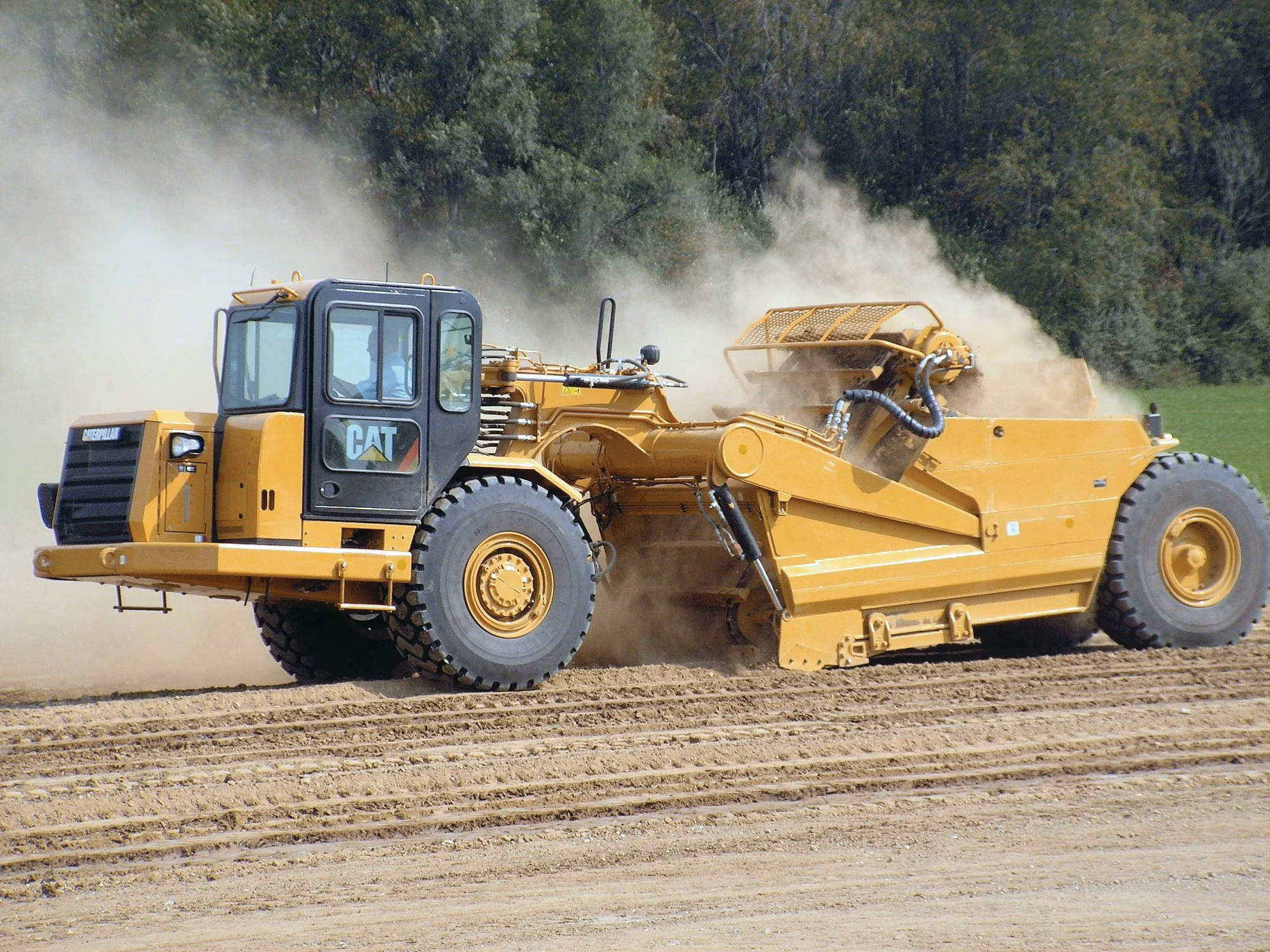
A scraper, on the other hand, is a heavy equipment machine designed for efficient excavation and transport of large quantities of soil over relatively short distances. A scraper typically consists of a tractor pulling a box-like container. The scraper works by digging into the ground with its front blade, loading the loose material into the box, and then transporting it to the designated area. The soil is then unloaded, spread, and compacted as needed. Scrapers are fast and efficient for moving bulk earth on large sites.
Overview of Their Uses in Land Development
Land development relies on graders and scrapers, each suited for different aspects of the job. These machines offer unique capabilities, such as:
- Graders are ideal for creating the final, smooth grade on a road or building site, ensuring proper drainage and a level surface for construction.
- Scrapers are employed for initial site preparation, excavation, and moving large volumes of earth to create the basic land structure.
The scraper’s high capacity and efficient movement make it indispensable for large-scale earthmoving jobs, allowing for fast project completion, while the grader’s strength lies in their ability to fine-tune the surface with precision.
Key Differences Between Graders and Scrapers
Functionality and Design
The key differences between graders and scrapers lie in their functionality and design. A motor grader is designed primarily to create a flat and smooth surface. It utilizes a long, adjustable blade to level the ground and spread material. The scraper, on the other hand, is built for efficient excavation and the transport of large quantities of soil. It uses a box attached to a tractor to load, move, and unload earth, making it suitable for bulk earthmoving tasks.
Types of Jobs Best Suited for Each
Graders are commonly used in road construction and maintenance to create the final grade on a road. They are ideal for jobs that require specific characteristics, such as:
- A high degree of precision
- A smooth surface
Scrapers, on the other hand, are best suited for initial site preparation, moving large volumes of earth. If the project requires the efficient transport of loose materials over a distance, a scraper is the tool of choice due to its large capacity and fast operation.
Comparison of Efficiency and Performance
When comparing the efficiency of graders vs scrapers, it’s important to understand their specific strengths. Scrapers are generally more efficient at moving large quantities of earth quickly due to their load capacity and movement. A motor grader, while relatively slow, offers superior precision in creating a level surface. The choice depends on whether the job requires speed and capacity or precision and surface quality. Understanding this is a crucial factor.
Understanding the Box and Its Role
What is a Box in Grader and Scraper Context?
In the context of graders and scrapers, the term “box” refers to different components. For a scraper, the box is the main container that loads and transports soil. The scraper digs into the ground to load material into the box. While graders do not utilize a box in their design, their blade serves a purpose of moving material to create the required surface.
How the Box Affects Performance
The design and capacity of the box significantly affects the scraper’s performance. A larger box allows for more efficient transport of soil, reducing the number of trips required. The shape and angle of the blade on the box affect the machine’s ability to dig and load material. The proper box ensures that the scraper operates at peak efficiency, maximizing its earthmoving potential. The performance will require fewer runs and have a smooth operation.
Variations in Box Design
There are variations in box design among different types of scrapers, each tailored to specific soil conditions and job requirements. Some boxes are designed to handle loose materials like gravel, while others are built for heavier, more compact soil. Understanding these variations is crucial for selecting the right equipment for the job and ensuring the efficient use of resources on a construction site.
Factors Influencing the Choice Between Grader and Scraper
Site Conditions and Terrain
The choice between a grader and a scraper is significantly influenced by the site conditions and terrain. A motor grader is generally more suitable for sites with relatively smooth terrain, where its main purpose is to create a flat and level surface. In contrast, a scraper is better equipped for sites with rough terrain that require significant excavation and transport of earth over a distance.
Project Requirements and Budget
The project requirements and budget are critical factors in determining whether to use a grader or a scraper. If the project demands a high degree of precision in creating a smooth surface, a grader is often the better choice, despite its being relatively slower. However, if the project involves moving large volumes of earth over a distance within a limited budget, the scraper’s efficiency becomes more appealing.
Long-term Maintenance and Operational Costs
Long-term maintenance and operational costs are important considerations when selecting equipment. Graders typically have lower operational costs due to their relatively simple design and main function. However, scrapers, while more efficient in moving large quantities of material, may incur higher maintenance costs due to their complex design and the stress they endure during excavation and transport of earth.
Conclusion: Choosing the Right Equipment for Your Needs
Summary of Key Differences
In summary, the key differences between graders and scrapers lie in their function, design, and the types of jobs they are best suited for. Graders excel at creating flat and smooth surfaces with precision, while scrapers are efficient in moving large volumes of soil over a distance. The choice depends on the specific project requirements, site conditions, and budget.
Final Recommendations
When selecting the right equipment for a project, it’s crucial to consider the primary tasks involved. Depending on the work that needs to be done, different machines will be a better fit. Consider these factors:
- For projects needing precise grading and surface leveling, such as road construction and finishing work, a grader is typically recommended.
- If the main task involves excavation, transporting, and moving significant amounts of earth, particularly over a distance, then a scraper is often the more efficient and cost-effective choice.
Understanding these differences and carefully assessing the job requirements is a key factor in equipment selection.
Future Trends in Grader and Scraper Technology
Future trends in grader and scraper technology are geared towards enhancing efficiency, precision, and sustainability. Expect to see advancements in automation, GPS-guided systems, and electric or hybrid power systems that reduce emissions and improve fuel efficiency. Innovations in blade design, box capacity, and material handling will further optimize the performance of these essential machines in the construction industry.