
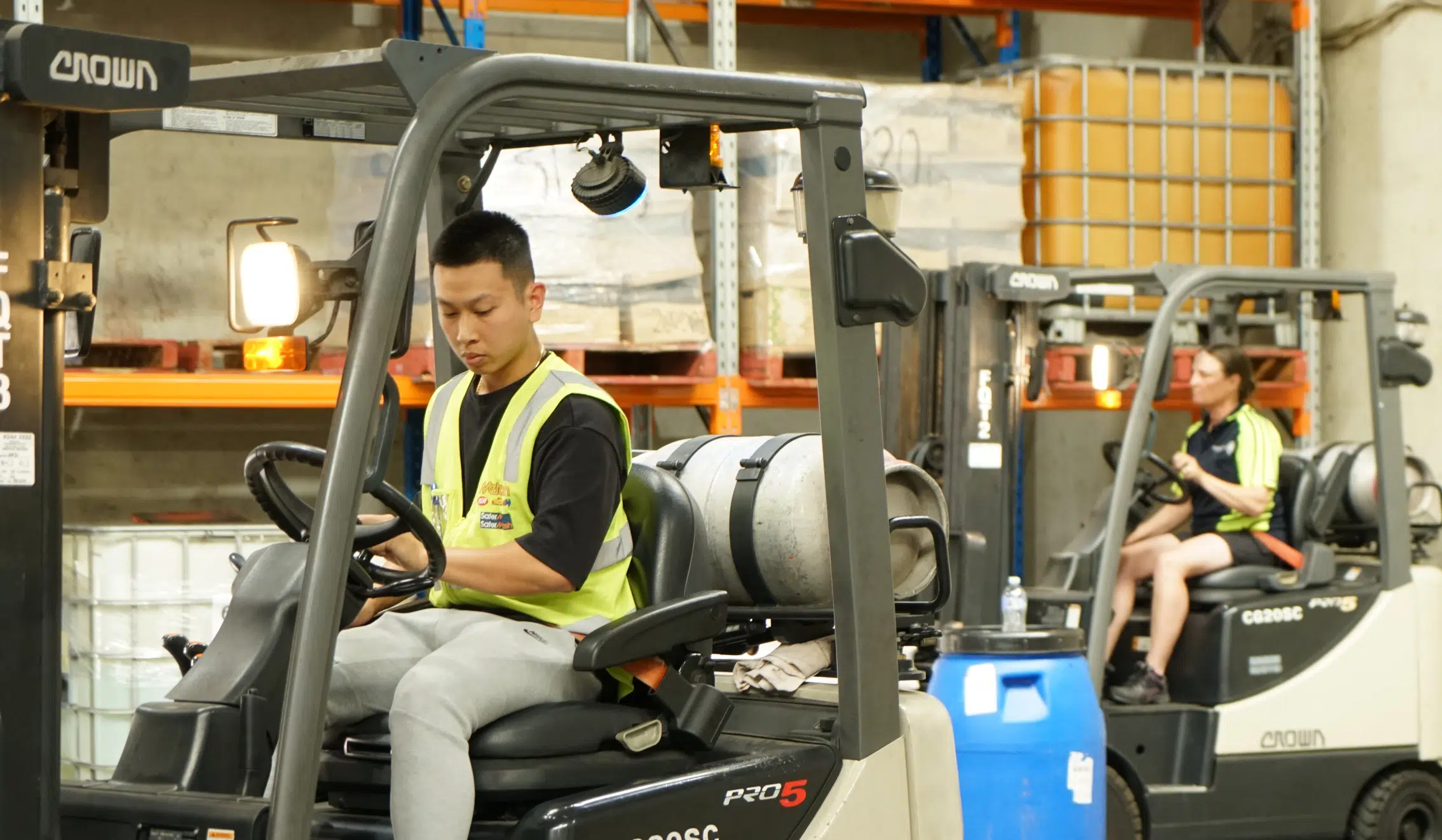
Are you thinking about a career as a forklift operator? Well, before you can actually get behind the wheel of one of these machines, you’ve got to get the right forklift licence. This post is all about explaining the prerequisites, different types of licences, the training you’ll need and where to get top-notch forklift training within NSW, so you can kickstart your career in logistics.
Entry Requirements for Becoming a Forklift Operator
Age and ID Requirements – What You Need
First things first – you’ve got to meet some basic entry requirements to obtain a licence to operate an order. The most obvious one is age – you’ve got to be at least 18 years old to get behind the wheel of a forklift. And of course, you’re going to need to show some kind of ID, like a drivers license or passport, just so we can verify how old you are. This ID business is a must-have when you’re signing up for a forklift training course with a registered training organisation (RTO). Meeting these age and ID requirements is the first step on the path to getting the licenses you need to work and operate a forklift in NSW – all of which is in line with SafeWork NSW. This means that only the right kind of people can get their hands on a forklift license, which makes for a safer workplace.
Your Health and Safety – The Big Picture
When it comes to becoming a forklift operator, health and safety are the biggest deal, and you must ensure that you are well-prepared. Because forklift operation is classed as high risk work, we must ensure that the people operating them are sound in body and mind and fully up to the task with the necessary practical skills. The training course will cover all the safety rules and what not that you need to follow to avoid accidents. SafeWork NSW want to make sure that all operators are capable and competent – which means they might need to go through a medical check before getting their licence. It’s all about making sure you and your mates are safe at work.
Pre-requisites for Training – Make Sure You’re Right
Before you even start looking at forklift training courses, you’ve got to make sure you’re eligible and ready to go. The good news is that you don’t need any fancy qualifications to get started – just a basic level of English and maths so you can follow the instructions and do the numbers. Some training providers may even ask you to do a pre-training assessment just to check in and see where you’re at. Safety first, and that means being willing to learn and committing to following the safety rules – thats the kind of mindset we’re looking for. And while your thinking about it, you might want to think about what type of forklift you’re planning to operate, so you can choose the right training course.
Getting a Licence to Operate a Forklift Truck
The Different Types of Forklift Licences
When it comes to forklift licences, there’s no one-size-fits-all approach. There are different categories that cater to specific types of forklifts. You’ve got the LF licence, which covers counterbalance forklifts and standard forklift trucks, and the LO licence, which is designed for order picking forklifts – also known as stock pickers. The RTO will show you the ropes and guide you towards the right forklift training course to match the type of forklift you’ll be operating. And don’t worry, the training they provide is all about teaching you how to safely and efficiently handle the designated type of forklift.
What is a High Risk Work Licence?
A forklift licence is actually a high risk work licence, so operating a forklift is seen as a high-risk activity. That’s why the requirements for getting a licence to operate a forklift are a bit more strict than other jobs. SafeWork NSW looks after the issuing of these licences to make sure that operators are properly trained and assessed. To get a high-risk work licence, like a forklift licence, you need to do a training course with a registered training organisation and pass a pretty tough assessment to show off your forklift operation skills.
LF and LO Forklift Licence – What’s the Difference?
In NSW, the two main forklift licence categories are LF and LO. The LF licence allows you to drive a counterbalance forklift, while the LO licence is for order picking forklift trucks. When you’re choosing a forklift training course, you need to pick the one that matches the type of forklift you’ll be operating in your workplace – and that means considering the specific needs of your employer as well. If you only need to drive an order picking forklift, then the LO licence is all you need to go for.
Steps to Obtaining a Forklift Licence
Getting Enrolled in a Forklift Course
So your first step in becoming a forklift operator and getting your licence in NSW is to find a forklift training course with a registered training org. You want to make sure that the course is good and meets all the requirements, particularly in terms of practical training. That way, you can get the skills and knowledge you need to safely operate a forklift. Make sure the course covers the type of forklift you’re interested in operating – be it a standard forklift, a counterbalance or an order picking one. Choosing the right course is a pretty big deal – you want to get the best possible training, including both theory and practical components.
The Practical Test – Show What You Got
After you’ve done the theory and practical part of the course, it’s time for the practical test. This is your chance to show off your skills and see if you can safely operate a forklift. They’ll be looking at how well you can do the pre-checks, handle the forklift and do all the other things that come with operating one. The training is all about making sure you meet the standards for operating safely and competently. And of course, you’ve got to pass it to get your licence.
Finalising Your Licence Application
Once youve completed the forklift licence course, done the training and assessment and actually gotten through the practical assessments, the next step is to tie up all the loose ends on your application for a high risk work licence. You’ll need to get your application sorted out and send off all the necessary paperwork – you’ll need to include your statement of attainment from the RTO and some ID for starters. Double check the whole lot is spot on so there are no hold ups. SafeWork NSW will give your application the once over and if they give you the thumbs up you’ll be on your way to having a forklift licence in hand. This licence will give you the green light to legally operate a forklift truck in NSW, all while keeping you safe and in line with the relevant laws and safety regulations.
Forklift Training Courses – What You Need to Know
Forklift Licence Course – What to Expect
If you want to become a certified operator, then you need to do a forklift licence course. This training course – which is typically run by a registered training organisation – covers everything you need to know to safely operate a forklift, including pre-operational checks, load handling techniques and safety regulations. Getting this training is a must if you want to get a forklift licence that’s good in NSW – and it’s pretty fundamental to working safely and effectively in a warehouse or industrial setting.
Choosing the Registered Training Organisation
When you’re looking for a registered training organisation to get your forklift licence from, there are a few things to bear in mind regarding their practical training offerings.
- First off, make sure the RTO is accredited and offers nationally recognised forklift training.
- Look for an RTO that’s got experienced instructors, hands-on training and comprehensive training materials.
- Also think about factors like location, course schedules and fees – and don’t be afraid to check out reviews and testimonials from previous students to get a feel for the quality of the training and assessment.
Choosing a good RTO can really make a difference to your learning experience and help you obtain a forklift licence with ease. Getting quality forklift training for my staff is a big priority for me.
High Reach Forklift Training – Options and Considerations
For those who plan to run a forklift in a high-up environment, there are specific high reach forklift training options available to get you up to speed. This special training focuses on the “do’s and don’ts” and safety concerns that come with operating a forklift at raised heights, ensuring safe operation throughout the process. High reach training usually covers the basics of load management, stability and navigating tight spaces. By going through the high reach forklift training course, you’ll be able to boost your skills and knowledge, making you a more than capable and valuable operator. Adding in extra licenses such as the TLILIC0004 Licence to operate a forklift may be a good idea depending on the type of operation you’ll be doing.
Career Prospects as a Forklift Operator
Average Salary of Forklift Operators
Getting certified can mean reliability and job security along with a bunch of different job opportunities. How much you can expect to earn as a forklift operator in NSW depends on a few factors, such as experience, skills, and where you work, especially if you have the TLILIC0003 licence to operate. On top of a regular wage, you may also be able to get extras like health insurance and superannuation. Making the investment in forklift training and getting a licence is a worthwhile gamble on your future when it comes to career prospects. Plus its pretty handy to have a forklift work licence, you know.
Job Opportunities in Sydney
Sydney’s a city with a lot of different job openings for people with forklift operators licenses. Heaps of warehouses, distribution centres, and manufacturing facilities need skilled operators to operate an order picking forklift and move goods around efficiently to get the job done. You can find job ads on online job boards, go through a recruitment agency or check out a company’s own website – many will require a valid forklift licence as proof of your skills and that you’re up to scratch requirements. Having a licence to operate a forklift opens doors to heaps of different industries and career paths.
Moving Up the Ranks in Forklift Operations
There are always opportunities to get ahead. You can boost your skills with some extra courses, like high reach forklift training or courses for driving those special forklift trucks. Getting an extra certification like the TLILIC0004 licence is a great way to stand out to your employer and add value. With a bit more experience and some more training, you can move into supervisory or management roles in the warehouse or logistics industry. Continuously working on your skills and knowledge will keep you at the top of your game as a forklift operator.